
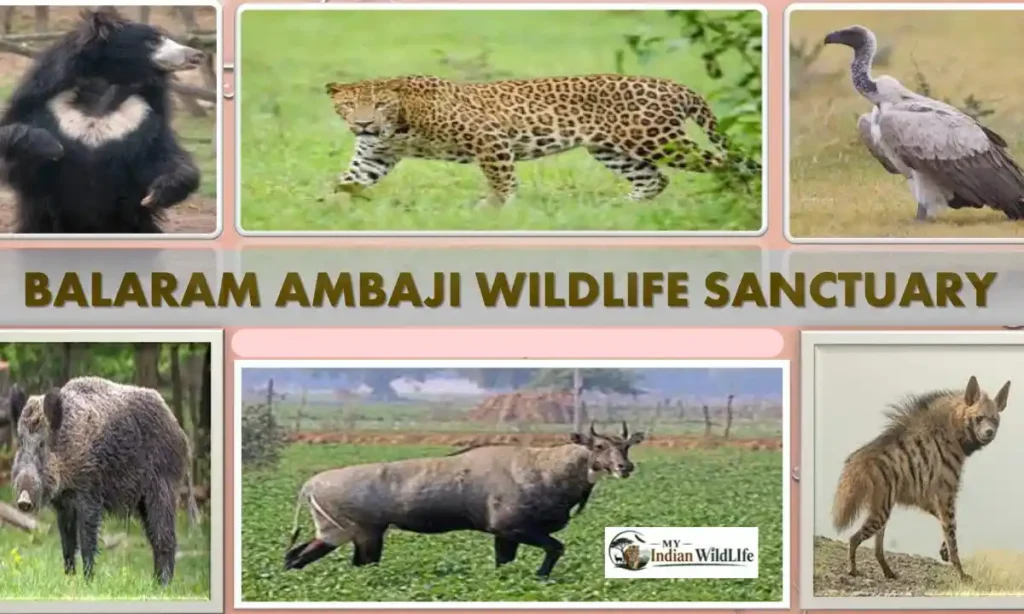
Balaram Ambaji Wildlife Sanctuary is considered as one of the most picturesque and ecologically significant wildlife sanctuaries of Gujarat. The sanctuary, situated in the district of Banaskantha, occupies the area of picturesque Aravalli ranges and is distinguished by its forests, hills, rivers, wildlife and diverse flora. The natural surroundings make this place very attractive for those who like nature, photography and wildlife excursions. Moreover, the sanctuary is also unique owing to its proximity to the religious center – pilgrimage site of Ambaji. Thus, the names of Balaram and Ambaji are intimately related to this area making it significant from the points of view of nature and culture. This sanctuary gives visitors an opportunity to get acquainted with the forests of North Gujarat and with the sights around.
About Balaram Ambaji Wildlife Sanctuary
The Balaram Ambaji Wildlife Sanctuary was formed on 7th August 1989, with the main aim of conservation of the wildlife and the natural forest ecosystem. It spans an area of about 542.08 sq. km, and it is among the major conservation forest regions in Gujarat. It has varied landforms such as the dry deciduous forests, rocky hills, valleys and the sources of water that are temporary in nature. It offers favorable habitat conditions for various mammal, bird and reptile species. The Balaram Ambaji Wildlife Sanctuary is famous for its wildlife such as leopards, sloth bears, wolves, hyenas, blue bulls and wild boars.
Location of Balaram Ambaji Wildlife Sanctuary
The Balaram Ambaji Wildlife Sanctuary is situated in Banaskantha district of Gujarat, near the renowned town of Ambaji. It is part of the Aravalli hill range, and is covered with forest and hilly terrain. Due to its location, it is possible to make your wildlife tour alongside visits to various religious and tourist sites. Palanpur is a major town in the vicinity and is helpful for transport and accommodations.
History of Balaram Ambaji Wildlife Sanctuary
Balaram Ambaji forest area has historically been linked to the hilly and forest areas and the spiritual significance of North Gujarat. Realising the ecological significance of this area, the government has established it as a sanctuary in the year 1989. The sanctuary served as an important step towards ensuring that this area’s forests and wildlife received more protection. Ever since, this area has remained significant to the wildlife conservation efforts of Gujarat.
Area and Landscape
Balaram Ambaji Wildlife Sanctuary is spread over an area of about 542.08 sq. km. The terrain comprises the Aravalli hills and has forests in valleys, sloping areas, and open areas. The terrain varies from one region to another within the sanctuary, which leads to variation in the habitat for the wildlife species. The monsoon brings in greenery, whereas the dry season brings the typical dry deciduous forest look.

Wildlife in Balaram Ambaji Wildlife Sanctuary
The park has a rich diversity of wildlife. The leopard is an example of one of the carnivorous animals that exist in this area while the sloth bear is yet another interesting animal that exists in this forest ecosystem. Some of the other animals that have been identified in the park include the wolf, hyena, blue bull, wild boar, Indian porcupine, jackal, jungle cat, Indian civet, langur, rhesus macaque and hare. The sightings of these wild animals will depend on the season, weather, time and the activities of the animal.
Major Animals Found in the Sanctuary
| Animal | Description |
|---|---|
| Leopard | Important predator of the forest |
| Sloth Bear | Large forest-dwelling mammal |
| Wolf | Carnivorous species found in the region |
| Striped Hyena | Nocturnal forest predator |
| Blue Bull | One of the major herbivores |
| Wild Boar | Common forest mammal |
| Indian Porcupine | Mostly active at night |
| Jackal | Small carnivore |
| Jungle Cat | Wild cat species |
| Langur | Common primate |
| Rhesus Macaque | Forest-dwelling monkey |
| Hare | Small herbivorous mammal |
Birds in Balaram Ambaji Wildlife Sanctuary
Balaram Ambaji Wildlife Sanctuary can be an ideal destination for bird watching also. The presence of forests, open forest, hills and water sources makes a habitat for a variety of birds. Peacocks, Indian rollers, woodpeckers, bulbuls, barbets, hornbills, and a number of predatory birds can be seen around the forest region. Bird watchers can enjoy the surroundings with great ease and by observing the trees and open areas of the forest.
Reptiles and Other Wildlife
In addition to mammals and birds, there are various reptiles and smaller species of wildlife in the sanctuary. Snakes, monitor lizards and many more reptiles make up the ecosystem of this place. The Indian star tortoise is one such reptile that can be found here. People need to stay away from reptiles and other wildlife. Reptiles and wildlife should not be disturbed at all.
Flora of Balaram Ambaji Wildlife Sanctuary
Balaram Ambaji Wildlife Sanctuary has vegetation primarily consisting of dry deciduous forest. The vegetation at this place comprises various types of trees, shrubs, herbs, climbers, grass and medicinal plants. Vegetation at this place comprises various species like khair, salai, dhavada, timru, khakhara, bor, karanj, arjun, jamun and behda. Such plants play a significant role in providing food and cover to the animals residing at this sanctuary.
Natural Beauty of Balaram Ambaji Wildlife Sanctuary
The attractiveness of the sanctuary lies in the blend of hills, forests, rocky regions, and serene settings. Contrary to other tourist spots that are very commercialized, the sanctuary offers a more natural experience that enables the traveler to explore the terrain at leisure. The appearance of the forest greatly differs according to the season. While the rainy season brings new foliage, winter makes it enjoyable to explore the region while summer showcases the aridity of the deciduous forest.
Flame of the Forest
Among the attractive characteristics of the sanctuary during the season is the blooming of khakhara, which is referred to as the Flame of the Forest. During this blooming period, the colorful blooms are easily distinguished due to the relatively dry state of the forest. This offers nature enthusiasts and photographers a chance to view a completely different side of the sanctuary. It is advisable not to damage any plant or pick flowers from the sanctuary.
Why Is Balaram Ambaji Wildlife Sanctuary Famous?
Balaram Ambaji Wildlife Sanctuary is renowned for the blend of wildlife, forest, Aravalli hills, and religious significance that it offers. It supports various wildlife species and at the same time is situated near Ambaji, one of the famous pilgrim places in Gujarat. The availability of leopard, sloth bear, wolf, hyena, and various other herbivores gives it significance from the wildlife point of view. Its varied vegetation and picturesque beauty further add to its significance as a natural attraction.
Best Time to Visit Balaram Ambaji Wildlife Sanctuary
Best time to visit Balaram Ambaji Wildlife Sanctuary is usually the period from November to March. These are the months when it will be easier for you to travel and enjoy outdoor activities in the favorable climatic conditions. Winter season is very nice due to mild climate. Months of February and March can also prove very nice for those who have interest in flowering seasons and photography. Summer months are quite hot but it will be easier to observe wild animals at the places where there are water resources.
Balaram Ambaji Wildlife Sanctuary Timings
This is not an amusement park but rather a protected forest, and hence, the timings and other related issues concerning accessing the park may be guided by regulations set by the forest department in that specific area of interest. Visitors need to ensure that they know the times of entry and the routes available for movement within the park before undertaking their adventure.

Balaram Ambaji Wildlife Sanctuary Entry Fee
The cost for entrance into the sanctuary and other charges will also vary depending on what kind of access is allowed in the sanctuary. Visitors should always refer to the latest information regarding these as forest rules and charges may change frequently. It is equally important to know that a visit to a protected forest is not the same as a visit to any normal tourist attraction because some places may only be visited with prior permission.
How to Reach Balaram Ambaji Wildlife Sanctuary
Access to the Balaram Ambaji Wildlife Sanctuary is through the road network that links Banaskantha with Ambaji and Palanpur. Road transport is especially favorable for those tourists who wish to visit multiple tourist destinations in the area.
By Road
Ambaji and Palanpur are two notable road destinations close to the sanctuary. Tourists who travel from other cities within Gujarat may get down at either of these places and move further on to the sanctuary.
By Train
The Palanpur Railway Station serves as the closest important railway station to access the Balaram Ambaji area. From there, one can proceed to their destination through the road route.
By Air
For passengers who travel by plane, Ahmedabad Airport becomes one of the most important airports from where the road trip to Banaskantha could start. The total time taken would depend on where the traveller is coming from.
Places to Visit Near Balaram Ambaji Wildlife Sanctuary
A visit to Balaram Ambaji Wildlife Sanctuary is easily combinable with a number of other attractions.
Ambaji Temple
Ambaji is amongst the most revered places of pilgrimage in Gujarat. It is related to the shrine in such a way that it is a perfect destination to visit during the same trip.
Balaram
The Balaram region has been renowned for both its religious importance and scenic beauty. Additionally, it is the source of the name of the sanctuary.
Palanpur
Palanpur is a very important town in Banaskantha and can be used as a base by visitors exploring the surrounding areas. There are facilities for accommodation, restaurants, and transportation at Palanpur.
Mount Abu
Mount Abu is situated in the neighboring Aravalli range of Rajasthan. Tourists who have more time may opt for a tour of the sanctuary combined with sightseeing in the hill station.
Things to Do in Balaram Ambaji Wildlife Sanctuary
The Balaram Ambaji Wildlife Sanctuary can best be used for activities relating to nature. Based on existing rules and permissible locations, wildlife viewing, bird watching, and nature photography can take place. The area around Balaram Ambaji Wildlife Sanctuary is ideal for viewing picturesque scenery and places of religious importance. Instead of just animal sighting, people should make full use of the forest atmosphere and surroundings.
Travel Tips for Balaram Ambaji Wildlife Sanctuary
Bring comfortable shoes, drinking water, sun protection gear, and clothes that can be worn when traveling outdoors. The climate may get hot except in winter, so you need to take this into consideration while planning your outdoor adventure. Never feed animals or try to approach them. Do not bring in loud music or create litter inside or near the forest. Always carry out the plastic waste generated by you. Photography is to be done without disturbing the animals. The visitors are required to obey the rules of the forest officials.
Balaram Ambaji Wildlife Sanctuary Location on Google Maps
The Balaram Ambaji Wildlife Sanctuary is found in the state of Gujarat, situated in Banaskantha district. The sanctuary is near a popular pilgrimage town called Ambaji and is found in the Aravalli hills area. It is accessible through road transport from places such as Ambaji and Palanpur. Google Maps can be used to view the exact position of the sanctuary, route and other helpful information about how to access it. The following map can be included in this section to facilitate easy navigation of the wildlife sanctuary.
Is Balaram Ambaji Wildlife Sanctuary Worth Visiting?
Travelers who like forests, wildlife and natural settings may find Balaram Ambaji Wildlife Sanctuary to be a very good option. The blend of Aravali landscape, dry deciduous forests and the varied wildlife make the sanctuary special. This sanctuary offers a great advantage to travelers who come to visit Ambaji, in that a wildlife and nature trip can be complemented by spiritual tourism in the area. Yet it is important for travelers who want to see animals close up to understand that this is the natural home of the wildlife.
Balaram Ambaji Wildlife Sanctuary Quick Information
| Information | Details |
|---|---|
| Name | Balaram Ambaji Wildlife Sanctuary |
| State | Gujarat |
| District | Banaskantha |
| Established | 7 August 1989 |
| Area | Approximately 542.08 sq. km |
| Landscape | Aravalli Hills |
| Forest Type | Dry Deciduous Forest |
| Major Animals | Leopard, Sloth Bear, Wolf, Hyena, Blue Bull |
| Major Birds | Peafowl, Indian Roller, Woodpeckers, Hornbills |
| Important Reptile | Indian Star Tortoise |
| Nearest Major Railway Station | Palanpur |
| Nearest Major Airport | Ahmedabad |
| Nearby Pilgrimage Town | Ambaji |
| Best Time to Visit | November to March |
Conclusion
Balaram Ambaji Wildlife Sanctuary is a unique place to visit in North Gujarat, which includes forests, wildlife, hills and spirituality. Occupying extensive portions of the Aravalli Range, this wildlife sanctuary houses a variety of mammal, avian, reptilian and plant species. The location of this sanctuary near Ambaji and Palanpur enables travelers to combine a visit to this wildlife sanctuary into their Gujarat tour. Whatever may be your interest – wildlife viewing, bird watching, taking photographs or relaxing in an exclusive wildlife sanctuary – Balaram Ambaji is another facet of Gujarat that you should not miss.
Faqs
Where is Balaram Ambaji Wildlife Sanctuary located?
Balaram Ambaji Wildlife Sanctuary is located in Banaskantha district of Gujarat, in the Aravalli hill region near Ambaji.
When was Balaram Ambaji Wildlife Sanctuary established?
Balaram Ambaji Wildlife Sanctuary was established on 7 August 1989 to protect the area’s forests, wildlife and natural habitat.
What is Balaram Ambaji Wildlife Sanctuary famous for?
The sanctuary is famous for its dry deciduous forests, Aravalli hills, diverse wildlife and rich plant life. Its proximity to Ambaji also adds religious importance to the region.
Which animals are found in Balaram Ambaji Wildlife Sanctuary?
Visitors may find wildlife such as leopards, sloth bears, wolves, striped hyenas, blue bulls, wild boars, jackals, jungle cats, langurs and Indian porcupines.
What is the area of Balaram Ambaji Wildlife Sanctuary?
The sanctuary covers an area of approximately 542.08 square kilometres, making it one of the important protected forest areas of Gujarat.
What is the best time to visit Balaram Ambaji Wildlife Sanctuary?
The best time to visit is generally considered to be November to March. The weather during these months is more comfortable for outdoor activities and nature exploration.
How can I reach Balaram Ambaji Wildlife Sanctuary?
The sanctuary can be reached by road through Palanpur and Ambaji. Palanpur is also an important railway connection, while Ahmedabad is a major airport option for travellers arriving by air.
Is Balaram Ambaji Wildlife Sanctuary suitable for wildlife photography?
Yes, the sanctuary can be interesting for wildlife and nature photography. However, wildlife sightings are not guaranteed, and visitors should always maintain a safe distance from animals.
What places can I visit near Balaram Ambaji Wildlife Sanctuary?
Popular places around the region include Ambaji Temple, Balaram, Palanpur and Mount Abu. These destinations can be combined with a wildlife and nature trip.
Can Balaram Ambaji Wildlife Sanctuary be visited with family?
Yes, families interested in nature, forests and wildlife can include the sanctuary in their travel plans. Visitors should follow forest rules, avoid disturbing animals and remain in permitted areas.
Also,Read About: Smallest Wildlife Sanctuary in India: Mayureshwar Wildlife Sanctuary Guide