
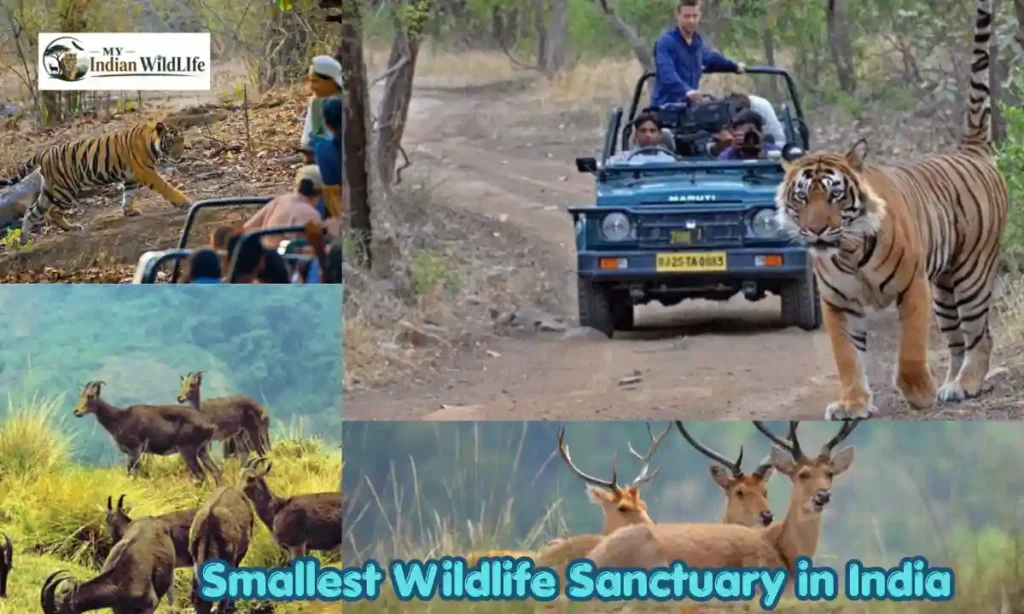
India is famous for its variety of wildlife, forests, grasslands, wetlands, and natural landscapes. From the various wildlife sanctuaries present in the nation, some spread across hundreds of square kilometres while others are confined to a smaller area. The Smallest Wildlife Sanctuary in India is usually considered Mayureshwar Wildlife Sanctuary, which is situated in the state of Maharashtra. Situated in Pune District, Mayureshwar Wildlife Sanctuary is famous for its grassland and scrubland landscape. Even though it covers a small geographical area, the wildlife sanctuary serves as a vital home for blackbucks as well as other animal and bird species. It has a unique setting in comparison to other forest-based wildlife sanctuaries in India.
Which Is the Smallest Wildlife Sanctuary in India?
One such example is Mayureshwar Wildlife Sanctuary of Maharashtra, which is widely regarded as one of the smallest wildlife sanctuaries in India, occupying an area of roughly 5.14 square kilometres. This sanctuary was created with the objective of protecting the wildlife in the area, specifically the blackbucks. Size does not determine the importance of the sanctuary. Even small sanctuaries could be important in preserving the particular habitat and animals living there. Mayureshwar is an example of a dry grassland habitat in the Deccan Plateau and offers tourists a chance to see wildlife in a different environment compared to forests in other parts of India.
Mayureshwar Wildlife Sanctuary
The Mayureshwar Wildlife Sanctuary is a protected area dedicated to wildlife that is located in Pune district, in the state of Maharashtra. Its topography is dominated by grasslands, clear grounds, spiny plants, and scrub. This kind of ecosystem is suitable for animals that are well adapted to comparatively dry climates. This place is especially connected with blackbuck, which is known to be a kind of antelope and is famous for its unique looks and agility. Besides blackbuck, people visiting this sanctuary may see some other mammals as well as many species of birds.
Mayureshwar Wildlife Sanctuary Location
Mayureshwar Wildlife Sanctuary is situated in Pune district of Maharashtra State in the area of Baramati. The position of the sanctuary within the semi-arid zone of the Deccan Plateau endows it with a unique ecology. Mayureshwar Wildlife Sanctuary can be accessed via the roadways from surrounding cities and villages. The location of the sanctuary provides an opportunity for incorporating a visit to the sanctuary in a broader tour of Pune and Baramati.
Mayureshwar Wildlife Sanctuary History
The reserve has been created to ensure the safety of wildlife in the dry grassland and scrub land ecosystem found in the region. The importance of conservation is directly linked with protecting the grassland fauna, especially blackbuck. Protected sites like Mayureshwar have, over the years, become essential for conserving wildlife habitats surrounded by agricultural lands and human settlements. Small ecosystems like these are important for preserving biodiversity and ensuring safe habitat for wildlife.
Area of Mayureshwar Wildlife Sanctuary
Mayureshwar Wildlife Sanctuary has an area of around 5.14 sq. km, thus making it a very tiny sanctuary in comparison to others that exist in India. The small size of the sanctuary does not imply that the sanctuary is not important in any way. The Mayureshwar Wildlife Sanctuary serves as a shelter for a unique dry grassland and scrub ecosystem. These kinds of ecosystems are home to wildlife and birds that cannot survive in forested regions.
Why Is Mayureshwar Wildlife Sanctuary Famous?
Blackbucks are the most famous fauna of Mayureshwar Wildlife Sanctuary, along with its unique dry grasslands habitat. This wildlife sanctuary differs from the others that are popular because of their dense forest cover, since it includes open grasslands and scrub areas surrounded by semi-arid terrain. Visitors get a chance to see animals in an open habitat. The compact size of the sanctuary also sets it apart from other popular wildlife locations, which require a long drive to visit different places.
Wildlife Found in Mayureshwar Wildlife Sanctuary
Mayureshwar is home to wildlife that is quite adaptable to the arid climate prevailing in the Deccan region. Some of the prominent animals inhabiting the Mayureshwar wildlife sanctuary include the blackbuck, whereas some other mammalian species may also be encountered in this area. Wildlife observations will depend on a number of factors such as seasons, weather, and time of the day. Morning and evening are the best times to observe wildlife since animals are quite active at these times of the day.
Blackbuck
Blackbuck is undoubtedly the most famous animal that can be seen in Mayureshwar Wildlife Sanctuary. The blackbuck males can easily be identified by their twisted horns, dark color on the body, and white marks on them. The open land is an ideal place where blackbucks can run, eat food, and stay aware of any danger. It is surely the most exciting experience to see such fast animals in their natural habitat.
Indian Gazelle
Gazelles of India, which are referred to as Chinkara, have adapted themselves to living in dry and grassy lands. They are well known for their agility and capability of surviving in water-scarce regions. Depending upon the time of the year and part of the landscape where they live, there is a possibility for you to see them running in open spaces due to their camouflaging ability.
Indian Hare
One of the small mammals that inhabit these dry areas is the Indian hare. This creature tends to be shy and moves very fast when disturbed. This animal is an integral part of the food chain in the grasslands. While other mammals may not get much attention compared to blackbucks, they are equally important in wildlife habitat.
Golden Jackal
The golden jackal may also be found in the area adjacent to the sanctuary. It is an adaptive carnivore which uses a variety of habitats for hunting and resting. The role of jackals in the ecosystem is predation and scavenging of smaller animals. Jackals maintain the balance between herbivorous and other mammals and predators.
Other Wildlife Species
There are many possibilities for small mammals, reptiles, insects, and other life forms to be found within the sanctuary as well as its surroundings. Visibility of the species depends largely on season and availability of their habitats. As Mayureshwar Sanctuary consists mainly of open grasslands and scrublands, viewing wildlife at this sanctuary is not similar to viewing wildlife at a forest sanctuary. Therefore, one must look at the whole landscape instead of searching for big mammals everywhere.

Birds Found in Mayureshwar Wildlife Sanctuary
Another significance of Mayureshwar Wildlife Sanctuary in relation to birdwatching is that the grasslands and scrub lands present in the sanctuary act as food and nest sources for various types of birds. Different types of birds like raptors, grassland birds, ground birds, and common local birds can be spotted here. The openness of the area may make spotting some of the birds easier than the dense forest regions. Binoculars must always be kept handy by the birdwatcher and he/she should remain silent when watching the birds.
Flora and Vegetation
The flora at Mayureshwar consists predominantly of dry grasslands, thorny bushes and scrub. These plant species are well-suited to the dry climate in the area and serve as sources of food and shelter for animals in the area. Dry grassland vegetation is especially useful for herbivorous animals like the black buck. A combination of grasses, shrubs, insects, birds and mammals forms a mini ecosystem in the sanctuary.
Best Things to Do in Mayureshwar Wildlife Sanctuary
For those who love to visit wildlife sanctuaries that have vast land and like to watch birds and take pictures of nature, Mayureshwar Wildlife Sanctuary is a great choice for them. This is because there is grassland and scrubland in the sanctuary.
Wildlife Watching
Wildlife viewing forms an important part of the activities at the Mayureshwar Wildlife Sanctuary. It is due to its open nature that one may view blackbucks as well as other animals from an appropriate distance. Silence is recommended as the best approach for observing wild animals. This should be done in the early morning or during late afternoon as animals tend to become active at such times.
Bird Watching
Grassland and scrubs of the sanctuary host various species of birds. Bird enthusiasts may take time to watch various species of birds found in the open spaces and vegetation. Binoculars will come in handy in making your birdwatching experience more enjoyable. It will especially be useful when watching the birds at rest from a distance. Patience is required as bird behavior changes daily and seasonally.
Nature Photography
Mayureshwar Wildlife Sanctuary is an open region where one can engage in nature photography. This includes blackbuck, birds, grasslands, shrubs, and the countryside in general. Photographers should be careful not to use any techniques that may interfere with the animals while taking pictures. One can also practice natural light photography in the morning or evening, which will reflect the grasslands.
Exploring the Grassland Habitat
Landscape exploration forms an integral aspect of Mayureshwar. The sanctuary shows how arid and open landscapes can sustain various species of animals despite having few closed forests. The visitor can learn about the connection that exists between the grasslands, the shrublands, the herbivores, the birds, and the small animals. The silent exploration of the landscape will help one learn more about the ecosystem.
Best Time to Visit Mayureshwar Wildlife Sanctuary
Winter months are considered good months for travel to this area, especially between October and February when the climate is better for being outdoors and tourists will have plenty of time to enjoy the sanctuary as it is not hot like in summer. Warmer months are also suitable for watching the wildlife, as long as it is done during cooler hours, but tourists should expect higher temperatures. Monsoon season may affect the visit to the park.
Mayureshwar Wildlife Sanctuary Timings
The opening and closing hours for Mayureshwar Wildlife Sanctuary may differ depending on the rules of the forest department at that particular time of year, as well as on the activity being conducted in the park. It is important to check the current timings before traveling. It is advisable to observe animals in the early mornings and evenings because the midday heat may be uncomfortable.
Mayureshwar Wildlife Sanctuary Entry Fee
Entry fee and any other costs associated with permitted activities can vary depending on the rules of the forest department in that area. Various fees might be applicable to tourists, vehicles, guides, and other services available. One should verify the relevant local information before planning to visit the place so that he/she could budget properly. All instructions issued by the wildlife sanctuary authority should also be followed.
How to Reach Mayureshwar Wildlife Sanctuary
Mayureshwar Wildlife Sanctuary is accessible through the road from various locations of Maharashtra. Being located in the Pune district, traveling by road becomes quite easy for travelers coming from neighboring cities and towns. For travelers coming from other regions, Pune may be the destination, after which they can head to Baramati region through roads. Private transport can also be taken into consideration, as per the convenience of the traveler.
By Air
The nearest airport in practical terms from the far-off cities would be Pune International Airport. Once the visitors reach Pune, they can go ahead to their destination by road. The total travel time would depend on the chosen route and traffic conditions.
By Train
Travelers can travel to the railway station of Pune or any other appropriate railway station in the area and then proceed via roadways. Being well connected by rail, Pune is a convenient place for travelers who want to visit from other parts of India. Travelers can book a private mode of transport after reaching the railway station.
By Road
Traveling via roads can be considered the most convenient mode of transportation to get to the Mayureshwar Wildlife Sanctuary. Individuals can travel through the Pune and Baramati area and further to the sanctuary via local roads. It is necessary for travelers to verify certain details before they commence their travel to the sanctuary.
Nearest Airport to Mayureshwar Wildlife Sanctuary
The closest major airport that tourists visiting Mayureshwar Wildlife Sanctuary will find is Pune International Airport. There are flight links available for major cities in India from Pune, which makes it a suitable entry point for tourists who are coming from out of Maharashtra. From thereon, after arriving at the airport, tourists can travel further on road to Baramati area and then to the sanctuary. The travel time may differ according to various factors.
Nearest Railway Station to Mayureshwar Wildlife Sanctuary
Pune Railway Station is one of the important railway stations from which the visitors can travel for reaching the Mayureshwar Wildlife Sanctuary. Pune Railway Station is well connected to various important Indian cities through rail network. From Pune Railway Station, the visitors can take road transport for reaching the destination. The visitors must confirm the rail timetable prior to making their plan.
Places to Visit Near Mayureshwar Wildlife Sanctuary
There are some tourist attractions in the region of Mayureshwar which can be combined in an overall tour of Maharashtra. The tourist attractions of nearby areas can be explored according to the availability of time. Some of these attractions can be found in Pune and Baramati regions. The inclusion of other tourist attractions along with this wildlife sanctuary would make the tour even more interesting.
Where to Stay Near Mayureshwar Wildlife Sanctuary
There are various accommodation facilities available in the surrounding towns and big cities in the vicinity of the Pune and Baramati region. Visitors have a choice of hotels, guest houses, lodges, etc., as per their requirements and budget. In case of a wildlife excursion, it is convenient for visitors to stay in close proximity to the sanctuary since it will cut down on travel time. It is recommended that accommodation be arranged beforehand, especially on weekends and holidays.
Food and Local Facilities
Food outlets and other local cuisine will be available in the vicinity of nearby towns and villages. The travellers will be able to experience the Maharashtrian cuisine as well as regular Indian food. There may not be many facilities nearby a protected wildlife zone, hence it is advisable to have everything planned for your requirements in terms of food, drinking water, medicine, and others in advance.

Travel Tips for Visiting Mayureshwar Wildlife Sanctuary
Comfortable clothes and proper footwear must be worn by the tourists, as they have to travel outdoors. Drinking water, sunglasses, sunscreen lotion, hat, binoculars, and camera may also prove helpful during the tour. It is advised that wildlife be watched from a safe distance. The tourists should refrain from making any noise, providing food to the animals, littering, and going close to the wildlife for taking photos.
Rules and Regulations
As it is a protected natural habitat, visitors should comply with all those rules and regulations laid down by the concerned authorities, which may include movement in vehicles, taking photographs, timings of visits, dealing with animals, and other such activities. It is very necessary for visitors not to disturb animals with feeding and teasing, nor should any of the natural objects like plants, stones, or other items be taken from the protected zone.
Mayureshwar Wildlife Sanctuary Location & Google Maps
Mayureshwar Wildlife Sanctuary lies in the Pune District of Maharashtra, near the Baramati area. This location helps it to be reachable as a road trip destination from Pune and other areas of Maharashtra. For navigation purposes, it is suggested that travelers use Google Maps for Mayureshwar Wildlife Sanctuary, Maharashtra prior to traveling. One must verify the route just before leaving since navigational paths are subject to change.
Why Should You Visit the Smallest Wildlife Sanctuary in India?
Mayureshwar Wildlife Sanctuary provides an alternative experience of watching wildlife since its terrain consists mainly of open grasslands and scrub and not forests. The Mayureshwar Wildlife Sanctuary has unique attractions for tourists that wish to view blackbucks and learn about the significance of dryland ecology. Moreover, due to its relatively small area, it provides opportunities to explore the area without having to travel huge distances, as in the case of larger wildlife sanctuaries. For the nature lover, bird watcher, photographer, and tourist looking for alternatives to mainstream wildlife sanctuaries, Mayureshwar can prove to be an interesting destination.
Conclusion
Mayureshwar Wildlife Sanctuary is a small yet important wildlife sanctuary in the Pune district of Maharashtra. With its dry grasslands and scrublands, it forms home to blackbucks and several other animals, birds, and smaller organisms. Mayureshwar is an example of how wildlife conservation does not entirely depend upon the size of the sanctuary. For travelers who wish to visit Mayureshwar, there is a chance to have an experience in an open grassland ecosystem. Observing wildlife, taking pictures of different animals, enjoying the surrounding nature, and bird watching are some activities that one might undertake during his visit to the sanctuary. It is important for travelers to abide by the forest rules of the place.
Faqs
Which is the smallest wildlife sanctuary in India?
Mayureshwar Wildlife Sanctuary in Maharashtra is commonly cited as one of the smallest wildlife sanctuaries in India, with an area of approximately 5.14 square kilometres.
Where is Mayureshwar Wildlife Sanctuary located?
Mayureshwar Wildlife Sanctuary is located in Pune district of Maharashtra, in the Baramati region.
What is Mayureshwar Wildlife Sanctuary famous for?
The sanctuary is particularly associated with blackbuck and its dry grassland and scrubland ecosystem.
What animals can be seen at Mayureshwar Wildlife Sanctuary?
Blackbuck is the most notable species associated with the sanctuary. Other wildlife can include Indian gazelle, Indian hare, golden jackal, and various smaller animals.
Is Mayureshwar Wildlife Sanctuary good for birdwatching?
Yes. The grassland and scrub habitats provide opportunities to observe different bird species, including birds adapted to open and dry environments.
What is the best time to visit Mayureshwar Wildlife Sanctuary?
The cooler months, particularly from October to February, are generally comfortable for visiting the region and enjoying outdoor wildlife activities.
How can I reach Mayureshwar Wildlife Sanctuary?
The sanctuary can be reached by road from the Pune and Baramati regions. Travellers coming from other parts of India can reach Pune by air or train and continue by road.
Can I photograph wildlife at Mayureshwar Wildlife Sanctuary?
Wildlife photography may be possible where permitted. Visitors should maintain a safe distance from animals and follow all photography and sanctuary regulations.
Is Mayureshwar Wildlife Sanctuary suitable for a family trip?
It can be included in a family nature trip, particularly for visitors interested in wildlife and open landscapes. Families should follow all safety instructions and remain with their group.
Why is a small wildlife sanctuary important?
Small wildlife sanctuaries can protect specialized habitats and provide refuge for species that depend on particular ecosystems. Their conservation value is therefore not determined solely by geographical area.
Also,Read About: Shenduruny Wildlife Sanctuary, Kerala: Complete Travel Guide