

India has several unique landscapes ranging from the Himalayan mountains to forests, deserts, marshes, grasslands, and coastal lands. These different types of ecosystems are inhabited by various kinds of animals, birds, reptiles, and plant species.
In India, wildlife sanctuaries are important in ensuring that the natural habitats are preserved and also serve as places where wild animals can be safely observed. Wildlife sanctuaries are ideal for wildlife safaris, bird watching, photography, trekking, and nature tourism.
How Many Wildlife Sanctuaries Are There in India?
There are 574 existing wildlife sanctuaries in India, as per the Wildlife Institute of India. In total, these conservation zones span an area of over 1.27 lakh sq. km and are located across various states and Union Territories.
| Particular | Details |
|---|---|
| Total Wildlife Sanctuaries | 574 |
| Total Area Covered | 1,27,241.24 sq. km |
| Country | India |
| Main Purpose | Wildlife and habitat conservation |
| Major Attractions | Wildlife, birds, forests, wetlands and landscapes |
| Governing Framework | Wildlife (Protection) Act, 1972 |
What Is a Wildlife Sanctuary?
Wildlife sanctuaries are conservation areas that are created to conserve the wild animals, birds, plants and their natural habitat. Sanctuaries help to conserve species from habitat loss, hunting and any other dangers. Unlike ordinary forest areas, sanctuaries have specific legal protections. Some actions may be permitted in controlled manner depending on the regulations for the specific sanctuary.
State-Wise Wildlife Sanctuaries in India
There are several wildlife sanctuaries in India that can be found in various geographical locations, and all the states have their unique blend of forests, wetlands, mountains, and other forms of landforms. The list of wildlife sanctuaries in India for February 2025 is prepared by the Wildlife Institute of India.
Wildlife Sanctuaries in Andhra Pradesh
The state of Andhra Pradesh houses various sanctuaries which are there to protect the wetlands along the coastline, forest regions, and rivers. Some of the important sanctuaries are Coringa, Kolleru, Krishna, Pulicat lake, Rollapadu and Sri Venkateswara. This place is home to a variety of wetland birds, reptiles, deers and other wildlife creatures.
Wildlife Sanctuaries in Arunachal Pradesh
Arunachal Pradesh is well-known because of its great Himalayan biodiversity and its forest areas. Some of the wildlife sanctuaries in the state are D’Erings, Dibang, Eagle Nest, Itanagar, Kamlang, Pakke and Sessa Orchid. Some of the wildlife sanctuaries in Arunachal Pradesh house rare animals, rare birds and even rare plants.
Wildlife Sanctuaries in Assam
Amongst all the states in India, Assam is considered to be one of the most significant regions for wildlife because of the presence of forests, grasslands, wetlands and river systems. Some of the wildlife sanctuaries in Assam include Amchang, Borail, among others. These wildlife sanctuaries have many animals like elephants, rhinoceroses, wild buffalos, deer, birds, etc.
Wildlife Sanctuaries in Bihar
Bihar’s protected zones encompass forests and wetlands that serve as natural homes for diverse mammals, birds, and reptile species. Wetland sanctuaries are especially significant in providing habitats for both resident and migratory birds. Protected zones also assist in the maintenance of ecological habitats in a highly populated area.
Wildlife Sanctuaries in Chhattisgarh
Chhattisgarh boasts of vast forest areas which are home to different wildlife. Sanctuaries of Chhattisgarh ensure protection of natural habitats of deer, wild boars, leopards, sloth bears, birds, and numerous other animals. Forests of Chhattisgarh form an important part of the central Indian wildlife ecosystem.
Wildlife Sanctuaries in Goa
The wildlife sanctuaries of Goa are situated within the biodiversity-rich Western Ghats. The important wildlife sanctuaries of Goa include Bhagwan Mahavir, Bondla, Cotigao, Madei and Netravali, while Dr. Salim Ali Bird Sanctuary is an important sanctuary for a wetland habitat. These regions are characterized by dense forests, birds, waterfalls and Western Ghats wildlife.
Wildlife Sanctuaries in Gujarat
The wildlife in Gujarat makes some of the most unique habitats in all of India and these range from dry forests, grassland areas, salt desert, and even coastal ecosystems. The main sanctuaries here are Gir Wildlife Sanctuary, Kachchh Desert Wildlife Sanctuary, Wild Ass Wildlife Sanctuary, Nal Sarovar Bird Sanctuary, and the Marine Sanctuary of the Gulf of Kachchh.
Wildlife Sanctuaries in Haryana
Wildlife sanctuaries in Haryana conserve forests, wetlands, and grasslands in an agricultural terrain. Some of the protected areas in Haryana include Bhindawas Lake, Kalesar, Chhilchhila Lake, and Khaparwas. Wetland sanctuaries play a very crucial role in conserving birds, particularly migratory
Wildlife Sanctuaries in Himachal Pradesh
Himachal Pradesh has many wildlife reserves that dot the Himalayan terrain. Reserves like Dhauladhar, Kibber, Kugti, Chail, Kalatop-Khajjiar, and Pong Dam Lake preserve mountain forests, Alpine regions, and wetlands. Wildlife in Himachal Pradesh comprises the Himalayan black bear, leopards, musk deer, and various bird species from the mountains.
Wildlife Sanctuaries in Jharkhand
The wildlife sanctuaries of Jharkhand have their links with the forests in the state. Dalma Wildlife Sanctuary, Hazaribagh Wildlife Sanctuary, Palamau Wildlife Sanctuary, Lawalong Wildlife Sanctuary, and Udhwa Lake Bird Sanctuary are some of the wildlife sanctuaries in Jharkhand.
Wildlife Sanctuaries in Karnataka
Karnataka has some of the best forest ecosystems that stretch from the Western Ghats to the Deccan Plateau. These wildlife sanctuaries are home to elephants, leopards, gaurs, deer, birds, and many more animals. Karnataka is an important place for wildlife tourism due to the presence of forests, rivers, and waterfalls.
Wildlife Sanctuaries in Kerala
The reserves of Kerala serve to protect significant portions of the Western Ghats and the forest ecosystems of these Ghats. Some of the known protected areas include Periyar, Wayanad, Chinnar, Neyyar, Peppara and Thattekad. The reserve forests contain elephants, tigers, leopards, deer, birds, reptiles, and plants.
Wildlife Sanctuaries in Madhya Pradesh
Madhya Pradesh has a vast network of protected forests and is one of the key wildlife destinations in India. Some of the reserves found in Madhya Pradesh are Bori, Gandhi Sagar, National Chambal, Nauradehi, Ratapani, and Ralamandal, among others. The protected areas are home to tigers, leopards, deer, sloth bear, crocodile, and many birds.
Wildlife Sanctuaries in Maharashtra
The reserved areas of Maharashtra encompass forests, grasslands, wetlands, among others. The reserves offer vital landscapes to tigers, leopards, sloth bears, deer, wild animals, and birds. There are also reserves that have ecological links to large landscapes of tigers and forests.
Wildlife Sanctuaries in Manipur
The protected areas of Manipur include forest and wetland ecosystems which provide habitation for a diverse range of animals. The habitats in Manipur serve as homes to many birds, mammals, reptiles, and water animals. The protected areas of Manipur help conserve the biodiversity of Northeastern India.
Wildlife Sanctuaries in Meghalaya
Meghalaya’s wildlife sanctuaries include green forests in its hilly northeastern terrain. Meghalaya’s natural habitats are home to many types of birds, mammals, reptiles, insects, and plants. The importance of the protected forests in Meghalaya lies in the fact that it has very rich biodiversity.
Wildlife Sanctuaries in Mizoram
The protected regions in Mizoram preserve forest ecosystems which are a part of the biodiversity of the northeast. There is an abundance of different species of mammals, birds and reptiles in these forests. The topography and thick forest cover of Mizoram make its wildlife unique.
Wildlife Sanctuaries in Nagaland
There are protected forests in Nagaland where diverse fauna and bird species exist. The forests are significant for migratory birds as well. The wildlife zones in Nagaland help preserve the natural ecosystem of the northeast hilly region.
Wildlife Sanctuaries in Odisha
Odisha is home to a diverse range of wildlife sanctuaries that exist in forests, wetlands, and coastal zones. Notable wildlife sanctuaries include Chilika, Debrigarh, Gahirmatha, Satkosia Gorge, and Similipal, which are home to elephants, crocodiles, deer, birds, and other wildlife species, especially those in coastal and wetland zones.
Wildlife Sanctuaries in Punjab
The sanctuaries in Punjab consist of forests, grasslands, and wetlands. The Harike Lake, Nangal and several Bir sanctuaries offer sanctuary to various kinds of birds and other animals. Wetlands play a vital role in that they lure migratory birds in winter season.
Wildlife Sanctuaries in Rajasthan
Rajasthan provides a rare mixture of deserts, grasslands, scrub forests, and wetlands. The sanctuaries found in Rajasthan are Desert National Sanctuary, Kumbhalgarh, Mount Abu, Sariska, Tal Chhapar, and Sitamata. Some of the animals found in these protected areas include blackbuck, chinkara, desert birds, leopards,
Wildlife Sanctuaries in Sikkim
Sikkim sanctuaries are situated in the Himalayan landscape and protect forests, alpine regions, and mountains. Barsey Rhododendron, Fambong Lho, Kitam Bird Sanctuary, Pangolakha, and Kyongnosla Alpine Sanctuary are some of its protected regions. The animals, birds, and rare plants of the Himalayas live in these regions.
Wildlife Sanctuaries in Tamil Nadu
Wildlife sanctuaries are present in Tamil Nadu for protecting forests, hilly, wetland and coastal areas. Some of the protected areas of Tamil Nadu include Cauvery North and South, Indira Gandhi, Kalakad, Kanyakumari and various bird sanctuaries. Tamil Nadu is inhabited by elephants, leopards, deers, birds and reptiles including those of Western and Eastern Ghats.
Wildlife Sanctuaries in Telangana
Protected areas in Telangana generally preserve dry deciduous forests and riverine ecosystems. These forests are a habitat for deer, wild boar, leopard, various kinds of birds, and other animals. The wildlife sanctuaries of Telangana help preserve biodiversity in the Deccan region.
Wildlife Sanctuaries in Tripura
The wildlife sanctuaries in Tripura provide a home to the tropical forests as well as the various mammalian, avian, and reptilian species. The protected zones of Tripura are an integral part of the entire forest system of northeastern India.
Wildlife Sanctuaries in Uttar Pradesh
Uttar Pradesh has sanctuaries that protect its forests, grasslands, and wetlands. Some of the major sanctuaries include Katarniaghat Wildlife Sanctuary, Kishanpur Sanctuary, Pilibhit Forest Division Sanctuary, National Chambal Sanctuary, along with several bird sanctuaries. These areas are significant in protecting the wildlife of Terai
Wildlife Sanctuaries in Uttarakhand
Wildlife sanctuaries of Uttarakhand safeguard the Himalayan forests, valleys, alpine areas and rivers of the region. Askot, Binsar, Govind Pashu Vihar, Kedarnath, Nandhaur and Sonanadi are some of the protected areas of Uttarakhand. They are the natural habitats of the Himalayan black bear, leopards, mus
Wildlife Sanctuaries in West Bengal
Wildlife habitats in West Bengal include the Himalayan forests and foothills as well as the wetlands and coastal ecosystems. The Buxa Tiger Reserve, the Chapramari Wildlife Sanctuary, the Haliday Island Wildlife Sanctuary and several bird sanctuaries are also part of the list of protected areas of West Bengal.
Top Wildlife Sanctuaries in India
There are certain wildlife sanctuaries that are popular due to the unique fauna and flora found in them. The wildlife sanctuaries given below are some of the famous ones known across the world.
| Wildlife Sanctuary | State | Famous For |
|---|---|---|
| Gir Wildlife Sanctuary | Gujarat | Asiatic Lion |
| Indian Wild Ass Sanctuary | Gujarat | Indian Wild Ass |
| Periyar Wildlife Sanctuary | Kerala | Elephants and forest wildlife |
| Wayanad Wildlife Sanctuary | Kerala | Western Ghats wildlife |
| Chinnar Wildlife Sanctuary | Kerala | Dry forest ecosystem |
| Netravali Wildlife Sanctuary | Goa | Western Ghats biodiversity |
| Ranganathittu Bird Sanctuary | Karnataka | Birds and wetlands |
| Tal Chhapar Wildlife Sanctuary | Rajasthan | Blackbuck |
| Katerniaghat Wildlife Sanctuary | Uttar Pradesh | Terai wildlife |
| Kutch Desert Wildlife Sanctuary | Gujarat | Desert ecosystem |
| National Chambal Wildlife Sanctuary | Multiple states | Gharial and river wildlife |
| Binsar Wildlife Sanctuary | Uttarakhand | Himalayan forest and birds |
Largest Wildlife Sanctuaries in India
Wildlife sanctuaries in India range from being very small to very large in area. Kachchh Desert Wildlife Sanctuary of Gujarat is one of the largest wildlife sanctuaries of the WII, covering an area of around 7,506.22 square kilometers. This sanctuary comprises the unique ecosystem of deserts and associated wetlands.
Small Wildlife Sanctuaries in India
India has many sanctuaries that are very small and have very unique habitats. Such habitats include a wetland, a forest patch, a bird sanctuary, or any other ecosystem. Being small in area does not automatically make the habitat unimportant from an ecological perspective since it can be a sanctuary to some unique species.
Wildlife Sanctuaries in India Famous for Tigers
There are also several wildlife reserves which constitute the larger tiger habitats, especially in the central and northern parts of India. The forests act as a sanctuary and also as passages for the tigers and other animals. It is important for people to note that seeing the tigers is not guaranteed in a safari.
Wildlife Sanctuaries in India Famous for Elephants
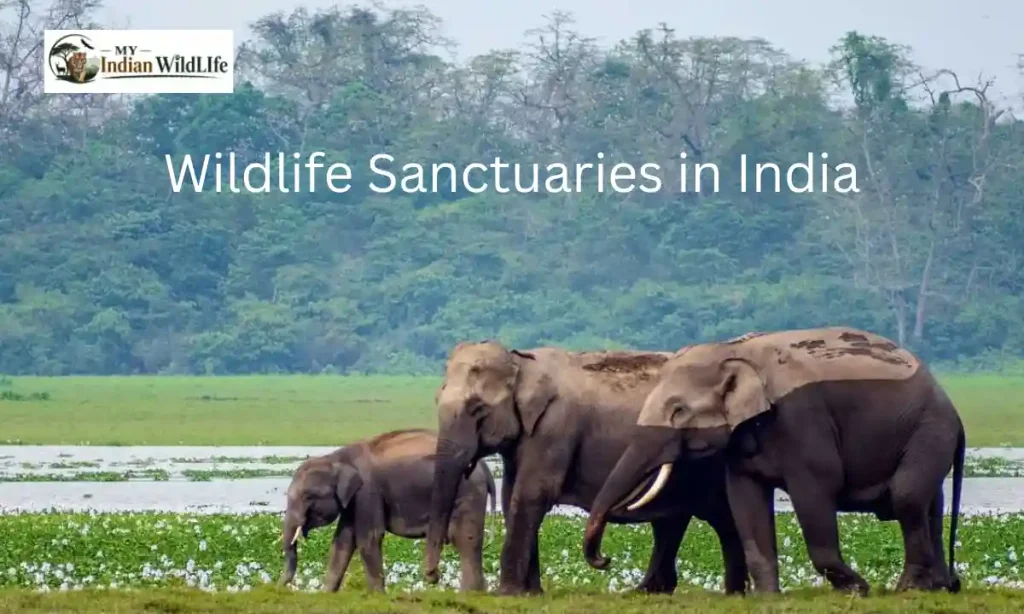
The elephants can be seen in a number of different forest habitats in Southern and North-eastern India. Some of the major sanctuaries where elephants are seen in Kerala, Karnataka, Assam and the nearby regions. Periyar and Wayanad are two such popular sanctuaries of elephants amongst wildlife tourists.
Wildlife Sanctuaries in India Famous for Asiatic Lions
The Gir Wildlife Sanctuary located in Gujarat state is renowned worldwide due to the presence of Asiatic lions. The Gir ecosystem is home to this endangered big cat and has emerged as one of the most famous wildlife reserves in India.
Wildlife Sanctuaries in India Famous for One-Horned Rhinoceros
The Indian single horn rhino is very much linked to the savannah and wetlands of Northeast India. Assam is especially vital in rhino conservation, because the areas here provide favorable environments for the rhinos.
Wildlife Sanctuaries in India Famous for Blackbuck
The blackbuck is generally linked with open grassland and semi-arid areas. Several significant locations for the blackbuck include Gujarat and Rajasthan. Tal Chhapar sanctuary is one of those places that are specifically frequented for sighting blackbucks and grassland birds.
Flora and Fauna in Indian Wildlife Sanctuaries
India’s wildlife sanctuaries are characterized by incredible variety in ecosystems. While a sanctuary in the Himalayan mountains may be entirely different from a sanctuary in the Thar desert and the Western Ghats region, geographical diversity is one of the main reasons why there are many types of wildlife in India.
Flora
Indian wildlife sanctuaries include tropical evergreen forests, deciduous forests, bamboo groves, mangrove forests, grasslands, alpine forests, and desert vegetation. The vegetation type is based on altitude, rainfall, soil, and climatic conditions.
Major Wild Animals
Wild life found in the sanctuaries of India include tigers, leopards, elephants, Asiatic lions, rhinoceroses, deer, gaur, wild buffalos, sloth bears, black bucks, wild asses and
Birds
There is rich bird life found in wetlands and forests. Visitors will find various types of birds like ducks, storks, herons, cranes, eagles, kingfishers, hornbills, and several species that migrate to these areas.
Reptiles and Amphibians
Several reptile and amphibian sanctuaries exist, which provide protection to animals such as crocodiles, gharials, turtles, snakes, lizards, frogs, and many others linked to forests, rivers,
Best Time to Visit Wildlife Sanctuaries in India
There are no fixed seasons as to when one should visit since that will depend on the destination and purpose of the visit. In most forest sanctuaries, the dry and cool weather makes a good time for safaris since it is possible to easily spot wildlife in areas where there is more water and less foliage. This is especially the case in bird sanctuaries and wetlands during the winter season when migratory birds appear.
Things to Do in Wildlife Sanctuaries
Wildlife Safari
An animal safari is one of the most exhilarating adventures that one can go through in a sanctuary. The kind of safari one goes through will depend on the location and one can either use a jeep, boat or any other safari.
Bird Watching
Bird-watching is best done in sanctuaries of forests, grasslands and wetlands. Binoculars should be carried while going bird-watching in the proper season.
Nature Walks
Nature walks can help the visitor gain insight into plant life, insects, birds, and animal tracks of the area. This is especially helpful in gaining knowledge about the finer elements of an ecosystem that are otherwise ignored during the safari.
Trekking
Trekking on the pre-defined path with the permission of concerned authority is provided by some sanctuaries. It enables people to see the flora and fauna in more detail.
Wildlife Photography
Animal sanctuaries are great for wildlife photography. One needs to keep in mind the safety of animals and adhere to the guidelines for photography provided by the forest department.
Wildlife Sanctuary Rules for Visitors
It is expected that the tourists will be respectful towards the conservation zone and follow the guidance provided by the forest department and their guides. Listening to loud music, feeding the animals, littering and trying to get closer to wildlife will not only disturb the animals but also create dangers for themselves.
Wildlife Sanctuary Entry Fees
There are no common admission fees for all the wildlife sanctuaries in India. Fees will vary from one wildlife sanctuary to another and can be any of the following: ticket fee, jeep fee, guide fee, safari fee, camera fee, etc. It is advisable that you verify the latest fee rates from the respective forest department.
How to Reach Wildlife Sanctuaries in India
By Air
Various major sanctuaries for wildlife are located close to airports. On arriving at the airport, one would need to travel further in a taxi, bus, or other form of local transportation to get to the sanctuary.
By Train
Railway is one of the best options that make access to various wildlife locations easy, especially those close to major towns and cities. The nearest railway station allows tourists to take a taxi or bus to get to the sanctuary.
By Road
By road, getting to the sanctuaries will prove to be quite convenient as they are usually found out in the countryside far from the urban areas. It all depends on where one wants to go.
Where to Stay Near Wildlife Sanctuaries
Accommodation options around the sanctuaries include rest houses in the forests, eco-lodges and even hotel resorts. It is easier for those who want to start their safaris very early in the morning to book accommodation close to the entrance. The decision would depend on the budget and facilities around the sanctuary.
Best Wildlife Sanctuaries in India for Families
There are also family-friendly wildlife sanctuaries that can be reached easily by tourists along with other facilities including safari arrangements and comfortable accommodations. In addition, bird sanctuaries and wetland locations are also suitable choices for children since there is wildlife watching without the need of a forest safari.
Best Wildlife Sanctuaries in India for Photography
The wildlife photographers have plenty of choices in India, based on the type of animals that they want to shoot – mammals, birds, landscapes or even reptiles. Mammals can be photographed in forest sanctuaries, whereas wetlands and grasslands are best for shooting birds. Sunrise and sunset give natural lighting, but one needs to stick to the approved safari time.
Best Wildlife Sanctuaries in India for Bird Watching
India has many wetlands and forests where both resident and migrating birds live. Winter turns out to be good at many of India’s wetlands as migrants come from cold countries. There are many bird sanctuaries such as Ranganathittu, Nal Sarovar, Harike and others that are visited by bird watchers.
Wildlife Sanctuary vs National Park
| Feature | Wildlife Sanctuary | National Park |
|---|---|---|
| Main Purpose | Protection of wildlife and habitat | Protection of wildlife and ecosystems |
| Human Activities | Certain regulated activities may be allowed | Generally more restricted |
| Tourism | Allowed under applicable rules | Allowed under strict regulations |
| Habitat | Forests, wetlands, grasslands, deserts and more | Wide range of ecosystems |
| Protection | Strong legal protection | Generally stricter protection |
| Management | Governed by applicable wildlife laws | Governed by applicable wildlife laws |
Wildlife Sanctuary vs Biosphere Reserve
The wildlife sanctuary is a protected area which has been set up for wildlife conservation purposes. The biosphere reserve is a concept which is a little wider than the wildlife sanctuary, and this may also have core areas and buffer areas along with other human activities in addition to transition zones. Hence, the biosphere reserve is on a larger scale.
Wildlife Sanctuaries in India Location on Google Maps
Indian wildlife sanctuaries can be found in several states and UTs and serve as protected areas for animals, birds, and plant species. A visitor will not find it difficult to locate any specific wildlife sanctuary on Google Maps by typing its name together with the name of the state or city. Travelers will be able to use Google Maps to check distances and directions before visiting the destination.
Important Wildlife Protection Laws in India
The wildlife conservation efforts in India are aided by legislative and administrative tools which ensure safety for flora, fauna, and their natural habitat. One of the key legislative acts in wildlife conservation in India is the Wildlife (Protection) Act of 1972 which serves as the foundation for establishing various protected wildlife areas.
Tips for Visiting Wildlife Sanctuaries in India
- Follow all the guidance provided by forest officials or guides.
- Do not feed or try to touch any wild animals.
- Keep yourself at a safe distance from wildlife.
- Do not listen to loud music or generate unnecessary noise.
- Do not litter with plastics or any other garbage in protected zones.
- Wear appropriate clothes and shoes.
- Use binoculars for bird watching.
- Stick to the prescribed safari path.
- Note down the safari time and entry regulations before you travel.
- Always carry your permits and identity proofs with you.
Conclusion
The wildlife sanctuaries in India constitute some of the best examples of natural conservation zones in the country. Starting from Asiatic lions in Gujarat, elephants in Western Ghats and up to the wildlife of the Himalayas, desert wildlife and migratory birds, each of the sanctuaries offers protection to different types of India’s rich biodiversity. There are 574 wildlife sanctuaries spread across 1.27 lakh sq. km in India today.
A visit to a wildlife sanctuary offers you not only a chance to observe animals in their natural habitat but also the realization of the significance of forest, wetland, grassland and other types of conservation. Through responsible tourism and proper conservation efforts, the sanctuaries will be able to preserve India’s rich wildlife and heritage in the years to come.
Faqs
How many wildlife sanctuaries are there in India?
According to the Wildlife Institute of India’s February 2025 database, India has 574 existing wildlife sanctuaries covering 1,27,241.24 sq. km.
Which is one of the largest wildlife sanctuaries in India?
Kachchh Desert Wildlife Sanctuary in Gujarat is one of the largest, with an area of about 7,506.22 sq. km in the WII database.
Which wildlife sanctuary is famous for Asiatic lions?
Gir Wildlife Sanctuary in Gujarat is famous for Asiatic lions and is one of India’s most important lion conservation areas.
Which wildlife sanctuary is famous for elephants?
Periyar and Wayanad in Kerala are among the well-known wildlife sanctuaries associated with elephant habitats.
Which state is famous for wildlife sanctuaries?
Gujarat, Kerala, Karnataka, Rajasthan, Madhya Pradesh, Maharashtra, Assam and several other states have well-known wildlife sanctuaries with different types of habitats and species.
What is the best time to visit wildlife sanctuaries in India?
The best season varies by sanctuary, but cooler and drier months are generally comfortable for wildlife tourism. Winter is especially useful for bird watching at many wetlands.
Can tourists go on safari in wildlife sanctuaries?
Yes, many popular sanctuaries provide regulated safari experiences. Depending on the location, these may include jeep, boat or guided nature tours.
Are wildlife sanctuaries safe for tourists?
Wildlife sanctuaries can be visited safely when tourists follow official instructions, remain with authorized guides where required and maintain a safe distance from wild animals.
What should I carry to a wildlife sanctuary?
Comfortable clothing, suitable footwear, binoculars, drinking water, sun protection and a camera can be useful. Visitors should also check which items are permitted inside the sanctuary.
Why are wildlife sanctuaries important?
Wildlife sanctuaries protect animals, plants and natural habitats while supporting biodiversity conservation. They also provide opportunities for research, environmental education and responsible wildlife tourism.
Also,Read About: Sukhna Wildlife Sanctuary: Location, Area, Flora, Fauna, Eco-Sensitive Zone and UPSC Facts