
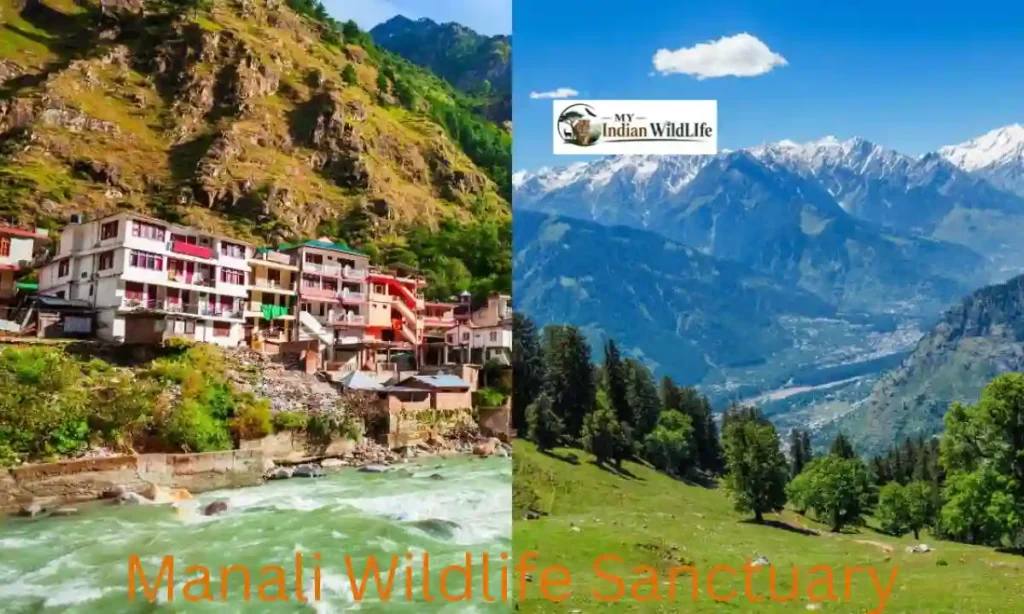
Manali Wildlife Sanctuary is one of the important protected natural sites in Himachal Pradesh, situated near the famous hill station of Manali. Enveloped by the majestic Himalayan range, the wildlife sanctuary is famous for its dense forests, mountainous terrain, and flora and fauna. The tranquil setting renders it a fascinating spot for tourists who wish to explore the natural side of Manali away from its bustling tourist spots.
The wildlife sanctuary is famous for its forest ecosystem that comprises of deodar, kail, horse chestnut, walnut and maple trees. It is the natural habitat for a variety of Himalayan fauna and avian species. The combination of forest cover, mountains, and cool climate makes the wildlife sanctuary a fascinating spot for nature and wildlife lovers as well as those who have interest in the Himalayan environs.
About Manali Wildlife Sanctuary
Manali Wildlife Sanctuary is an area designated as a protected wildlife area located at the foothills of Manalsu Khad in the vicinity of the Himalayan forests. The wildlife sanctuary was established in the year 1954 and it comprises an area of approximately 29 square kilometers. Manali Wildlife Sanctuary is a very important part of the natural environment of Manali and it is responsible for preserving the natural resources of forests and wildlife in the area. The wildlife sanctuary has a rugged mountainous topography covered with thick vegetation. Its climatic conditions are mostly cool and are typical of the Himalayas. Different types of mammals and birds thrive in its forests while some Himalayan species find a favorable environment in its inaccessible higher areas.
Manali Wildlife Sanctuary History
The history of Manali Wildlife Sanctuary is deeply associated with the conservation of the Himalayan forests around Manali. The sanctuary was notified in the year 1954 with the objective of preserving the forest ecosystem and wildlife found in the region. Over time, the protected sanctuary has maintained its relevance in the realm of Himachal Pradesh conservation. It is relevant to note that the protected forests are of significance owing to their contribution towards the preservation of natural flora near one of the highly visited tourist sites in Himachal Pradesh. In addition, the conservation of the protected forests ensures that habitat for local wildlife and birds is preserved.
Manali Wildlife Sanctuary Location
Manali Wildlife Sanctuary is situated near Manali in Kullu district of Himachal Pradesh. Proximity to Manali makes this site relatively easy to access for tourists seeking an outing involving nature and wildlife in their tour of the Himalayan region. The sanctuary occupies mountainous areas covered by forest in the vicinity of Manalsu.Due to the location in the Himalayan region, the scenery differs according to the height. Tourists visiting the sanctuary have a chance to enjoy the forest, mountain, cool air and views of surrounding hills. Being close to other tourist sites in Manali, visitors can combine both in one visit.
Manali Wildlife Sanctuary Area
Area of Notification of Manali Wildlife Sanctuary is 29 square kilometers. Although it may not be one of the biggest wildlife sanctuaries in Himachal Pradesh, it is an important one due to its geographical location and significance. The sanctuary consists of forests and mountains where species native to the Himalayan region can be found.This small size of the sanctuary also makes it easy for tourists who wish to explore the natural environment around Manali without having to travel to another place specifically for wildlife. Nevertheless, sightings depend on various factors.
Manali Wildlife Sanctuary Timings
Conditions regarding visits and access for the protected forests area can be varied depending on season, weather, forest department rules, and other circumstances. Therefore, visitors must ensure to have the latest visiting information before making any plans. Visits during morning hours are usually preferable when one needs to feel the presence of nature, as there is less hustle in the forest and animals/birds might be quite active at that time. Visitors must always pay heed to the guidelines of forest authorities.
Manali Wildlife Sanctuary Entry Fee
The entrance fee and other charges, if any, may depend upon the regulations prevailing at the forest department and the kind of permission allowed to the visitors. The charges and permission levels are variable, and thus it is advisable for the visitors to get updated regarding the same.The visitors should also be aware that a wildlife sanctuary is not the same as a commercial tourist destination. Certain places could have been prohibited for some reasons.
Best Time to Visit Manali Wildlife Sanctuary
However, the optimal time for visiting the Manali Wildlife Sanctuary would be contingent upon what kind of experience a traveller desires to have. More comfortable conditions could be found during the nice months in order to take a tour of the forests surrounding the sanctuary and enjoy the beautiful scenery of the Himalayas.Winters could be chilly in Manali, with possibilities of snowfall. Therefore, a traveller considering visiting the wildlife sanctuary in winter must find out about the climate in the area and plan accordingly. Travellers interested in going on a nature walk or photography tours would definitely find such a time more conducive to their experience.
Weather and Climate of Manali Wildlife Sanctuary
Manali Wildlife Sanctuary features a Himalayan mountainous type of climate where the weather differs depending on the altitude and season. Summer is fairly cool in comparison with the plains, and winter can be extremely cold with snowfall at times. The monsoon season witnesses rains, which make the forest trails muddy for travelers.The weather in the mountains can turn around anytime, and therefore visitors are advised to pack appropriate clothing despite traveling in summer. Good walking shoes, a raincoat and warm clothes would help in making the trip enjoyable.
How to Reach Manali Wildlife Sanctuary
The place is very much linked to some important cities of northern India through roadways and therefore roadways are the best way of getting there. After arriving at Manali, people can make use of the local cabs to get to the access point of the park.People who come from different parts of the country to Himachal Pradesh can also choose to combine air or rail transport with roadways to get to Manali. As the sanctuary is located in a mountainous area, the last bit of the trip is through the hilly areas.
Manali Wildlife Sanctuary by Air
The closest major airport for visitors heading to Manali is Bhuntar Airport, which is also referred to as Kullu-Manali Airport. This airport lies in the Kullu district and offers an air link to the Kullu-Manali area. Travellers from this airport can proceed to Manali through taxis or other means of road transport.Flight timings may change according to seasons or other operational aspects. Travellers are advised to check for any availability of flights before planning their trip.
Manali Wildlife Sanctuary by Train
There is no railway station of great significance present directly at Manali. For those who plan to use the rail transport system for getting there, it becomes necessary to board a train and reach a nearby railway station first before proceeding on the road journey further. There is one such railway station at Joginder Nagar.Those coming from far-off places within India might consider making their way to Manali through Chandigarh or some other rail-connection city and thereafter proceeding through road transport to their destination.
Manali Wildlife Sanctuary by Road
Road transport can serve as one of the most practical means to get to Manali. Manali is linked with Chandigarh, Delhi, and other places in Himachal Pradesh via various high roads and mountain roads. Bus services, private cars, and taxis are some of the common means of transport to get to Manali.After reaching Manali, people can resort to local transport to get to the sanctuary area. Mountain roads might be affected by the climate, traffic, and landslides at times; thus, it is recommended that the road condition be checked prior to traveling.
Flora of Manali Wildlife Sanctuary
The Manali Wildlife Sanctuary is famous for its abundant Himalayan vegetation and forest cover. The sanctuary has both coniferous and broad-leaved trees which form the natural environment of the flora and fauna and birds here. Some of the important trees found in the forests in the area include deodar, kail, maple, walnut, and horse chestnut.The type of vegetation depends on the altitude and climate of the place. The thick forest cover makes the sanctuary very beautiful in addition to maintaining the stability of the soil, water sources, and ecology. There are changes in the look and color of the forests depending on the season.
Fauna of Manali Wildlife Sanctuary
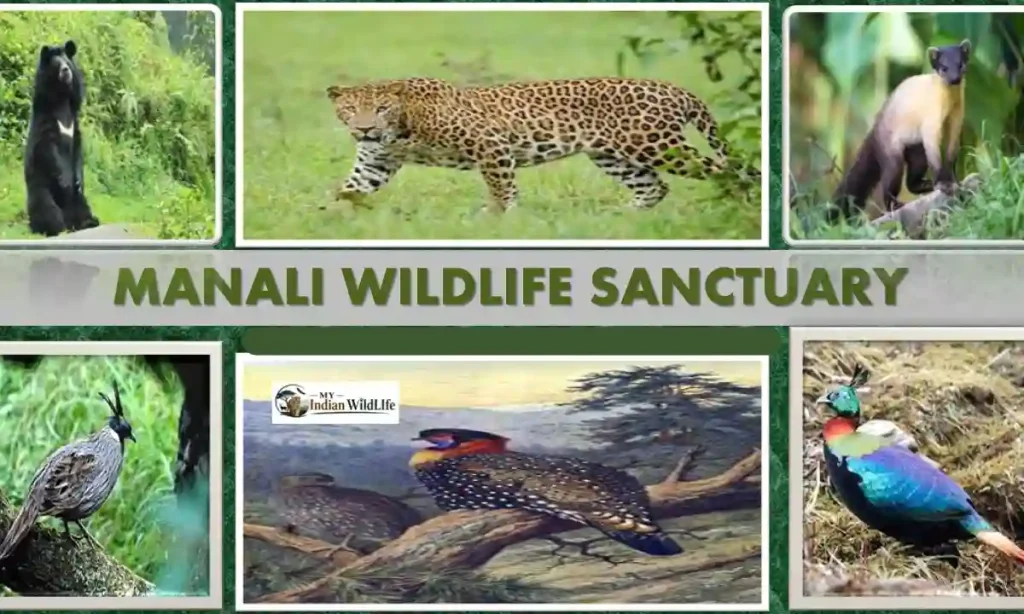
Manali Wildlife Sanctuary has several animal species inhabiting its forests that are native to the Himalayan ecosystem. Among the wildlife species found in the sanctuary include the Himalayan black bear, musk deer, leopard, and many other mountainous animals. However, some of these animals can be hard to spot due to living deep within the forested regions.Animal spotting cannot be guaranteed since their movements depend on the presence of food sources, weather, season, and human activities. It is advisable to keep a safe distance from the animals and do not attempt to lure them through noise or otherwise.
Animals Found in Manali Wildlife Sanctuary
Manali Wildlife Sanctuary is a home for various forms of wildlife in the Himalayas. Dense forest, hilly regions and areas that remain untouched provide a proper environment for various mammals. While some mammals thrive better in the forested areas below, other mammals tend to favor heights.Tourists must keep in mind that the wildlife sanctuary is first and foremost a sanctuary and not a zoo. Wild animals have the freedom to move about in their natural environment, thus finding them may take some effort.
Himalayan Black Bear
Another interesting mammal found in the region’s forests is the Himalayan black bear. These animals usually favor forest habitats because that is where they can find their food and places to take shelter. This particular species is active at specific times of the day and will try to avoid areas that have a lot of humans.Due to the fact that this is a wild animal with great strength, it should not be approached under any circumstances and should certainly not be fed.
Musk Deer
One such mammal of the Himalayas that is rather interesting is the Musk Deer. These are quite shy creatures and therefore, it becomes tough to spot them in their natural environment. Being fond of forests and mountains, protected areas play a very crucial role in their preservation.The Musk Deer is one such animal that wildlife watchers find fascinating. These are due to their unique look as well as their association with the Himalayas.
Leopard
Leopards can be considered some of the largest carnivores found in the Himalayas. Leopards tend to be shy and keep away from humans. Their existence helps to maintain the ecological balance in the ecosystem.To see leopards in the natural forests is a rare thing that must not be expected during your visit to the area. It is important for visitors to stick to the trails specified by the authorities.
Snow Leopard
The snow leopard is among the most popular animals found in the Himalayas, even though they are elusive and live in areas with altitude suitable for their survival. If you are visiting Manali Wildlife Sanctuary, it would be wrong to hope that you can see a snow leopard just because the animal is present in the Himalayan ecosystem.Snow leopards mostly live in rugged mountainous terrain. Their preservation is vital in the Himalayan ecosystem and helps conserve mountain wildlife.
Himalayan Ibex
Himalayan Ibex is a wild goat species that thrives in high altitude and rugged Himalayan habitat regions. Its strong body structure and capability to climb enables it to navigate steep regions where other animals would find it difficult to move.However, the species is not necessarily connected with an area within easy reach of tourists but the high altitude habitat region. Tourists who are looking for a sighting of Himalayan mammals need to look at the broader habitat region.
Other Himalayan Wildlife
Besides the well-known species of wildlife, the Himalayan forest in Manali region has many different small mammals and other wildlife creatures. It depends on elevation, time of year and environment which species will be found in this area.That makes the sanctuary not only important for large wildlife species, but also helps to maintain functioning Himalayan forest ecosystem. In cases when visitors do not spot any big animals, they still can enjoy the nature by following the tracks and sounds of the animals in the forest.
Birds Found in Manali Wildlife Sanctuary
Manali Wildlife Sanctuary is important to the ornithologist since its forest ecosystem makes it possible for some of the Himalayan bird species to thrive. The presence of thick forest cover and varying levels of elevation allows the visitor to spot resident and migratory bird species.It is always better to watch the birds in silence in order to increase one’s chance of spotting them. Binoculars come in handy for this activity.
Himalayan Monal
The Himalayan monal is one of the most beautiful birds from the Himalayan region. Due to its colorful feathers, it is especially favored by bird watchers and wildlife photographers.It normally favors mountainous forested environments and may be hard to spot in regions where there is a lot of human activity. Bird watching walks early in the morning would be ideal.
Western Tragopan
Another equally significant bird belonging to the Himalayas is the Western Tragopan. It is easily distinguishable because of its unique appearance and is a significant species from the point of view of conservation.It is a rather shy bird and is difficult to locate. Tourists are advised not to chase any birds or enter any forests which are off-limits in search of photographs.
Koklass Pheasant
Koklass pheasant is yet another type of bird found in the Himalayas that could be related to forest birds in Manali, as it likes woody mountains and normally avoids areas of disturbance.For bird watching, one can hear calls before seeing the bird. Silent environment and proper observation skills are helpful while bird watching in the Himalayan forests.
Other Himalayan Birds
The forest ecosystem also offers home for a number of other birds, both small forest birds and those that migrate according to seasons at different elevations. The kind of birds you can see on your visit will thus change depending on the time of year.For taking pictures of birds, visitors should use appropriate equipment and also keep their distance. The well-being of the birds must always come before any good photo.
Vegetation and Forests of Manali Wildlife Sanctuary
Manali Wildlife Sanctuary forests are an essential component of the Himalayan ecosystem. Deodar and Kail trees, alongside broad-leafed trees like maple, walnut and horse-chestnut, help give the area its special character.There are many roles that these forests play within the ecological system. The forests provide protection for the wildlife and food for the wildlife; they are home to insects and birds and they assist in protecting the mountain soil and also the water cycle.
Things to Do in Manali Wildlife Sanctuary
The tour to Manali Wildlife Sanctuary is more towards enjoying nature than indulging in a recreational activity that is more usual. The visitors may engage themselves in the exploration of natural environment along with bird watching and taking photographs of the landscapes.This kind of recreational activity is quite delightful for those travelers who love tranquil outdoor activities. Based on the allowed access and forest rules, one may indulge in nature watching and exploring natural areas.
Wildlife Spotting
Seeing wild animals is another significant attraction which makes the sanctuary interesting for nature enthusiasts. The forest offers a natural home to various animals from the Himalayas, although sightings wholly depend upon nature only.One must be silent and not disturb any flora and fauna during the visit. Binoculars can make it easy to see animals.
Bird Watching
Bird-watching could also be one of the most exciting activities in the sanctuary. The presence of vegetation within the forest and the altitude of the Himalayas make perfect habitat for various bird species.It is usually advisable to conduct bird-watching in the early morning hours due to the peaceful environment in the forest at that time. A set of binoculars and a basic guide on birds would help in this regard.
Nature Walks
Nature walks enable people to interact with the forest setting at a relaxed pace. It is not only about spotting animals but allows one to view the trees, plants, birds, insects, mountains, and the sounds of nature.People have to adhere to approved paths and instructions. Suitable shoes are necessary since forest and mountain trails may be rough.
Forest Exploration
Exploring the forest offers an insight into the natural surroundings of Manali. Tourists will get a chance to see the various forms of vegetation and observe the variations in the environment depending on altitude.However, one must ensure that the exploration does not go beyond the permitted limits. Venturing into the restricted regions of the forests poses safety hazards.
Photography
Photography of landscapes, forests, birds, and nature is possible at Manali Wildlife Sanctuary. The presence of tall trees, mountains, and natural light makes it possible to take good photos any time of the year.It is important to note that wildlife photography must always be done from a safe distance. Food and other methods to lure animals or birds into taking a photo are prohibited.
Trekking and Hiking
Manali’s mountainous environs make it possible to engage in trekking and hiking activities; however, one cannot simply use any route for trekking because the area falls within a wildlife sanctuary with strict rules governing the use of the forests.One needs to ensure he/she is aware of the permissible routes, weather patterns, and other details before embarking on the trekking mission. Trekking equipment like proper footwear, drinking water, warm clothes, and safety gear can be handy.

Trekking Routes Near Manali Wildlife Sanctuary
There are various possibilities for trekking and hiking within the Himalayan region surrounding Manali, though not all forest paths can be accessed by travelers. Entry into trekking trails in protected areas will be based on the conditions of the forest department as well as climatic conditions prevailing at the time.The environment surrounding Manali is ideal for nature walking and long trekking expeditions. Trekkers get to experience forest scenery as well as the mountains and the changes in vegetation along the way. The terrain can become slippery in certain sections of the trail, hence the need for proper hiking gear.
Nature and Wildlife Photography
Manali Wildlife Sanctuary offers a perfect environment for taking photos of nature thanks to its forests, mountain ranges, birds, and changing landscapes depending on the season. The deodar trees and vegetation as well as the magnificent scenery of the Himalayas can make good subjects for photography. It is advisable to take photos early in the morning or in the evening.It is important to pay special attention to wildlife photography since wild animals should not be bothered or touched. Instead, one should use a telephoto lens or binoculars rather than approaching wild animals.
Manali Wildlife Sanctuary Rules and Regulations
As a wildlife sanctuary, it is essential to maintain all conservation laws that exist here with the objective of conserving the forests, wild life and people. Visitors must stick to the approved places and follow the guidance of forest officials and authorities in case any exists. Entry into restricted regions without valid authorization is prohibited.Visitors are not supposed to feed the wild animals or damage the plants. Moreover, they should not litter in the forest and create noise unnecessarily. Proper disposal of plastic waste is required in specific locations.
Safety Tips for Visitors
Safety becomes paramount in case of adventure in the forest and mountains. People ought to follow the given paths and refrain from moving alone in the unknown parts of the forest since there are risks due to changes in weather and slippery routes in the mountainous regions.It is necessary to watch wild animals from a distance. It is not advisable to try to touch, chase or take pictures from very close quarters. It is important to have drinking water, some medicine, appropriate clothes, and a fully-charged mobile phone.
What to Carry for Manali Wildlife Sanctuary
People visiting should be prepared depending on the season and kind of outdoor sport that will be done. Sturdy shoes would come in handy because some of the trails may not be that smooth. People are advised to dress warm regardless of the favorable seasons because there are weather changes in the mountains.A daypack, drinking water, sunglasses, sunscreen, binoculars, and a raincoat would also be helpful for the visitors. Those who intend to take wildlife pictures can have cameras with telescopic lenses, while the trekkers should include other items as well.
Best Places to Visit Near Manali Wildlife Sanctuary
Visiting the sanctuary also means that it is close to some well-known sites in and around Manali. People are able to plan a trip to the wilderness along with the visits to temples, rivers, ancient villages, parks, and the hills.The actual amount of time required to reach one place from another varies depending on the traffic situation and other factors. It is possible to spend time leisurely.
Hidimba Devi Temple
One of the popular cultural destinations of Manali is Hidimba Devi Temple. This temple is famous for its traditional Himlayan architecture style which is situated in a forest area surrounded by tall deodar trees.The location of this temple makes it an easy destination to be visited along with other natural destinations in and around Manali. It is an experience totally different from that of the commercial areas of Manali.
Old Manali
Old Manali is famous for its laid-back ambiance, historic buildings, coffee shops, and mountain paths. It provides an escape from the hustle and bustle of the center of Manali.Tourists may take their time to walk around, sample some cuisine, and enjoy the unique mountain town feel of the place. Old Manali can definitely be added to a sightseeing tour of Manali.
Manu Temple
Manu Temple is another important religious attraction in Manali. Dedicated to Sage Manu, the temple is situated in the Old Manali area and is surrounded by mountain scenery.The temple is visited by both pilgrims and tourists interested in the cultural heritage of the region. Its location makes it convenient to combine with other attractions in Old Manali.
Beas River
The Beas River forms one of the main natural landmarks of the Manali area. Its crystal clear waters and rocky shores, along with the neighboring hills, contribute to the overall picturesque appearance of the location.One can observe the river from various spots in Manali. Yet, it is important to be careful when standing next to the river, as the currents there can be quite strong.
Manali Nature Park
Another eco-friendly place not far from the town is the Manali Nature Park, which offers forest environment and the sight of the Beas River. This is a more peaceful place, as it is less crowded than some other places of interest.The place is great for peaceful walks and observing nature. It may also become part of your sightseeing route along with Old Manali and other sights nearby.
Vashisht Temple and Hot Springs
Vashisht is one of the many villages situated close to Manali, where one can find an old temple as well as natural hot water springs. This place offers tourists a blend of religious aspects along with an authentic mountain village feel.This place is frequently included in the tour plan to Manali due to the fact that it can be visited in a day’s trip.
Solang Valley
One of the major recreational spots in the vicinity of Manali is Solang Valley. This place is characterized by scenic beauty and adventure sports; however, the range of such sports varies from season to season as well as from weather conditions.Unlike Manali Wildlife Sanctuary, which is characterized by a forest zone, Solang Valley is quite unique in terms of its landscape and features.
Places to Stay Near Manali Wildlife Sanctuary
There are many types of accommodations available in Manali; some of these include hotels, resorts, guest houses, hostels, and homestays. Accommodation in or around Manali city will be ideal because tourists have access to eating places, transportation, and sightseeing spots from there.If tourists are looking for peaceful accommodations, they may choose those that are around Old Manali or nearby residential areas. There are several things that tourists should keep in mind while choosing an accommodation place.
Restaurants and Food Options Near Manali Wildlife Sanctuary
There are numerous restaurants and cafes in Manali that provide North Indian, Himachali, Tibetan, Chinese and many other kinds of cuisines. The Old Manali area and the market areas have the greatest variety of foods available.Those staying for more than a few hours in the forest area must carry water and some snack foods wherever it is allowed. Foods must never be carried inside the sanctuary since it will disturb the animals.
Parking Facility Near Manali Wildlife Sanctuary
The availability of parking space is determined by the exact access point and local laws. Travelers need to park in designated parking spaces and avoid parking their vehicles on narrow forest roads and blocking local pathways.In case there is a rush season when most tourists visit Manali, then parking places near tourist attractions will be full. Travelers traveling through private transport must plan accordingly.
Manali Wildlife Sanctuary Google Maps
A Google Map is beneficial for the trip planning as the sanctuary is situated in a hilly region and access points may not be the same as the usual location of the Manali town. It is advisable to confirm the destination and way beforehand.In an article, Google Map needs to be included after the information about location and mode of transport. The inclusion of map at this point will help the reader visualize the location of the sanctuary in relation to Manali town.
How Much Time Is Required to Explore Manali Wildlife Sanctuary?
The time needed will depend on the level of access, the walking path, and the activity options preferred by visitors. A short trip can be limited to the forest areas and viewpoints around, while those who love nature can spend more time along the designated trails.Those intending to see the sanctuary along with other attractions at Manali need to allocate time for transport between places. The mountainous roads and heavy tourist traffic could slow down the travel process.
Is Manali Wildlife Sanctuary Safe for Tourists?
Manali Wildlife Sanctuary can be visited safely by keeping to the rules of the forest as well as general guidelines on how to behave around wildlife. The first and foremost of all these guidelines is to keep a safe distance from the animals and not to venture into forbidden territory.The weather and landscape can also pose problems. Visitors need to be aware of weather conditions and use appropriate footwear while avoiding dangerous routes when such conditions prevail.
Manali Wildlife Sanctuary Travel Tips
The visit to Manali Wildlife Sanctuary would be more rewarding for you if you plan in advance. Before you make your journey, it would be good if you keep track of the prevailing weather conditions and the access conditions locally since the weather in the mountains can be unpredictable.In addition, it would be prudent for you to observe and show consideration to the natural environment. You need not play loud music, litter, or feed the animals. Instead, if you are into photography, it would be better if you take binoculars or a camera.
Dos and Don’ts at Manali Wildlife Sanctuary
Visitors must adhere to wildlife tourism guidelines all through their trip. Visitors must stick to designated paths, take instructions from forest department authorities, and remain at a safe distance from animals and birds. Use of reusable water bottles instead of disposable plastic bottles is an important way to conserve the forest.Feeding of wildlife, chasing of animals, destroying vegetation, and littering are prohibited activities. Making noise that might upset birds and animals is discouraged. Visitors should not enter forbidden zones just for the purpose of taking pictures or exploring off-limits areas.
Best Time for Wildlife and Bird Watching
The most suitable season for watching wildlife and birds depends upon weather, the state of the forests, and movement of animals. The good seasons, on the other hand, are better for spending time outdoors and observing nature due to better climatic conditions.Morning is a good time for bird watching since there are many active birds around and the forest is quiet. Wild animal watching will always be a hit-and-miss affair, and visitors must concentrate on experiencing nature rather than on observing any specific wild animal.
Manali Wildlife Sanctuary One-Day Travel Plan
The one-day tour can be arranged by adding the sanctity along with some attractions in Manali. People can start their day with a nature walk in the morning when the weather is pleasant and the surroundings are calm. After having a good time at some of the permissible areas, they can come back to Manali for having their breakfast or lunch.People can visit other places such as Hidimba Devi Temple, Old Manali, Manali Nature Park, or the Beas River in the second part of their day. There should be enough time kept by travellers for travelling due to traffic and difficult road conditions.
Manali Wildlife Sanctuary Trip Budget
The cost of the whole tour to the Manali Wildlife Sanctuary will depend upon the starting point of the traveller, mode of transport, stay, food and costs incurred for sightseeing. Travellers visiting Manali may incorporate the sanctuary in their sightseeing tour because it is quite near to Manali.
| Expense | Approximate Cost Range |
|---|---|
| Local Transport | ₹300–₹1,500 |
| Food | ₹300–₹800 per person |
| Budget Accommodation | ₹800–₹2,000 per night |
| Mid-Range Accommodation | ₹2,000–₹5,000 per night |
| Local Sightseeing | ₹1,000–₹3,000 |
| Miscellaneous Expenses | ₹300–₹1,000 |
These are only approximations for planning purposes and are not firm prices. Costs will vary greatly during weekends, holidays, tourist peaks, and times of high demand.
Nearby Tourist Attractions Distance from Manali Wildlife Sanctuary
There are many popular places that could be part of the same Manali trip. As road distances and travel time are dependent on the starting point and the route itself, travelers need to verify the latest map before embarking on their journey.
| Tourist Attraction | Approximate Distance from Manali Area |
|---|---|
| Hidimba Devi Temple | Around 2–3 km |
| Old Manali | Around 2–3 km |
| Manu Temple | Around 3–4 km |
| Manali Nature Park | Around 3–4 km |
| Vashisht | Around 4–5 km |
| Solang Valley | Around 13–15 km |
These distances are rough estimates and can be affected by the specific point of access to the sanctuary and the chosen path.
Why Should You Visit Manali Wildlife Sanctuary?
At Manali Wildlife Sanctuary, you will get a chance to see the natural side of Manali. Unlike the other places that concentrate purely on business, you have a chance to see Himalayan forest, watch birds and learn more about the wildlife and flora of the region.The proximity of this place to Manali makes it easy for you to incorporate it into your tour. For nature enthusiasts, photographers and people interested in the ecosystem of the Himalayas, Manali Wildlife Sanctuary is definitely a must-see place.
Pros and Cons of Visiting Manali Wildlife Sanctuary
| Pros | Cons |
|---|---|
| Beautiful Himalayan forest environment | Wildlife sightings are not guaranteed |
| Close to Manali town | Weather can change quickly |
| Good for nature observation | Some areas may have restricted access |
| Suitable for bird watching | Mountain trails can be uneven |
| Excellent natural photography opportunities | Peak seasons can be crowded around Manali |
| Can be combined with nearby attractions | Accessibility may vary with weather |
Conclusion
Manali Wildlife Sanctuary is one of the important protected areas of nature located in the Himalayan region of Himachal Pradesh. It serves as an attractive tourist spot due to the presence of forest and mountain terrain along with local wildlife and birds. Thus, it could serve as an interesting place for tourists to enjoy nature close to Manali.Visiting the place responsibly is essential since it is not a usual tourist park but a protected eco-system. Tourists must abide by the rules regarding the forest and should not disturb the wildlife or spoil the surrounding environment. Proper planning can help tourists enjoy nature along with other attractions in Manali.
Faqs
Where is Manali Wildlife Sanctuary located?
Manali Wildlife Sanctuary is located near Manali in Kullu district of Himachal Pradesh. It lies within the Himalayan forest landscape surrounding the Manalsu area.
What is the area of Manali Wildlife Sanctuary?
Manali Wildlife Sanctuary covers an area of approximately 29 square kilometres.
When was Manali Wildlife Sanctuary established?
The area was notified as a wildlife sanctuary in 1954.
Which animals are found in Manali Wildlife Sanctuary?
The Himalayan forest ecosystem supports species such as Himalayan black bear, musk deer, leopard and other wildlife associated with the region.
Which birds can be seen in Manali Wildlife Sanctuary?
Birdlife associated with the Himalayan forests includes species such as Himalayan monal, Western tragopan and Koklass pheasant, along with various other mountain birds.
What is the best time to visit Manali Wildlife Sanctuary?
The pleasant months are generally suitable for exploring the sanctuary, while the ideal period can vary depending on weather, access conditions and the visitor’s interests.
Can tourists go trekking in Manali Wildlife Sanctuary?
Trekking or walking inside protected areas depends on permitted routes and current forest regulations. Visitors should use only authorised trails and check local guidelines before starting.
Is Manali Wildlife Sanctuary suitable for families?
Families interested in nature and forest environments can consider visiting, provided they follow safety instructions and choose suitable permitted areas and walking routes.
Can I see wildlife easily at Manali Wildlife Sanctuary?
Wildlife sightings are not guaranteed. Animals live in their natural habitat and may remain hidden because of vegetation, weather, season and human activity.
Is photography allowed at Manali Wildlife Sanctuary?
Nature and landscape photography can be enjoyed where permitted. Visitors should follow local rules and avoid disturbing wildlife for photographs.
How far is Manali Wildlife Sanctuary from Manali town?
The sanctuary is located close to Manali, making it relatively convenient to include in a Manali sightseeing itinerary. The exact distance depends on the particular access point.
What should I carry while visiting Manali Wildlife Sanctuary?
Visitors should consider carrying comfortable walking shoes, drinking water, weather-appropriate clothing, sunglasses, sunscreen and binoculars. A rain jacket can also be useful because mountain weather can change quickly.
Also,Read About: Wildlife Sanctuary in Goa – Complete Guide to Goa’s Wildlife Sanctuaries