

Forests and wildlife resources are some of the most valuable natural resources available on this earth. Forests supply essential items like timber, bamboo, fuelwood, fruits, medicines, and fiber, whereas wildlife comprises living creatures like animals, birds, insects, and others which play an essential role in natural ecosystems. Both forests and wildlife contribute significantly in maintaining ecological balance and sustaining innumerable forms of life.
Rich biodiversity of India is the result of diverse geography of the country which consists of Himalayas and deserts on one side and tropical forests, coasts, and islands on the other side. Various climates and environments provide suitable conditions for survival of a wide range of flora and fauna. But increasing human interventions are putting tremendous pressure on these natural resources.
Therefore, conservation of forests and wildlife has become an essential environmental issue. Activities like deforestation, degradation of habitat, poaching, pollution, mining, farming, and infrastructure development may cause reduction in biodiversity and endangering of several species. Appreciating the significance of natural resources is the first step towards their conservation and sustainable utilization.
What Are Forest and Wildlife Resources?
Forest resources can be defined as the natural resources available from the forest ecosystem as well as the environmental services rendered by forests. Forests give products like wood, bamboo, fruits, leaves, gums, resins, medicinal plants, and other resources. They also serve the purpose of protecting the soil, conservation of water, regulation of climatic conditions and providing cover to different types of species.
Wildlife resources can be described as wild animals, birds, reptiles, amphibians, insects and other forms of organisms that live in their natural environment. The term wildlife does not only include larger animals like tigers, elephants, or lions; smaller animals also perform significant roles in the functioning of the ecosystem and food chains. The two are strongly related in such a way that the forests give food, habitat and breeding places to several forms of species. At the same time, the animals and other organisms help in activities like pollination, dispersal of seeds and other ecological processes.
Why Are Forest and Wildlife Resources Important?
The forests and wildlife have ecological importance, and this is because they undertake some ecological roles. Forest vegetation removes carbon dioxide from the environment, produces oxygen, regulates temperature and participates in the water cycle. Roots of trees stabilize the soil and prevent soil erosion, while forest cover can stabilize groundwater.
Resources like forests are also economically useful to different communities, since forest-dependent communities derive various products such as foods, fuel wood, medicines and other products. Economic uses of these resources are very important, because when resources are exploited in an unsustainable way, it would destroy the very resources upon which the communities rely. Ecologically, wildlife is very important, because animals exist within a food chain and food web and play important roles within the ecosystem. Wildlife includes predators, herbivores, insects, birds and microorganisms among others.
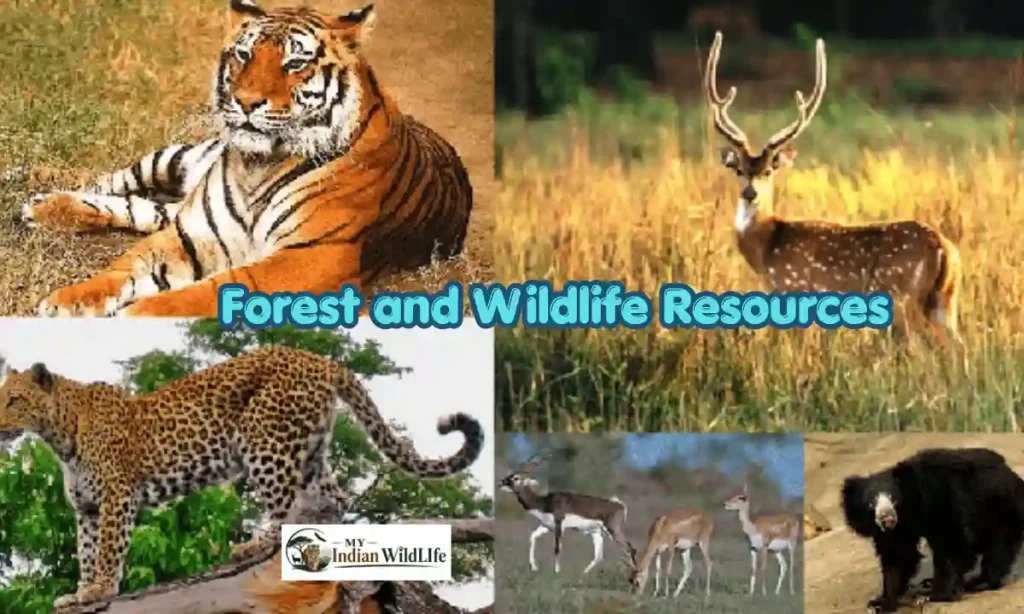
Biodiversity and Its Importance
Biodiversity refers to the diversity of living organisms that are present in a specific geographical area or globally. It encompasses the diversity of plants, animals, and microorganisms as well as their ecosystems. India has high biodiversity owing to its diverse physical environment and varied climate.
Biodiversity is of great significance from ecological, economic, scientific and cultural aspects. Various species play a role in maintaining ecosystem stability and provide us with a source of food, medicinal value and genetics. Biodiversity helps ecosystems cope with changes in the environment. Diversity loss could bring about various long term effects. As habitats and species get lost, there could be disruptions in ecological interactions. Hence, conservation measures do not only include the protection of the species themselves but also their habitat and ecosystems.
Flora and Fauna in India
India has an amazing diversity of flora and fauna. Flora essentially means the plant life in a specific region, while fauna means animal life. The diverse climatic regions of India and varied landforms form a number of ecosystems including forests, grasslands, wetlands, mountains, deserts, and coastal regions.
India’s forests house a number of tree, shrub, herb, climber and medicinal plant species. Wildlife in India consists of mammals, birds, reptiles, amphibians, fishes and insects innumerable in numbers. Different regions of India have different species of flora and fauna because of varying environmental conditions. Some of these species can be found in a wide geographic range while others have limited range only. Geographically limited species of flora and fauna are very vulnerable if their habitat is affected. Hence, conservation of habitats is an integral aspect of conservation of Indian flora and fauna.
Rich Biodiversity of India
Why is India regarded as a country with biological diversity?
India is referred to as a biologically diverse country due to the presence of various types of ecosystems and species in the country. Himalayas offer habitat to mountain species, while forests offer habitat to various species in the center and south of the country. Moreover, northeastern part of India is famous for its high biological diversity and unique coastal and islands offer unique marine and terrestrial species.
Altitude, rainfall, temperature and soil differences create different habitats in the country. Geographical diversity offers a suitable habitat for several species and therefore ensures their survival. Several species can be found in specific regions and they are referred to as endemic species. India’s biodiversity is an important natural heritage that requires long term conservation. It will help to conserve species diversity and ecosystem stability in the country.
Classification of Species Based on Conservation Status
However, not all plant and animal species face the same level of threats. While some species maintain constant numbers, others have become progressively rarer due to habitat destruction, hunting, pollution, and other causes. Therefore, species can be classified based on their conservation status.
Normal Species
What constitutes normal species are those organisms which have sufficient numbers to ensure that they survive within their current environment. They do not pose any danger of being extinct currently. Some examples include certain plants and animals which occur normally and maintain fairly constant numbers within their environments.
Endangered Species
Endangered species are those animals or plants whose population levels have been greatly reduced and are at risk of going extinct if the factors responsible for the reduction are not controlled. Destruction of habitats, poaching, pollution, among other human activities, may put such species at risk. Endangered species are usually protected through habitat conservation, protection by law, monitoring, and control of human threats.
Vulnerable Species
Vulnerable species are those species whose population or habitats are under threat and may turn out to be endangered species in the future. This necessitates some conservation methods for them before the situation worsens.
Rare Species
Rare organisms are characterized by having few numbers or inhabiting specific geographical regions. Even though the rare species is not necessarily endangered, their specific geographical location can make them especially susceptible to changes in their environment.
Endemic Species
Endemic species are those which occur naturally within a particular geographical area. Endemic species could occur only within a certain state, ecosystem, island, or any other geographical area. Since the endemic species occur naturally within a certain geographical area, destruction of the habitat is very likely to affect their existence.
Extinct Species
Extinct species refer to those which no longer survive anywhere in the world. This state is irreversible and cannot be changed by nature when all the members of the species have died out. The extinction of species points out the need for conserving habitats and regulating actions leading to the fast reduction of populations.
Factors Responsible for the Depletion of Forest and Wildlife Resources
Deforestation and loss of fauna may result from both natural reasons as well as human intervention. An increase in the need for land, resources, energy, and infrastructure may put stress on the natural environment.
Agricultural Expansion
The increase in agricultural activities may lead to the clearing of forest areas for agricultural use. With the destruction of natural habitats through clearing for agricultural activities, animals are deprived of sources of food and shelter.
Commercial and Industrial Activities
In order to manufacture, industries need raw material and land. The extraction of forest products in an unsustainable manner can decrease the amount of vegetative cover on the surface of earth and disrupt the natural habitat.
Mining and Development Projects
Mining may also lead to deforestation and the disturbance of soil and the landscape. Roads, dams, and other major development works could equally lead to habitat fragmentation.
Hunting and Poaching
Over-hunting and poaching lead to rapid reductions in the number of animals. These animals are hunted for their meat, skin, horns, bones or any other parts of their body. Enforcement and preservation of habitats play an important role in addressing these problems.
Habitat Destruction
Loss of habitat is one of the threats to wildlife. Destruction of forests, swamps, grasslands, or any other natural ecosystem to make way for human activities may cause the loss of favorable conditions for the species’ survival.
Conservation of Forest and Wildlife Resources
Forest and wildlife conservation are absolutely necessary in order to maintain the balance of ecology and preserve biodiversity. Forests serve as habitat for numerous species of plants and animals and are responsible for the tasks like soil conservation, climate control and water conservation. Wildlife constitutes a connected part of ecosystems and absence of even one species will influence the other species present there.
In India, forest and wildlife conservation is done by means of government policies and legislation, preservation of protected areas, legislation and participation of local communities. The main aim is not just preventing people from exploiting nature, but making sure that they use nature wisely and responsibly.
Methods of Forest and Wildlife Conservation
Forests and wildlife conservation can be done through conservation of the habitat, regulation of the utilization of natural resources, prevention of poaching, and rehabilitation of the damaged ecosystems. Reforestation and afforestation can also be done to increase the forest cover in such ecosystems.
Protecting the species within the natural habitat can also be done. The conservation efforts could be directed towards particular species while at the same time conserving the habitat where the species are found.
In-Situ Conservation
In-situ conservation is conservation of the organisms where they naturally exist. Conservation does not involve taking organisms out of their natural environment but involves efforts to conserve the habitats that support their life processes.
Some examples of sites that can be used to achieve this form of conservation include national parks, wildlife sanctuaries and biosphere reserves. In-situ conservation also helps conserve the interrelationships among different organisms.
Ex-Situ Conservation
Ex-situ conservation is a practice that takes place outside the native environment of the species concerned. This method can be adopted in situations where there are dangers facing a particular species in its habitat or where breeding and preservation of that species is essential. This type of conservation can take place through zoos, botanical gardens, seed banks, and gene banks.
Protected Areas in India
A protected area is defined as a place that is set aside for natural ecosystems along with its flora and fauna for the purpose of safeguarding the same. The categories of the protected areas in India are varied. The various categories of protected areas are national parks, wildlife sanctuaries, and biosphere reserves.
National Parks
National parks are protected sites that are created mainly to conserve wildlife, habitats, landscapes, and ecology. The level of regulation of human activity in national parks is higher compared to many other protected sites. They create safe havens for key species, conduct scientific studies and environmental education, and develop sustainable nature tourism.
Wildlife Sanctuaries
Wildlife sanctuaries are those places where specific species of wildlife are conserved. Some human activities that are regulated can be allowed based on the management guidelines of the sanctuary. Such sanctuaries play a critical role in the protection of animals, birds, and other organisms from the dangers of habitat destruction and hunting among others.
Biosphere Reserves
Biosphere reserves cover large land masses that aim to preserve biological diversity along with the human impact on the environment. These areas may encompass different ecosystems and zones with varied levels of human presence. The idea promotes conservation as well as research, education, and sustainable development. It is especially relevant for areas where local communities have always relied on natural resources.
Project Tiger and Wildlife Conservation Programmes
Some of the wildlife conservation projects that have been developed by India are the ones that conserve the endangered species in the ecosystem. One of the successful wildlife conservation projects in India is Project Tiger, which was established in 1973. The project aims at the conservation of the tiger species and the ecosystem where they exist. Habitat conservation is important as the conservation of a species involves conserving its habitat.
Role of Local Communities in Forest Conservation
The local communities share a significant relationship with the forest because many people use the forest as their source of livelihood, food, fuel, fodder, medicine, etc. Traditional knowledge of the community may help in sustainable resource management as well. Incorporation of the local community in the process of conservation is more likely to lead to success than those efforts that do not involve the community.
Community and Traditional Conservation Practices
Many societies have come up with traditions for safeguarding specific forests, trees, animals, and water sources. Religious and cultural beliefs in certain regions have played an important role in safeguarding the natural habitat for many years. These practices show that conserving the environment is not only a recent idea. Traditional practices coupled with proper scientific conservation methods can play a part in conserving biodiversity.
Sacred Groves and Their Importance
Sacred groves are pieces of vegetation that are protected by local communities due to their cultural or religious importance. Tree felling and hunting might be prohibited within the groves. Sacred groves might serve as mini-habitats for local flora and fauna. The most important thing about sacred groves is that they protect flora that is not found in nearby territories anymore.
The Chipko Movement and Forest Conservation
Chipko Movement became a prominent instance of participation of people in conservation of forests. The local communities, especially in the Himalayas region, were protesting against the commercial felling of trees through hugging them. It was because of the Chipko Movement that the intimate relationship between forests and livelihoods of people along with the soil, water, and environmental security was established.
Joint Forest Management
Joint Forest Management is a concept where the involvement of local communities with forest authorities is considered to protect and manage the resources of the forests. The concept implies the recognition that local people who live in the vicinity of forests can be a source that can prevent degradation. Involvement of the community may help in protecting the forests as well as providing ways for locals to profit from proper forest management.
Importance of Wildlife Protection Laws in India
These acts of wildlife conservation make up a legal structure for the protection of animals, birds, plants and their habitat. This will facilitate the regulation of hunting, wildlife trade and any other activity that threatens the endangered species and their habitat. Legislation is needed because conservation on its own may not be enough to regulate certain activities such as poaching and wildlife trade.
Forest and Wildlife Resources and Sustainable Development
Development and conservation must be balanced well. Forests serve as source of needed resources for people, but when such activities are not regulated, it causes harm to ecosystems and the depletion of the resource pool in the long term.
Sustainable development is designed to satisfy current needs of people while preserving opportunities for future needs. It can be done through sustainable forestry, responsible tourism, restoring habitats and proper management of natural resources.
How Can We Protect Forest and Wildlife Resources?
The protection of forest and wildlife resources involves measures that can be taken on various levels. For instance, governments can improve protected areas, enforce environmental laws and initiate conservation programs. Communities can get involved in protecting forests and utilize natural resources wisely.
On the individual level, one can reduce unnecessary consumption, avoid buying goods associated with illegal trade of wildlife and refrain from causing any pollution to the environment and violating protected areas.
Major Challenges in Forest and Wildlife Conservation
Forest and wildlife conservation is still threatened by problems such as destruction of habitats, deforestation, poaching, pollution, climatic changes, forest fires, and increased demand for land and natural resources. A challenge that is faced in this field is finding a balance between the interests of the community and those of conservation. Long term conservation becomes more realistic if the two concepts are combined.
Importance of Community Participation in Conservation
Community involvement can contribute to making conservation more effective due to the fact that the local population often knows a lot about the nature around them. Communities can assist in detecting any dangers, stopping illegal practices and taking part in restoring activities. If communities get reasonable rewards for conserving nature, they will become more supportive of such conservation efforts. Thus, collaboration of governments, conservation agencies and communities is a significant element of sustainable management of forests and wildlife.
Forest and Wildlife Conservation in India
The conservation of forest and wildlife in India has evolved over time through the process of legislation, the creation of protected areas, governmental initiatives, and community participation. The objective of such efforts is to conserve natural habitats, avoid the extinction of species and keep the ecosystem in balance. In addition, conservation plays a role in ensuring that forests retain their value to the environment and people. As the conservation efforts of India have progressed over time, the focus has shifted from conserving single species.
Wildlife Protection Act, 1972
The Wildlife Protection Act 1972 served as a significant landmark in the wildlife conservation strategy of India. This Act offered legal protection to many wild animals and birds and plants and ensured stricter controls on hunting activities. This Act also offered a basic framework for the establishment of protected areas. Gradually, the amendments to this Act have improved the legal regime for wildlife conservation and protection in the country.
National Parks and Wildlife Sanctuaries in India
National parks and wildlife sanctuaries preserve significant habitats in various geographic locations. National parks are preserved in forests, mountains, grasslands, wetlands, deserts, and along coastlines. These habitats not only serve to preserve endangered and vulnerable species but also serve to facilitate scientific study and education on the environment and regulated tourism activities. Habitat preservation is crucial because animals cannot exist perpetually without adequate food and shelter.
Project Elephant
Project Elephant was established in 1992 in order to help protect elephants and their habitats. The project aims at helping conserve the elephant species by ensuring protection from any threats as well as conservation of the habitats.
Elephants need big tracts of land for food and movement. Fragmentation of the habitats as well as destruction of traditional movement routes can thus pose major challenges to the elephants.
Project Crocodile
Crocodile conservation programs were initiated with the aim of protecting some of the major crocodilians found in India. The various conservation measures that have been undertaken include captive breeding, habitat preservation, population surveillance, and releasing the animals in the wild. These conservation programs serve to highlight the role of species-specific conservation in the recovery of threatened species.
Conservation of Endangered Species
Endangered species need to be prioritized because their numbers can quickly go down when threats to their survival are left uncontrolled. Conservation actions can include habitat protection, hunting prevention, ecosystem restoration, and population monitoring. The preservation of endangered species entails not only their preservation but also that of plants and prey species, water, and land. This means that species conservation is interdependent with habitat conservation.
Wildlife Corridors and Habitat Connectivity
A wildlife corridor is a natural or man-made path through which animals migrate between fragmented habitats. Wildlife corridors are especially vital for those animal species that roam large areas or travel seasonally looking for food and water. Habitats can be fragmented through the construction of roads, railroads, urban development and agricultural development among others. The maintenance of connectivity can assist the animal population in staying healthy.
Forest Degradation and Its Impact on Wildlife
Degradation of the forests leads to deterioration in the quality of the habitat. Even without complete deforestation, over-logging, grazing, and fire among others may change the vegetation and limit the food and cover available to animals. The soils in degraded forests may undergo erosion and may lack adequate water. Proper restoration of the vegetation and good management of the human activities in such areas may help improve their condition.
Deforestation and Loss of Biodiversity
Deforestation is the process through which forests are cleared or changed to facilitate certain processes like agriculture, construction of buildings, infrastructure development, and exploitation of natural resources. Extensive deforestation may lead to habitat destruction and a reduction in the number of species that can be accommodated by that particular ecosystem. Habitat loss may force animals to be concentrated within a small space, thus exposing them to human-wildlife conflict.
Human-Wildlife Conflict
Human-wildlife conflict arises where humans and wildlife come into close contact as a result of habitat loss and fragmentation due to altered land use patterns. Problems can arise from crop destruction, livestock depredation, and human and wildlife interactions. However, wildlife can suffer where wildlife is harmed, displaced or even killed as a result of conflict. Proper land-use planning, connectivity of habitat, early warning systems and participation of the community can solve these problems.
Role of Forests in Climate Regulation
The forest contributes to climate control as trees take up CO2 during photosynthesis and retain carbon in plants and soil. Ecosystems of forests have a significant effect on precipitation, temperature, and hydrological cycle. Therefore, conservation of forests serves as a means of achieving both biodiversity conservation and environmental purposes concerning climate change. Rehabilitation of forests will increase their function if proper native vegetation is used.
Role of Forests in Soil and Water Conservation
The forest vegetation plays an important role in protecting the soil from erosion since roots of trees bind soil particles together while forest canopy protects the soil from the effect of rainfall. The floors of the forest have organic matter that makes the soil structure stable. The forests play an important role in conserving water resources by reducing runoff and increasing infiltration of water into the soil.
Forest Resources and Local Livelihoods
There are many people who rely either directly or indirectly on forests to earn their livelihood. NTFPs like fruits, leaves, honey, medicinal plants, bamboo, and fibers may contribute in earning income and providing food. Sustainable harvesting is necessary because overharvesting may result in low regeneration and destruction of ecosystem. Community based approach may enable the harmonization of both livelihood needs and forest conservation.
Sustainable Use of Forest Resources
A sustainable approach is an exploitation of the forest resources in such a way that it helps in regeneration and maintenance of the provision of benefits. This needs proper harvesting, conservation of critical habitats and minimization of any form of destruction. There are various methods that may be used for sustainable forestry like proper extraction of the forest resources, development of plantations, restoring degraded land and protection of natural forests.
How Rich Are India’s Forest and Wildlife Resources?
India boasts very abundant forest and wildlife resources due to its various climatic, landform and ecosystems. These include tropical forests, mountain forests, mangrove forests, grasslands, wetlands, among others. The natural habitats accommodate a large number of plant life, mammalians, birdlife, reptiles, amphibians, fish and insect life. India is home to some species which are indigenous and endangered, hence significant to the biodiversity of the planet.
The forest resources offer wood, bamboo, fruits, medicinal herbs, energy and other valuable things. They aid in conserving the soil, water, climatic regulation and livelihoods of many locals. The wildlife resources in India are also equally vital since the animal life and other organisms help in regulating the food chain and ecological balance. It is necessary to protect such resources in order to conserve the biodiversity.
Role of Education in Forest and Wildlife Conservation
Environmentally based education enables people to comprehend the importance of conserving the forest and wildlife habitats. Once students and local communities acquire education about ecology and conservation, then it becomes easier for them to comprehend the impact of environmental degradation. Educational methods such as schools, campaigns, nature programs, and eco-friendly tourism can help people become more environmentally responsible.
Role of Responsible Tourism
Nature tourism is an activity that not only has economic value but may also raise the awareness of people about wildlife and natural systems. At the same time, tourism should be regulated in vulnerable territories to avoid any pollution, disturbing of wildlife or noise pollution. People visiting such places should obey the rules of protected territories and avoid any contact with wildlife.
Future of Forest and Wildlife Resources in India
India’s forests and wildlife will have to be managed in such a way that the needs of conservation are balanced along with those of a growing human population and an evolving economy. An increase in scientific study, utilization of technology, involvement of communities, and responsible management of resources can be used to improve conservation practices. Success in the long run will require collaboration among different entities.
Key Points to Remember
Forest and wildlife are important for the maintenance of ecology and biodiversity. Forests are sources of biological resources and environmental services, whereas wildlife is an important part of healthy and functioning ecosystems. It is not enough to conserve specific species. It needs to ensure that the ecosystem in which they live is conserved and protected.
Forest and Wildlife Resources Location on Google Maps
Forest and Wildlife Resources does not represent any single geographic location as it is a broad concept that includes forests, habitats of wildlife, national parks, wildlife sanctuaries, and biodiversity zones in India. Hence, there does not exist any single Google Map location of “Forest and Wildlife Resources.” For any particular area like National Parks or Wildlife Sanctuaries, you may include their Google Map location under this topic.
Conclusion
The forest and wildlife resources are vital components of the natural heritage of India. These resources play an important role in a variety of environmental aspects including biodiversity, climate regulation, soil conservation, and even water security. Unfortunately, development pressures make conservation more necessary than ever.
Good conservation depends on proper legislation, protected areas, scientific approaches, and involvement of the local community in decision-making processes. Responsible use of forest resources and conservation of wildlife habitats help India to conserve its natural heritage for future generations.
Faqs
What are forest and wildlife resources?
Forest and wildlife resources include forests, plants, animals, birds, insects and other organisms, along with the useful products and ecological services provided by natural ecosystems.
Why are forest resources important?
Forest resources are important because they provide timber, bamboo, fuel, fruits, medicinal plants and other products. Forests also help conserve soil and water, regulate climate and provide habitats for wildlife.
What is wildlife conservation?
Wildlife conservation means protecting wild animals, birds and other organisms along with their natural habitats. It aims to prevent species decline and maintain ecological balance.
What is biodiversity?
Biodiversity refers to the variety of plants, animals, microorganisms and ecosystems found in a particular region or throughout the world.
What are the major causes of depletion of forest and wildlife resources?
Major causes include deforestation, agricultural expansion, mining, industrial development, habitat destruction, hunting, poaching, pollution, forest fires and unsustainable use of natural resources.
What is the difference between a national park and a wildlife sanctuary?
A national park generally provides a higher level of protection to its ecosystems and wildlife, with human activities more strictly regulated. Wildlife sanctuaries are also protected areas, but certain regulated activities may be permitted depending on their management rules.
What are endangered species?
Endangered species are species whose populations have declined considerably and that face a significant risk of extinction if the threats affecting them are not controlled.
How do forests help in maintaining ecological balance?
Forests absorb carbon dioxide, influence the water cycle, protect soil from erosion, regulate local climate and provide habitats and food for numerous species. These functions help maintain healthy ecosystems.
How can local communities help in forest and wildlife conservation?
Local communities can protect forests, use forest resources sustainably, prevent illegal activities, participate in conservation programmes and contribute traditional knowledge about local ecosystems.
Why is conservation of forest and wildlife resources necessary?
Conservation is necessary to protect biodiversity, maintain ecological balance, preserve natural habitats, support forest-dependent communities and ensure that valuable natural resources remain available for future generations.
Also,Read About: Tungareshwar Wildlife Sanctuary: Location, Timings, Entry Fee, Best Time to Visit & Travel Guide