

Nauradehi Wildlife Sanctuary is one of the largest wildlife sanctuaries in Madhya Pradesh and an important natural habitat in central India. Being spread over vast stretches of forests, grassland, valleys, and seasonal water bodies, Nauradehi provides habitat to a wide variety of animals, birds, and reptiles.
Nauradehi Wildlife Sanctuary is located in the Sagar, Damoh, and Narsinghpur region of Madhya Pradesh. Being rich in biodiversity and relatively tranquil, Nauradehi is one of those places in India where visitors get to see nature in its most pristine form. It does not have the crowd of people like many other wildlife sites in India and visitors get to experience nature amidst natural forests and landscape.
Wildlife species in Nauradehi include Indian wolf, leopard, sloth bear, chital, sambar, nilgai, chinkara, and wild dog. Moreover, being spread over a vast area, Nauradehi also makes for an interesting place for bird watchers and photographers. Nauradehi Wildlife Sanctuary is important in terms of conservation because of its vast and relatively undisturbed forest habitat. It is part of the larger wildlife habitat in central Madhya Pradesh and has been of importance for conservation of certain species of animals in this area.
Nauradehi Wildlife Sanctuary at a Glance
| Information | Details |
|---|---|
| Name | Nauradehi Wildlife Sanctuary |
| Location | Madhya Pradesh, India |
| Established | 1975 |
| Area | Approximately 1,197 sq. km |
| Districts/Region | Sagar, Damoh and Narsinghpur |
| Landscape | Dry deciduous forests, grasslands, valleys and water bodies |
| Major Wildlife | Wolf, leopard, sloth bear, chital, sambar, nilgai and chinkara |
| Popular Activities | Wildlife watching, birdwatching and nature photography |
| Best Visiting Season | Winter and summer months |
| Nearest Major Cities | Sagar, Jabalpur and Bhopal |
| State | Madhya Pradesh |
| Country | India |
Where Is Nauradehi Wildlife Sanctuary Located?
Nauradehi Wildlife Sanctuary is located in the central region of Madhya Pradesh. The sanctuary comprises a huge protected region spanning lands that relate to the regions of Sagar, Damoh, and Narsinghpur district, which makes it larger geographically and spread out as compared to other wildlife sanctuaries in the state. The sanctuary is located in the Vindhyan region as well as in the central Indian region, where there is a combination of forests, rocky landscape, grassland and rivers which form varied habitats of the wildlife. The position of the sanctuary also places it in an ecologically important region that connects various forest landscapes of Madhya Pradesh.
As the sanctuary is vast, there is likely to be a difference in distance and duration of travel to the sanctuary, depending on the starting point and particular route or forest area chosen. For the people traveling from the city regions, Sagar and Jabalpur serve as good reference points for traveling to the sanctuary. Road route is the best choice for reaching the varied parts of Nauradehi.

History of Nauradehi Wildlife Sanctuary
Establishment of Nauradehi Wildlife Sanctuary took place in the year 1975 with the aim of conserving the forest and wildlife of this region. Throughout the years, this wildlife sanctuary has grown to become one of the most important wildlife sanctuaries in Madhya Pradesh, which is full of wildlife.
Importance of the wildlife sanctuary is due to its vast expanse and varied geographical features. Unlike many wildlife sanctuaries, this wildlife sanctuary does not focus on conservation of one particular species but many species. The protected forest has gained importance due to conservation of those species that need vast expanses of natural surroundings. Large size of the wildlife sanctuary makes it suitable for species like wolves.
Nauradehi Wildlife Sanctuary Area and Landscape
The Nauradehi Wildlife Sanctuary is one of the largest wildlife sanctuaries in Madhya Pradesh, occupying about 1,197 square kilometres. The large size enables various natural habitats to be found in the sanctuary and thus supports diverse flora and fauna in the sanctuary. Natural habitats include dry deciduous forests, grasslands, open spaces, rocky places, valleys, and water sources. When the rains occur, the sanctuary becomes greener than normal while the dry season results in the development of a rugged landscape within the sanctuary.
The existence of several streams and water sources plays a very crucial role in wildlife since most of the animals congregate in the areas with the sources of water, especially during hot seasons. The coexistence of the vast forest and the grassland makes the sanctuary quite unique for visitors interested in the natural habitat of central India aside from the well-known tiger reserves in the area.
Flora of Nauradehi Wildlife Sanctuary
The flora of Nauradehi is mainly connected to the dry deciduous forest system of central India. Plants lose their leaves during the dry period; thus, they are able to conserve water during the time of high temperatures and low rainfall. Flora serves as a source of food and habitat for herbivorous animals and smaller animals, whereas hunting sites and habitat for predators are provided. The vegetations in different parts of the sanctuary may vary due to different climatic conditions prevailing in them.
Major Trees and Plants Found in Nauradehi
Some of the common plant species found within the sanctuary include:
- Teak
- Tendu
- Mahua
- Bamboo
- Dhawda
- Palash
- Babul
- Ber
- Khair
- Several types of grasses and shrubs
Both Mahua and Tendu are significant plant species within the broader Indian forest ecosystem and have been historically known to be related to the life of communities residing near forests. The combination of trees, shrubs, and grasses results in varied ecological niches for insects, birds, reptiles, herbivores and carnivores. This diversity in plant species is one of the main reasons why Nauradehi has such a variety of wildlife.
Wildlife of Nauradehi Wildlife Sanctuary
Nauradehi Wildlife Sanctuary houses a rich assortment of mammals, birds, and reptiles. The variety of habitats in this huge sanctuary creates the right environment for not only common species but also elusive ones.
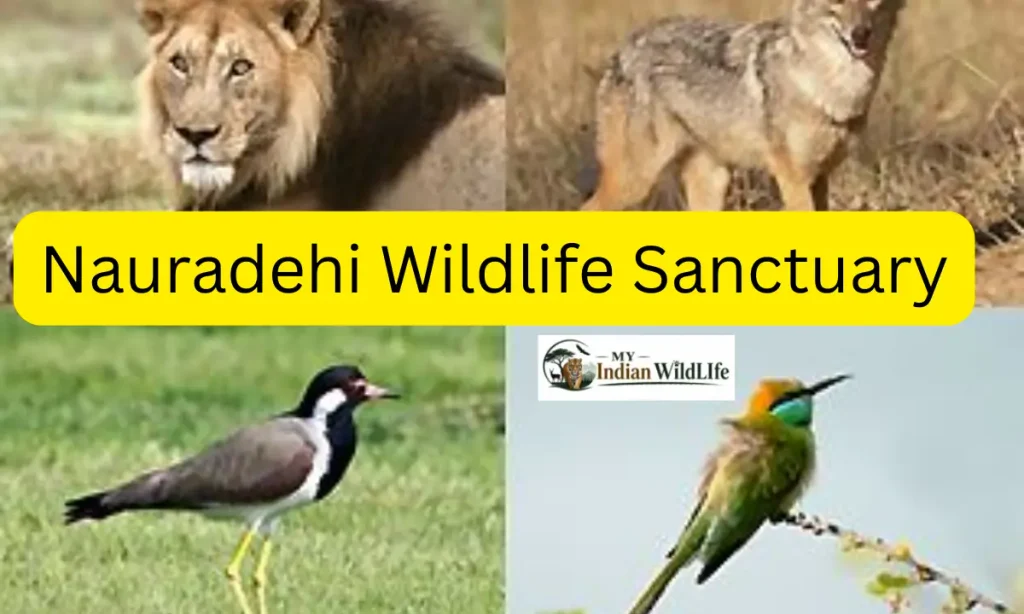
The presence of herbivores in open areas, small mammals in forests, and predators like leopards and wolves can be observed by visitors, but the sighting of wildlife can never be assured as the animals roam freely within the natural environment. Some of the species that can be found in Nauradehi include the Indian wolf, leopard, sloth bear, chital, sambar, nilgai, chinkara, blackbuck, wild dog, striped hyena, and jackal.
Mammals Found in Nauradehi Wildlife Sanctuary
The following are some of the important mammals present in the area of the wildlife sanctuary:
- Indian Wolf
- Leopard
- Sloth Bear
- Chital
- Sambar
- Nilgai
- Chinkara
- Blackbuck
- Wild Dog
- Striped Hyena
- Golden Jackal
- Wild Boar
- Four-Horned Antelope
- Langur
Birds Found in Nauradehi Wildlife Sanctuary
Forests, grasslands, and the lakes in the sanctuary form various habitats for birds. The sanctuary will be a good destination for bird lovers where one can view various kinds of birds including forest birds, water birds, raptors and little woodland birds. The diversity of vegetation and availability of seasonal water sources form favorable conditions for birds, thus forming another interesting destination apart from the wildlife safari experience.
Reptiles Found in Nauradehi Wildlife Sanctuary
Reptiles are also an important component of the ecosystem in the sanctuary. Various kinds of habitat can serve as home and a source of food for different kinds of reptiles like snakes and lizards. During different seasons and at various locations in the sanctuary, visitors can come across reptiles living in the forests, around water sources and even in rocky areas.
Famous Animals of Nauradehi Wildlife Sanctuary
The Nauradehi Wildlife Sanctuary boasts various animals and a large amount of natural habitat. The sanctuary provides habitat to herbivores, carnivores and small mammals, thereby making up an ecosystem. Some of the prominent animals found here include Indian wolf, leopard, sloth bear, chital, sambar, nilgai and chinkara.
Indian Wolf
One of the animals that make Nauradehi Wildlife Sanctuary fascinating is the Indian wolf. While several large carnivorous mammals like to roam in the denser forested regions, wolves have been observed in the open plains and grassland areas. The presence of open areas along with patches of forests in Nauradehi makes the area favorable for wolves. It might be hard to spot a wolf since they can be shy and might wander long distances to find food sources.
Leopard
Leopards are some of the key predators present in the sanctuary. Leopards are very adaptable and can live in diverse ecosystems, such as dry forests, rocky environments, and grassland areas. They are very shy animals; thus, it is hard to locate them. They are usually very active during the colder times of the day and mostly hide in vegetation and rocky areas.
Sloth Bear
The sloth bear is yet another unique creature that makes its home within the Nauradehi habitat. The animal is very well suited to the dry forests of central India and lives on fruits, insects, roots and other sources of natural food. These sloth bears are mostly solitary creatures and can be quite unpredictable if approached by people. It is always recommended to keep a safe distance from these animals.
Chital
The Chital, or the spotted deer, is one of the herbivores found in the forests of Central India that are readily identifiable. The beautiful spotted skin acts as an excellent form of camouflage in the foliage. The Chital generally travel in herds and survive on eating grass, leaves, and other vegetation. Apart from being an essential part of the food chain, they also act as prey for predators.
Sambar Deer
Sambar is among the largest types of deers found in India, and it is a vital herbivorous mammal in the sanctuary. The sambar deers are mostly found in forests where adequate food and water is available. It is more cautious than the smaller species of deers and can usually be found near water bodies or vegetation.
Nilgai
The Nilgai is also called the blue bull. This antelope is India’s largest. The nilgai is adapted to an environment of open woodlands and scrubland. The blend of forests and open lands in Nauradehi forms a proper habitat for nilgais. Their food includes grasses and vegetation.
Chinkara
The chinkara is well-adapted for life in dry regions. The fact that it can thrive in such harsh habitats renders it an important species in the wildlife ecosystem of central India. Chinkaras are very swift creatures, and at times, they can be spotted grazing in open areas with grass and scrub vegetation.
Blackbuck
Another significant antelope that can be observed in this grassland region is the blackbuck. It is a fascinating animal because of its unique physical appearance and speed. The presence of open areas in the larger landscape of Nauradehi can serve as a good environment for such animals.
Wild Dog
The dhole, which is also referred to as the Indian wild dog, is a social animal which inhabits both forest and grassland ecosystems. Wild dogs tend to form hunting parties and travel long distances in search of food. Even though it may not be sighted often, its existence shows the biological variety in the sanctuary.
Striped Hyena
Striped hyena is an excellent night hunter and scavenger present in some of the areas of central India. It has successfully adapted itself to arid lands and scrub and rocky places. Due to its nocturnal habit, visitors have less chance to encounter it as a common sight during the day visits.
Nauradehi Wildlife Sanctuary Safari
A wildlife safari is perhaps the most thrilling activity that can be undertaken in Nauradehi Wildlife Sanctuary. The extensive terrain presents visitors the chance to explore the dry deciduous forests, the grasslands, the waterbodies and wildlife habitat.
As compared to a zoo or wildlife park where the animals are confined within the premises, animals in Nauradehi have free movement in their natural habitat. This implies that a safari is unique in each instance and depends on the season, weather, time of the day and animal movement. While in the safari, visitors get a chance to see animals like the deer, nilgai and monkeys which are all herbivorous, whereas leopards and wolves remain elusive.
Nauradehi Wildlife Sanctuary Jeep Safari
The jeep-based wildlife exploration is a realistic approach to explore the various parts of the sanctuary. Using a safari jeep helps the tourists move around in the forest trails under the supervision of the forest authority.
The activities in a safari could involve moving around in the woods, plains, and parts that are near the water source. It is important for the wildlife lover to have binoculars since the animals may show up suddenly before disappearing among the foliage. The safari options and costs among others will vary according to the forest department. The tourist must, therefore, ensure to get the latest information before embarking on the safari.
Nauradehi Wildlife Sanctuary Safari Timings
The timing of the safari may depend on the season, weather, availability of sunlight, and regulations by the forest department in the particular region. The activity of wildlife is usually timed when the animals are active due to cooler temperatures.
| Safari | General Timing |
|---|---|
| Morning Safari | Seasonal timing; confirm before visiting |
| Afternoon Safari | Seasonal timing; confirm before visiting |
The visitors must arrive at the entry point in ample time before the reporting period. The delay in reporting can impact their entry since the forest zones follow timing schedules.
Nauradehi Wildlife Sanctuary Ticket Price
It will also depend upon the kind of visitors, mode of transport used, guides required, and the rules of the Forest Department at present.
| Category | Information |
|---|---|
| Indian Visitors | Applicable entry fee as per current rules |
| Foreign Visitors | Applicable fee as per current rules |
| Jeep Safari | Charges depend on current arrangements |
| Guide | Charges may apply separately |
| Vehicle Charges | Subject to current forest regulations |
Given that the cost of wildlife tourism is variable, visitors are advised to check their most recent rates before embarking on their safari trips.
Nauradehi Wildlife Sanctuary Safari Booking
It is recommended that safari arrangements be made before traveling due to varying access to different forest regions based on the permissions, vehicles available, and applicable regulations.
For a safari, travelers are advised to ascertain the following:
- Safari dates available
- Entrance point or gate
- Time for reporting
- Availability of vehicle
- Need for guide
- Fees for entry
- Identification documents required
- Forest department restrictions
Requirements for booking vary from one area to another. It is therefore wise to confirm the process that is currently being followed by the relevant forest department.
Nauradehi Wildlife Sanctuary Entry Gates
The sanctuary of Nauradehi covers a vast geographical region. As such, travellers should first determine their chosen point of entry before embarking on the trip. Various access points can take you to various areas within the sanctuary.
One of the recognised access points that is connected to the sanctuary of Nauradehi is Mohli. Nevertheless, access points and forest paths may vary according to the management policies of the time. It is not advisable for visitors to assume that there is only one gateway through which all sections of the sanctuary can be reached. It helps to first check out your chosen point of entry.
Best Time to Visit Nauradehi Wildlife Sanctuary
However, the best season to visit the Nauradehi Wildlife Sanctuary usually varies depending on the type of experience that an individual would prefer. For instance, one should consider visiting the sanctuary during the cool months if they want a comfortable journey and stay out, but visiting during the hot months might provide chances to see wildlife in the area near water sources.
The ideal time for people to visit the Nauradehi Wildlife Sanctuary is from October to March due to favorable weather and environment for outdoor activities. The hot months might be uncomfortable but one would get a chance to spot the wildlife in the area near water sources. However, monsoon brings greenery to the forest.
Nauradehi Wildlife Sanctuary in Winter
Winter is a season that promises comfort when you want to visit Nauradehi. The days will usually be comfortable, but the mornings and evenings may be quite cool. The comfortable weather is perfect for undertaking safaris, bird watching, and nature photography tours. Warm clothes should be carried for morning activities.
Nauradehi Wildlife Sanctuary in Summer
During summer, there is a rise in temperatures and dryness. With natural sources of water becoming scarce, wild animals will have to be dependent on any water body that is available. Sometimes this could help increase your chances of viewing animals, but the heat could also make travel during the day unpleasant. Travelers visiting the area during summer should ensure that they have enough drinking water and wear loose clothing.
Nauradehi Wildlife Sanctuary During Monsoon
The monsoon brings new plants and greenery in the form of vegetation into the picture. The water bodies including streams can get more water, thereby forming an aesthetically pleasing picture. But at the same time, excessive rains can make it hard to travel through the forests because of slippery conditions in the forest paths and also affect tourist activities.
Nauradehi Wildlife Sanctuary Weather
Nauradehi enjoys the normal climatic conditions in central Madhya Pradesh, comprising of hot summer season, rainy season, and cold winter season.
| Season | Approximate Period | General Conditions |
|---|---|---|
| Winter | November–February | Cool and pleasant |
| Summer | March–June | Hot and dry |
| Monsoon | July–September | Rainy and greener |
| Post-Monsoon | October | Pleasant with improving conditions |
The weather pattern may differ each year. Travelers should check the weather forecast before visiting, especially during summer and monsoon seasons.
How to Reach Nauradehi Wildlife Sanctuary
The Nauradehi Wildlife Sanctuary is situated in central Madhya Pradesh and can be accessed through airways, railways and roadways. As the wildlife sanctuary occupies a vast expanse of land, the mode of transportation will depend upon the place of origin and point of access of the visitor.
For the majority of tourists, accessing a major city near the wildlife sanctuary by train or air and subsequently proceeding on foot is a good choice. The visitors need to be aware of the particular point for entering into the jungle on a safari.
How to Reach Nauradehi by Air
Travelers from far off places may opt for the nearest appropriate airport and make the rest of the journey by road. Jabalpur Airport and Raja Bhoj Airport at Bhopal may be helpful as airport destinations in planning your trip to the vast Nauradehi area.
Jabalpur may be useful to you when you are approaching the eastern part of the sanctuary, whereas Bhopal may be helpful to you when you are traveling from the western and northern directions. Distance by road will depend on your chosen point of entry. As Nauradehi sanctuary is spread across a vast area, travelers need to ascertain their road route from the airport to their respective destination or entry point in the sanctuary.
How to Reach Nauradehi by Train
Traveling by train is yet another easy method to visit Nauradehi Wildlife Sanctuary. Depending upon the route and the area one intends to reach, Sagar, Damoh, and Jabalpur can prove to be helpful railway stations.
Once at the railway station, people can arrange for road transport or taxis to take them to their respective accommodation or the entrance point of the wildlife sanctuary. Traveling by train may be particularly convenient for people coming from major cities of Madhya Pradesh as well as other states. It would be better to confirm the train schedules and road network beforehand.
How to Reach Nauradehi by Road
Roadways are amongst the most convenient modes of transport in arriving at the Nauradehi Wildlife Sanctuary owing to the fact that the reserve lies in an extensive geographic area. Travellers have the option of travelling by road from the nearest city or hiring taxis for reaching the destination point.
There are several important cities like Sagar, Damoh, and Narsinghpur which serve as road destinations for travellers who can choose any destination based on the chosen entrance point of the sanctuary. Travelers travelling by road using their personal vehicle must be careful with planning and should not presume that all the forests lie accessible via the same road.
Nearest Airport to Nauradehi Wildlife Sanctuary
There are no airports available within the Nauradehi Wildlife Sanctuary. Thus, travelers should make use of the airport that is located in some major city close to their destination and cover the rest of the distance via road travel.
One such airport is the Jabalpur Airport, which can be used by tourists traveling towards the sanctuary from the eastern end of the area. The Raja Bhoj Airport of Bhopal may also be considered based on the route of travel and the area of the Nauradehi sanctuary to be explored. Different airports can be chosen as per the geography of the sanctuary.
Nearest Railway Station to Nauradehi Wildlife Sanctuary
There is no railway station within the confines of Nauradehi Wildlife Sanctuary. However, there are railway stations in various towns and cities near Nauradehi which can be used by visitors. Some of the railway stations that can come handy while visiting Nauradehi are Sagar Railway Station, Damoh Railway Station, and Jabalpur Railway Station. The most convenient railway station varies with the direction of your approach and point of entry into Nauradehi Wildlife Sanctuary. This can be determined after considering your entire road trip from the railway station.
Nauradehi Wildlife Sanctuary Distance
The distance to Nauradehi will change since the wildlife sanctuary is quite vast in its coverage. The distance given by the maps will also vary based on the entrance chosen by the traveler.
| Starting Point | Distance |
|---|---|
| Sagar | Depends on entry point |
| Damoh | Depends on entry point |
| Narsinghpur | Depends on entry point |
| Jabalpur | Depends on entry point |
| Bhopal | Depends on entry point |
Distances may differ depending on the route taken and access point to the sanctuary. It is advisable for visitors to verify the actual distance on the road.
Places to Stay Near Nauradehi Wildlife Sanctuary
The number of accommodation possibilities in and around Nauradehi is fewer as opposed to places like Kanha and Pench which are much more popular. Travellers thus find it easier to use the accommodation possibilities near towns and then visit the sanctuary based on their schedule.
Accommodation possibilities such as hotels and guest houses are present in towns around the sanctuary. The quality of accommodation varies greatly from one place to another. Travellers who would prefer to have more contact with nature should be able to find some form of accommodation inside the forest. This however depends on the forest department’s policies.
Forest Rest Houses
Forest guesthouses may offer more basic accommodation that is closer to nature than commercial hotels. In cases where there are forest guesthouses, people may get the chance to be accommodated near the forests.
But then again, getting accommodation at a forest facility comes under certain policies and permissions. Travelers should not expect that rooms are available without prior confirmation. People wishing to stay at forest guesthouses should be well informed about the current booking process, permission dates and other details before traveling.
Hotels and Resorts Near Nauradehi
Travellers who require more conventional accommodations may opt for hotels and guest houses in nearby towns like Sagar, Damoh, and Narsinghpur. This will provide greater options in terms of food and transportation and other basic requirements for travel. But then, by being at a farther distance from the reserve, one might have to spend more time in travelling to the entry gate each day. For a wildlife tour, it would be wise to decide on the basis of accommodation which is both comfortable as well as at an appropriate distance from the entry gate.
Places to Visit Near Nauradehi Wildlife Sanctuary
The area around Nauradehi in central Madhya Pradesh has many interesting spots that could be incorporated into a tour plan. Depending on the route taken, the sanctuary visit can be coupled with visits to various historical places, temples, and cities.
Sagar
Sagar is an important town in Madhya Pradesh which can also act as an ideal base for touring certain parts of Nauradehi. This town has all the necessary arrangements to accommodate tourists during their travel. Sagar and its environs have many places of historical and religious significance. Tourists may spend some time visiting this place either before or after their wildlife tour.
Damoh
Damoh is yet another noteworthy place in the wider Nauradehi zone. The place can serve as an excellent point to stop en route to the sanctuary on that side of Madhya Pradesh. The district boasts many natural and religious sites, providing tourists with a chance to combine animal watching with sightseeing.
Jabalpur
Jabalpur is one of the important cities of Madhya Pradesh which has a lot to offer in terms of natural scenery and history. This city can also serve as an entry point for tourists who want to explore the wildlife circuit of central India. Bhedaghat is perhaps the most popular tourist attraction in the city where the Narmada River runs through marble rock formations.
Bhedaghat
This place called Bhedaghat is one of the well-known natural beauty spots located in close proximity to Jabalpur. It attracts a lot of people because of the huge marble rocks that surround the Narmada River. People who come to Nauradehi from the Jabalpur side may take some time to visit Bhedaghat if they have enough time.
Khajuraho
Khajuraho is an important heritage destination in Madhya Pradesh and is renowned for its ancient temples. The temples are known for their intricate stone sculptures and excellent architecture. Khajuraho is not very near to Nauradehi. However, for those who are interested in wildlife as well as in history and architecture, Khajuraho can be covered in their Madhya Pradesh tour package.
Things to Do at Nauradehi Wildlife Sanctuary
Nauradehi is not just about hunting big game. The area’s vast terrain ensures that one gets to see forests, plains, birds, natural water bodies and, in general, the wild nature of central India.
Wildlife Safari
The wildlife safari enables tourists to tour designated areas of forests and see animals in their natural habitat. Season-wise and location-wise, tourists can come across various kinds of animals such as deer, nilgai, monkeys, birds, etc. Seeing predators cannot be assured, and hence it is better if tourists do not go with the hope of seeing a specific animal.
Bird Watching
Various types of bird species find the various habitats of Nauradehi suitable. The forests, grasslands, and water bodies can attract different birds in all seasons. Binoculars can make bird watching more enjoyable, especially when you want to watch birds perched very high in the trees.
Nature Photography
The forest surroundings, open grasslands, and animals and seasons in the sanctuary make great natural subjects for photographs. It is necessary to keep oneself away from the animals and adhere to photography regulations put forward by the forest officials. Flash photography must be completely avoided when not allowed or when it may disrupt the wildlife.
Wildlife Spotting
Spotting wildlife demands patience since animals have the freedom to roam in a vast natural environment. It is beneficial to go on a morning or evening walk as most animals tend to be more active in cooler times. Apart from looking at large animals, one must also keep track of their footprints, sounds, birds, insects, reptiles, and other small animals that help understand the forest environment.
Exploring the Forest Landscape
A big draw for Nauradehi is the vast wild nature of the place. It is the blend of dry deciduous forests, grasslands, rocks, and sources of water that make the sanctuary have that characteristic flavor of central India. Despite the lack of sightings of animals, traveling through the region allows visitors to enjoy the untamed wildlife destination.
Why Should You Visit Nauradehi Wildlife Sanctuary?
The Nauradehi Wildlife Sanctuary is an excellent destination for those who would like to see a large and relatively peaceful destination for wildlife in the state of Madhya Pradesh. The vast forest region of the area ensures a wide variety of flora and fauna, as well as a distinct experience from the renowned tiger reserves of the state.
The sanctuary is very unique for those tourists who are interested in wolf sighting, leopard watching, deer watching, bird watching, nature photography, and forest scenery. The vast area of the sanctuary ensures that the destination is of high ecological significance. Another great thing about the place is that the tourist can also visit other destinations of the state along with Nauradehi Wildlife Sanctuary.
Nauradehi Wildlife Sanctuary Google Map
Google Map will be helpful in planning a trip to the Nauradehi Wildlife Sanctuary due to the fact that the sanctuary occupies a vast area and has several ways to reach the place. One needs to determine his entry point in addition to other details rather than just the name of the sanctuary.
Nauradehi Wildlife Sanctuary Travel Tips
Just a little planning can add to the comfort and happiness of the wildlife experience at Nauradehi. As the sanctuary is a huge natural habitat, people must be prepared for the limited facilities available in the forest zones and weather variations as well.
- Make sure of all the entry, safari and booking policies beforehand.
- Find out the entry gate and reporting place in advance.
- Take enough water with you, particularly in summers.
- Dress in comfortable clothes and shoes for outdoors traveling.
- Take along binoculars if you are fond of bird watching.
- Have your camera handy, but never disturb the animals for taking pictures.
- Do not engage in unnecessary loud talks and music inside the forest zones.
- Never try feeding the wild animals or getting too close to them.
- Listen carefully to the instructions of the forest officials and guides.
- Take along basic medicines and personal items.
- In winters, take warm clothing for early morning trips.
- In summers, use sunscreens, sunglasses and hats.
- Get the weather report before you travel in monsoons.
- Make sure that you have enough time for road travel depending on the entry point.
- Do not throw plastic bags or any other waste in the forests.
Rules and Guidelines for Visitors
Since Nauradehi Wildlife Sanctuary is a protected natural habitat, tourists must abide by the rules of wildlife tourism. These rules are set up to minimize any disruption that might come from humans to the animals and the forest surroundings. Tourists must stay in their cars and in the areas permitted. They must also listen to what is advised by guides and forest rangers. Coming too close to animals, shouting, making loud music or trying to lure wildlife is disruptive to their natural behavior.
The taking of photographs must also be done properly. The visitors must not chase animals or order the driver to drive fast toward wildlife just to take a good photograph. No plastic or other types of rubbish must be left in the forest. Cleaning the area is very important because it can damage the wildlife and the surrounding natural area.
Conclusion
Nauradehi Wildlife Sanctuary is a prominent wildlife spot located in Madhya Pradesh, and it is a perfect destination for people who wish to explore the natural scenery of central India. Due to its large size, dry deciduous forests, grasslands, and water bodies, a variety of animals, birds, and reptiles find themselves at home here.
For a wildlife lover, Nauradehi Wildlife Sanctuary is a special place due to animals like Indian wolf, leopard, sloth bear, chital, sambar, nilgai, and chinkara that inhabit there. The sanctuary is not just about meeting wild animals – the peace of the forest and large landscape will satisfy nature enthusiasts and photographers too. In order to have a great trip, travelers should choose the right path, learn more about the entrance and safari arrangements, weather conditions, and forest rules. With careful preparations, visiting Nauradehi Wildlife Sanctuary becomes a wonderful experience.
Faqs
Where is Nauradehi Wildlife Sanctuary located?
Nauradehi Wildlife Sanctuary is located in Madhya Pradesh, India. The sanctuary covers a large area across the Sagar, Damoh and Narsinghpur regions.
What is Nauradehi Wildlife Sanctuary famous for?
Nauradehi is famous for its vast forest landscape and diverse wildlife. The sanctuary is particularly known for Indian wolves, leopards, sloth bears, chital, sambar, nilgai and chinkara.
What is the best time to visit Nauradehi Wildlife Sanctuary?
The best time to visit is generally from October to March because the weather is more comfortable for outdoor activities. Summer can also be suitable for wildlife spotting around water sources.
Is safari available at Nauradehi Wildlife Sanctuary?
Wildlife safari or forest tourism activities may be available according to current forest department arrangements. Visitors should confirm the latest safari availability, routes and booking rules before visiting.
What animals can be seen in Nauradehi Wildlife Sanctuary?
Visitors may encounter Indian wolves, leopards, sloth bears, chital, sambar, nilgai, chinkara, blackbuck, wild dogs, striped hyenas and several other species.
How can I reach Nauradehi Wildlife Sanctuary?
Nauradehi can be reached by road from nearby cities and towns. Sagar, Damoh and Narsinghpur are useful reference points, while travellers coming from distant locations can use nearby airports or railway stations and continue by road.
What is the nearest railway station to Nauradehi Wildlife Sanctuary?
There is no railway station inside the sanctuary. Sagar, Damoh and Jabalpur are among the railway stations that can be considered depending on the selected route and entry point.
What is the nearest airport to Nauradehi Wildlife Sanctuary?
There is no airport inside Nauradehi Wildlife Sanctuary. Jabalpur Airport and Bhopal’s Raja Bhoj Airport can be considered depending on the traveller’s route and the part of the sanctuary they intend to visit.
Is there accommodation near Nauradehi Wildlife Sanctuary?
Yes, visitors can find hotels, guesthouses and other accommodation options in nearby towns. Forest accommodation may also be available in certain areas, subject to permission and availability.
What should I carry when visiting Nauradehi Wildlife Sanctuary?
Visitors should carry drinking water, comfortable clothing, suitable footwear, binoculars, sunscreen and basic personal essentials. During winter, warm clothing is recommended, while summer visitors should carry sun protection.
Also,Read About: Aralam Wildlife Sanctuary – Complete Travel Guide