
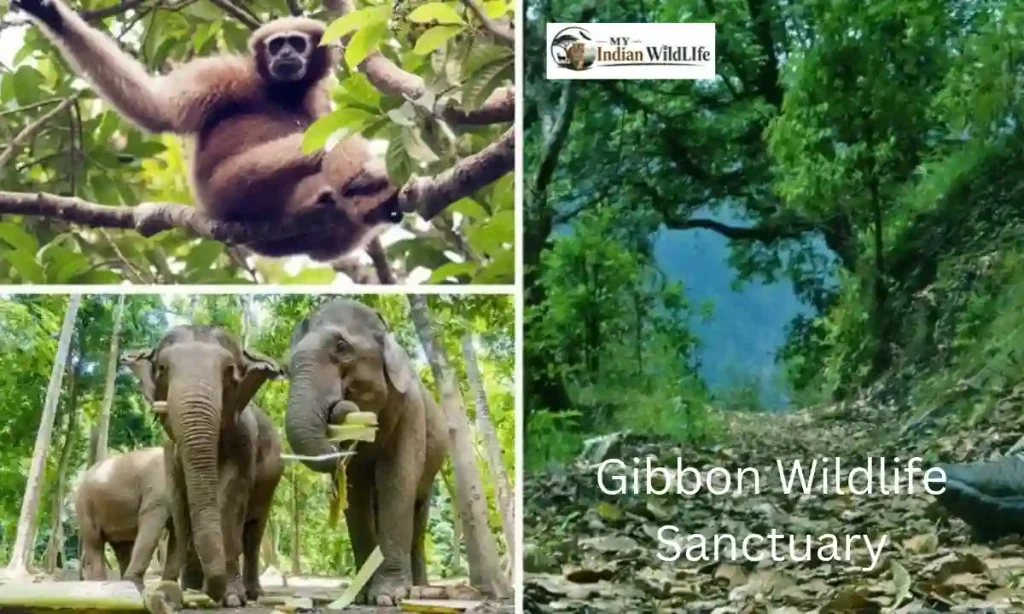
One of the most interesting wildlife destinations in Assam, India, is Hoollongapar Gibbon Wildlife Sanctuary popularly referred to as Gibbon Wildlife Sanctuary. Located in the district of Jorhat close to the town of Mariani, the sanctuary consists of a protected forest that is famous for hosting rare primates, dense evergreen vegetation, and unique diversity. Contrary to national parks characterized by jeep safari drives and open grasslands, Gibbon Wildlife Sanctuary gives visitors a chance to enjoy the peace of forests.
What makes the sanctuary interesting is the fact that it acts as a safe haven for hoolock gibbon, the only gibbon found in India. The sanctuary also hosts other primates like capped langurs, macaques, and Bengal slow loris. The forest, tall trees, bird sounds, and natural surroundings make it an ideal destination for wildlife lovers, nature photographers, bird watchers and researchers.
The sanctuary covers about 20.98 square kilometers making it smaller compared to other Indian protected areas. However, the ecological significance of the sanctuary cannot be overlooked.
Encircled by tea gardens and rural communities, Gibbon Wildlife Sanctuary acts as an important preserve for Assam’s tropical evergreen and semi-evergreen forests. Visiting the sanctuary is an opportunity to admire the natural beauty of
Gibbon Wildlife Sanctuary Overview
| Details | Information |
|---|---|
| Official Name | Hoollongapar Gibbon Wildlife Sanctuary |
| Popular Name | Gibbon Wildlife Sanctuary |
| Location | Jorhat district, Assam, India |
| Nearest Town | Mariani |
| Total Area | Approximately 20.98 square kilometres |
| Established as Reserve Forest | 1881 |
| Declared Wildlife Sanctuary | 1997 |
| Famous For | Hoolock gibbons and other primates |
| Forest Type | Tropical evergreen and semi-evergreen |
| Main Activities | Nature walks, birdwatching and wildlife observation |
| Nearest Railway Station | Mariani Junction |
| Nearest Airport | Jorhat Airport |
| Best Time to Visit | October to April |
| Recommended Duration | Half a day to one day |
Where Is Gibbon Wildlife Sanctuary Located?
Gibbon Wildlife Sanctuary is found in the Upper Assam area in northeast India, in the Jorhat district. This protected forest is located near Mariani town and is surrounded by tea gardens, villages and agricultural areas. It is thus an easy place to visit for tourists visiting Jorhat and other parts of Upper Assam.
Gibbon Wildlife Sanctuary can be reached by road travel from both Jorhat and Mariani towns. Mariani is an easy town to reach since the railway junction is about 5 km away while Jorhat town is about 20–25 km away.
Although surrounded by human developments, the sanctuary has quite many forest animals. Dense forests here serve as source of food and movements for species which depend on connected forest canopies. It is thus an important place for primate protection.
History of Gibbon Wildlife Sanctuary
Gibbon Wildlife Sanctuary has its origins dating back to 1881 when the area was designated as Hollongapar Reserve Forest. In those times, large areas were forested. Land use pattern changes over subsequent years along with increasing tea plantations and settlements had altered the landscape.
The forest slowly acquired the reputation of having exceptional primate fauna, especially due to the presence of hoolock gibbons. It became important to conserve the area due to the fact that this arboreal primate relies on the forest for food, resting sites, and movement between trees. Fragmentation of their habitat would limit their ability to search for food, establish territories and find mates.
In 1997, Assam government made the decision to declare this area as a wildlife sanctuary. Since then the reserve has been known under the name of Hollongapar Gibbon Wildlife Sanctuary. Nowadays, it is not only the site of interest for tourists but also an area of importance from the conservation point of view.
Why Is Gibbon Wildlife Sanctuary Famous?
The Gibbon Wildlife Sanctuary is known for its unique primates, its evergreen forest, and its significance in wildlife conservation efforts. This site provides a unique opportunity to tourists who are fascinated with animals which live in the trees and not on the ground.
1. Hoolock Gibbons
The highlight at the sanctuary is the hoolock gibbon which is an apelike animal that is characterized by its long arms and agility. One can hear the call of the hoolock gibbons as they reverberate throughout the forest, especially during the quiet times of the day.
The hoolock gibbons are well adapted to their habitat, and they use their arms to travel from one branch to another and eat fruit, flowers, leaves and other plants.
2. Bengal Slow Loris
Another primate species present within the sanctuary is that of the Bengal slow loris. While the gibbons tend to be diurnal, slow lorises are mostly nocturnal. They have a slow motion when moving around in the vegetation and depend on their large eyes in the dim light. It is not easy to spot a slow loris during an average visit since these animals are nocturnal.
3. Dense Evergreen Forest
The reserve contains an ecosystem of forest which includes tall trees, bushes, climbing plants, and other native vegetation. This layered canopy serves as a source of food and nesting place for various kinds of animals. The forest is also important for maintaining ecological balance in the region as it supports insects, birds, mammals and other creatures.
4. Rare Primate Diversity
What makes the Gibbon Wildlife Sanctuary even more special is the presence of seven types of primates there. These primates comprise the Hoolock gibbons, capped langurs, various types of macaques and slow lorises. The presence of a large number of primates makes the sanctuary a significant place for study by researchers and students alike.
Wildlife Found in Gibbon Wildlife Sanctuary
The wildlife found in the sanctuary is related to the forest ecosystem. Wildlife in the sanctuary utilize the canopy, understory and forest floors as their source of food and habitat. While primates may be the major attraction of the sanctuary, other animals are also found here.
Mammals and Primates
| Animal | Key Characteristics |
|---|---|
| Hoolock Gibbon | Tree-dwelling ape and the sanctuary’s signature species |
| Bengal Slow Loris | Nocturnal primate adapted to life among branches |
| Capped Langur | Arboreal monkey associated with forest habitats |
| Stump-tailed Macaque | Forest-dwelling primate that also forages on the ground |
| Northern Pig-tailed Macaque | Social primate found in forested landscapes |
| Rhesus Macaque | Adaptable monkey found in various habitats |
| Assamese Macaque | Primate native to parts of South and Southeast Asia |
| Asian Elephant | Large mammal associated with the wider forest landscape |
| Leopard | Elusive carnivore that may occur in the region |
| Jungle Cat | Wild cat associated with suitable natural habitats |
| Wild Boar | Ground-dwelling mammal that searches for roots and other food |
| Giant Squirrel | Tree-dwelling mammal that feeds on plant material |
These species are not all equal in terms of visibility. The hoolock gibbon and other primates are some of the most important species that attract tourists, while other large mammals or carnivores could very well stay out of sight during their entire stay.
Birds Found in Gibbon Wildlife Sanctuary
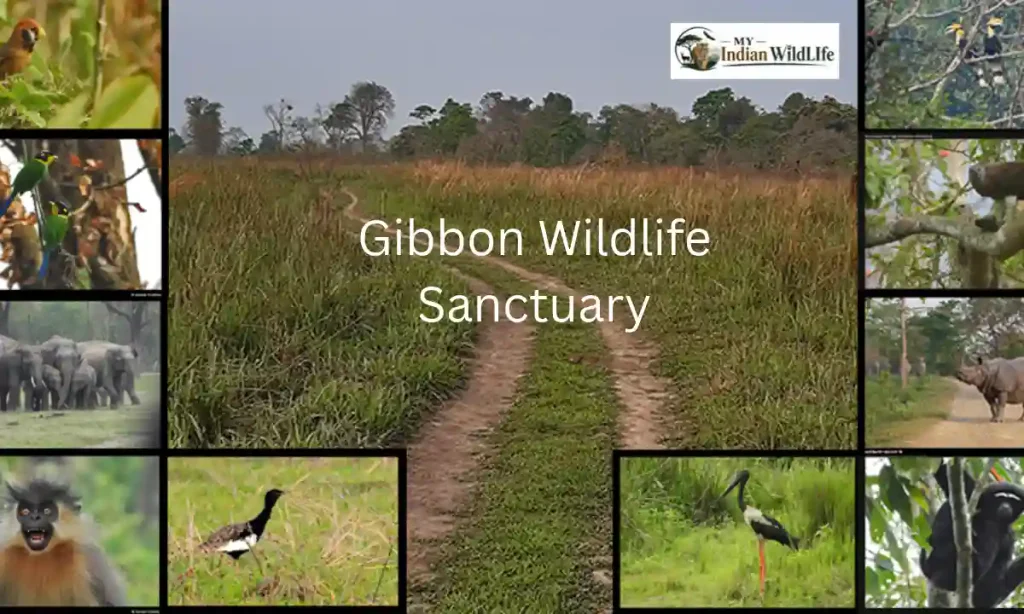
Another interesting place for bird lovers is Gibbon Wildlife Sanctuary. The forest canopy and undergrowth in the sanctuary have a different habitat for fruit eating, insect-eating and seed eating birds.
Some of the birdlife that has been recorded in the sanctuary and its vicinity includes the Indian pied hornbill, hill myna, osprey, Kalij pheasant, and other songbirds. Different varieties of plants contribute to different feeding and nesting needs of birds.
Visiting early in the morning could be one of the best times for bird watching as there would be high chances of activity and better recognition of bird calls. Binoculars could prove useful for observing the birds without disturbing their natural behavior.
Reptiles and Other Wildlife
Humid forests found within the sanctuary provide ideal habitat for snakes and small animals. These animals include the Indian python, monitor lizard, Indian cobra, and tortoises. Tourists should keep to authorized paths and not go near any reptiles. Some reptiles are hard to spot in areas of dead leaves, tree roots, and heavy vegetation.
Flora and Forest Ecosystem
One of the most significant aspects of the Gibbon Wildlife Sanctuary is the forest’s vegetation. The forest’s vegetation includes evergreen and semi-evergreen trees. There is a layer of tall trees forming the canopy in the forest above the other trees, shrubs, herbs, and plants.
The hollong is among the trees that have special significance for the forest. Another such tree is called Nahar. Together with other local trees, these trees form the vegetation of the sanctuary, which becomes the source of sustenance for the forest dwellers inhabiting the canopy of the forest.
In particular, the forest’s multi-layered structure is very important for arboreal primates since they use branches as well as interconnected tree crowns to travel between the places where they eat and rest. Therefore, when forests are fragmented, these routes can become blocked and create additional difficulties for the animals.
The vegetation of the sanctuary retains moisture in addition to being helpful for insects and birds, thus providing the necessary ecological stability of the area. It is crucial not only for particular animal species but also for the biodiversity of Upper Assam as a whole.
Things to Do at Gibbon Wildlife Sanctuary
The Gibbon Wildlife Sanctuary would be more appropriate for those people who are seeking natural environment instead of any amusement ride or entertainment. The primary way of visiting the park involves walking through the jungle according to the relevant instructions.
1. Explore the Forest on Foot
One of the best ways of enjoying the natural beauty of the sanctuary is by taking walks in the forest. The visitors are able to see high trees, vegetation, forest floor plants, and animals in the allowed paths. A guided walk may offer some information about the sanctuary’s ecosystem and conservation measures among others.
2. Observe Hoolock Gibbons
Visiting the sanctuary and watching the hoolock gibbons in their natural habitat is perhaps the most fascinating experience that one can ever have at the sanctuary. One may take a keen watch through the tree branches to catch a sight of them and also listen to their unique call. Use of binoculars becomes necessary since the gibbons stay up high on trees. Quietness is very important when visiting the place.
3. Enjoy Birdwatching
Vegetation in the sanctuary can offer an opportunity to view the birds that exist in the canopy and understory. The bird watchers can search for various kinds of birds while getting familiar with their calls and feeding habits.
A good pair of binoculars and a field guide book can make the activity more meaningful. Early morning time is usually a better time for this kind of activity.
4. Nature Photography
Nature photography is another fun way to spend time for the tourists who love to see wild animals and forest landscapes. Photographers can take pictures of trees, plants, birds and other animals from the allowed places.
Using a telephoto lens may allow photographers to capture animals from a distance. Tourists should obey the rules of photography and not make noise while taking pictures.
5. Visit Nearby Tea Gardens
The area that surrounds Jorhat and Mariani has a history of tea cultivation. Travellers who visit the sanctuary can explore the area and gain knowledge regarding the tea industry. It is important to note that access to tea gardens is not always possible, and it is recommended that people check this prior to their arrival.
Gibbon Wildlife Sanctuary Timings
The visiting time can actually change depending on the forest department schedules, weather, and season. Morning is usually better than afternoons since the forest could be relatively quiet and the primates may even be active.
| Visiting Detail | Recommendation |
|---|---|
| Best Time of Day | Early morning |
| Suggested Duration | 2–4 hours, depending on access and route |
| Full-Day Visit | Useful when combining the sanctuary with nearby attractions |
| Guide Requirement | Confirm with forest authorities |
| Seasonal Access | Verify before travelling |
| Holiday Visits | Check availability and entry arrangements in advance |
Do not rely on unverified opening and closing times. Contact the relevant forest office before departure to confirm the latest entry schedule, especially if you plan to arrive early or travel during the monsoon.
Gibbon Wildlife Sanctuary Entry Fee
The entrance fees at Gibbon Wildlife Sanctuary may vary depending on the present forest department fee scale and the type of visitors. The guide fee and other additional fees may be independent of the entrance fee charged.
| Fee Category | What to Know |
|---|---|
| Indian Adult Visitors | Confirm the current entry tariff |
| Children and Students | Ask whether concessions apply |
| Foreign Visitors | Verify the applicable rate |
| Guide Charges | Confirm availability and charges separately |
| Camera or Photography Fees | Ask whether additional permission or charges apply |
| Vehicle Parking | Check arrangements near the authorised entrance |
Best Time to Visit Gibbon Wildlife Sanctuary
The most ideal time to visit Gibbon Wildlife Sanctuary is October to April as these months tend to be more favorable for jungle trekking and watching wildlife. November to February is especially good for those tourists who like the cool climate.
October to November
The forest stays green post-monsoon season, which makes this time a good period for nature hikes and admiring the landscape around. Some of the trails might be wet, thus wearing comfortable shoes is advised.
December to February
Outdoor activities are more comfortable in cooler weather. This is an ideal time for bird watching, forest photography, and studying primates.
March to April
Warm temperatures and changing seasons create a distinct atmosphere in the forest. It is best to start early in the day and bring water.
May to September
Heavy rains, high humidity, and wet paths may increase the difficulty of your adventure. Find out about the weather and check to see whether access is possible before you go.
Animal sightings cannot be guaranteed at any time. It will depend on the weather, movement of the animals, condition of the forest, and the amount of time you observe the canopy.
How to Reach Gibbon Wildlife Sanctuary
The Gibbon Wildlife Sanctuary can be reached by air, train, and road transport means. The nearest transport facility is Mariani, although one may opt for Jorhat, which also provides accommodation facilities besides being a transportation point.
By Air
The nearest airport is Jorhat Airport or Rowriah Airport. It is about 25 km away from the sanctuary, depending on the route taken and gate chosen. The tourists can hire taxis and take transport services from here. For tourists coming from other parts of India, they should first travel to Guwahati and then to Jorhat through air, train, or roadways.
By Train
The nearest railway station is Mariani Junction, which is at a distance of about 5 km from the sanctuary. This would be a good choice for tourists who are traveling via train. Another railway station is Jorhat Town Railway Station; this would be a better choice if one is residing in Jorhat. Taxis could be taken from both the railway stations.
By Road
The sanctuary is linked through roads to Mariani and Jorhat. One can use either taxis or private cars or any other transport that may be available. Travelling through roads will be convenient for those planning to visit the sanctuary as well as the tea estates located near the sanctuary on the same day. In case of heavy rains, give yourself some more time.
Distance to Gibbon Wildlife Sanctuary
The following approximate distances can help you plan your journey.
| Starting Point | Approximate Distance |
|---|---|
| Mariani Town | 5 km |
| Jorhat Town | 20–25 km |
| Jorhat Airport | 25 km |
| Guwahati | Approximately 300–350 km by road, depending on the route |
Distances are indicative rather than guaranteed driving measurements. Your final journey may vary depending on the sanctuary entrance, road conditions and selected route.
Gibbon Wildlife Sanctuary Location and Address
The sanctuary lies close to Mariani and is accessible by road from Jorhat. Prior to embarking on the trip, ascertain the entrance point and any procedures necessary for visiting by checking with the forest department. Travelers should refer to the officially designated name of the sanctuary when looking for directions, thus ensuring that they locate the authorized entrance point and not a nearby accommodation point.
Places to Visit Near Gibbon Wildlife Sanctuary
With more time on hand, one can opt for visiting Jorhat, known for its culture, tea plantations and river islands. This will make one’s wildlife trip to Upper Assam a complete tour package experience.
1. Cinnamara Tea Estate
The Cinnamara Tea Estate has been linked to the tea industry of Assam since its inception. The green plantations here offer a chance for tourists interested in tea cultivation to get information regarding visiting the tea plantations.
2. Tocklai Tea Research Institute
The Tocklai Research Station is situated in Jorhat. It is a site that would interest those travelers who are interested in tea plantation studies. It would be necessary for the visitors to obtain permissions in advance in order to visit the premises of the institution.
3. Sukapha Samannay Kshetra
The monument is in honor of Sukapha, who is believed to have been one of the founders of the Ahom dynasty in Assam. This provides a historical aspect to the tour as well.
4. Majuli Island
Majuli is famous for its river scenery and cultural heritage of Assam as well as satras. Majuli is much better suited to be visited separately as a day trip or an overnight trip based on ferry timings. Majuli can be a great destination for travelers interested in visiting places that offer cultural and natural variety of Assam, other than forests and tea estates.
Where to Stay Near Gibbon Wildlife Sanctuary
There are accommodation facilities available in Mariani, hotels in Jorhat, as well as nature-based accommodation in the vicinity of the wildlife sanctuary. It all depends on your budget and method of travelling.
| Accommodation Option | Suitable For |
|---|---|
| Hotels in Jorhat | Families, couples and travellers wanting more facilities |
| Guesthouses in Mariani | Visitors seeking convenient access to the sanctuary |
| Homestays Nearby | Travellers interested in local hospitality |
| Forest Accommodation, if available | Nature enthusiasts seeking a closer connection with the forest |
These regulations may vary depending on the availability of access. Please double-check your reservation prior to your travel, especially if you plan to be close to the forest or travel during early mornings.
Travel Tips for Visiting Gibbon Wildlife Sanctuary
A little preparation can make your visit more comfortable while helping protect the sanctuary’s fragile ecosystem.
- Arrive early: Morning visits are often more suitable for observing wildlife and enjoying quieter forest conditions.
- Wear comfortable shoes: Choose sturdy footwear suitable for damp or uneven trails.
- Carry binoculars: They are useful for spotting gibbons and birds in the tree canopy.
- Bring drinking water: Carry a reusable bottle and follow the sanctuary’s waste-management rules.
- Hire an authorised guide when available: Local guidance can improve your understanding of the forest and help you follow permitted routes.
- Avoid loud noises: Shouting, playing music or calling animals can disturb wildlife.
- Never feed animals: Human food can harm wildlife and change natural feeding behaviour.
- Follow photography rules: Check restrictions on flash photography, professional equipment and commercial filming.
- Check the weather: Rain can make forest paths slippery and affect access.
- Confirm entry details: Verify current timings, fees, guide availability and access restrictions before leaving.
One-Day Itinerary for Gibbon Wildlife Sanctuary
A day trip from Jorhat or Mariani is a practical way to experience the sanctuary without rushing through the forest.
| Time | Suggested Activity |
|---|---|
| 6:00–7:00 AM | Travel towards the sanctuary, adjusting for confirmed opening hours |
| 7:00–10:00 AM | Explore authorised forest trails and look for primates and birds |
| 10:00–11:00 AM | Finish the visit and take a break |
| 11:00 AM–1:00 PM | Have lunch in Mariani or Jorhat |
| 1:00–3:00 PM | Visit a nearby tea attraction, subject to access and availability |
| 3:00–5:00 PM | Explore a suitable local attraction or return to your accommodation |
This is a suggested schedule, not an official timetable. Adjust it according to the sanctuary’s confirmed visiting hours, guide arrangements and travel conditions.
Is Gibbon Wildlife Sanctuary Worth Visiting?
Indeed, Gibbon Wildlife Sanctuary should be visited by those interested in wildlife, forests, and nature-based tourism because its biggest selling point is the chance to know about hoolock gibbons and other primate species within the protected forest surroundings. This destination will surely satisfy those tourists who love silent exploration, bird watching, and ecological protection.
But there is a possibility that this destination may fail to live up to the expectations of those tourists who come here to see animals, take part in jeep safari tours or have well-developed tourist facilities available for them. The animals can be found in the forest freely but may hide somewhere, and the entrance is regulated by conservation policy. So, the best option for tourists is to join both forest trail walking and visit some local tea attraction or cultural landmark nearby in Jorhat.
Gibbon Wildlife Sanctuary Location & Google Maps
Hoollongapar Gibbon Wildlife Sanctuary or Gibbon Wildlife Sanctuary is situated close to Mariani in the Jorhat district of Assam, India. The sanctuary is well-known for its population of hoolock gibbons, variety of primate animals and the dense evergreen forest. It can be visited via the road from Mariani and Jorhat, while the closest railway station is Mariani Junction.
For easy directions, one can use Google Maps to identify the sanctuary and prepare his travel plan. Prior to making a visit, visitors need to verify the entry point, timings and other arrangements with the forest department.
Conclusion
Gibbon Wildlife Sanctuary in Assam is among the unique wildlife sites in Assam, giving an insight into the green forest cover in Assam and the wide array of primates. With the hoolock gibbons, the Bengal slow lorises, and other forest animals along with the flora in the sanctuary, the site has been considered a unique site for both tourism and awareness.
The Gibbon Wildlife Sanctuary can be visited either in a short itinerary of Upper Assam or a long exploration of Upper Assam since it is easily accessible from Mariani and Jorhat. Ensure that you schedule your trip at the right time and arrange for entry to the sanctuary. A well-arranged trip will be enjoyable as well as meaningful for preserving Indian forests.
Faqs
Where is Gibbon Wildlife Sanctuary located?
Gibbon Wildlife Sanctuary is located in Jorhat district, Assam, near Mariani town in northeastern India.
Why is Gibbon Wildlife Sanctuary famous?
It is famous for hoolock gibbons, diverse primate species, dense evergreen vegetation and its importance in wildlife conservation.
What is the best time to visit Gibbon Wildlife Sanctuary?
October to April is generally a good period to visit. November to February is particularly suitable for travellers who prefer cooler weather.
What animals can be seen at Gibbon Wildlife Sanctuary?
The sanctuary supports hoolock gibbons, capped langurs, several macaque species, Bengal slow lorises and other mammals. Birds and reptiles are also found in the forest. Sightings are not guaranteed.
Is a safari available at Gibbon Wildlife Sanctuary?
The sanctuary is primarily explored on foot rather than through conventional jeep safaris. Confirm authorised walking routes and guide arrangements before visiting.
What is the entry fee for Gibbon Wildlife Sanctuary?
The current entry fee could not be reliably confirmed. Contact the relevant forest department office for the latest admission rates and any additional guide or photography charges.
How far is Gibbon Wildlife Sanctuary from Jorhat?
It is approximately 20–25 km from Jorhat town, depending on the route and entrance.
Which railway station is nearest to Gibbon Wildlife Sanctuary?
Mariani Junction is the nearest major railway station, approximately 5 km away.
Which airport is nearest to Gibbon Wildlife Sanctuary?
Jorhat Airport is the nearest airport, approximately 25 km from the sanctuary.
How much time is needed to explore the sanctuary?
Allow around two to four hours for a typical forest visit, depending on authorised routes, guide arrangements and wildlife-observation opportunities. A full day is useful if you plan to explore nearby attractions.
Can families visit Gibbon Wildlife Sanctuary?
Yes, families can visit, provided they follow the forest department’s rules. Children should remain close to adults and be supervised throughout the walk.
Are accommodation facilities available near the sanctuary?
Hotels and guesthouses are available in Jorhat and Mariani, with some nearby homestay options. Confirm availability and the exact location before booking.
Also,Read About: Tipai Wildlife: Resort Price, Safari, Location, Timings and Complete Travel Guide