
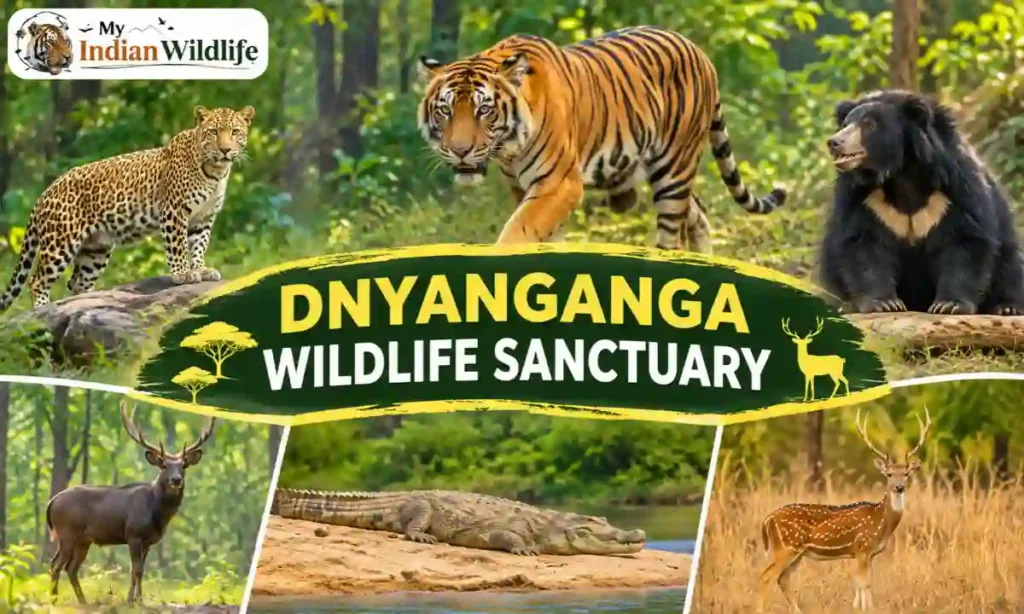
Dnyanganga Wildlife Sanctuary is a stunning natural wildlife spot located in Buldhana district of Maharashtra, India. It is known for its dry deciduous forests, various types of wildlife, natural water resources and forest scenery. Here animals, birds and other species get protection from natural dangers.
The size of the Dnyanganga Wildlife Sanctuary is about 203.21 square kilometers. It is one of the significant parts of wildlife in Maharashtra. There are leopards, sloth bears, wolves, hyenas, nilgai and wild boars inhabiting its forests. Different kinds of birds live here too.
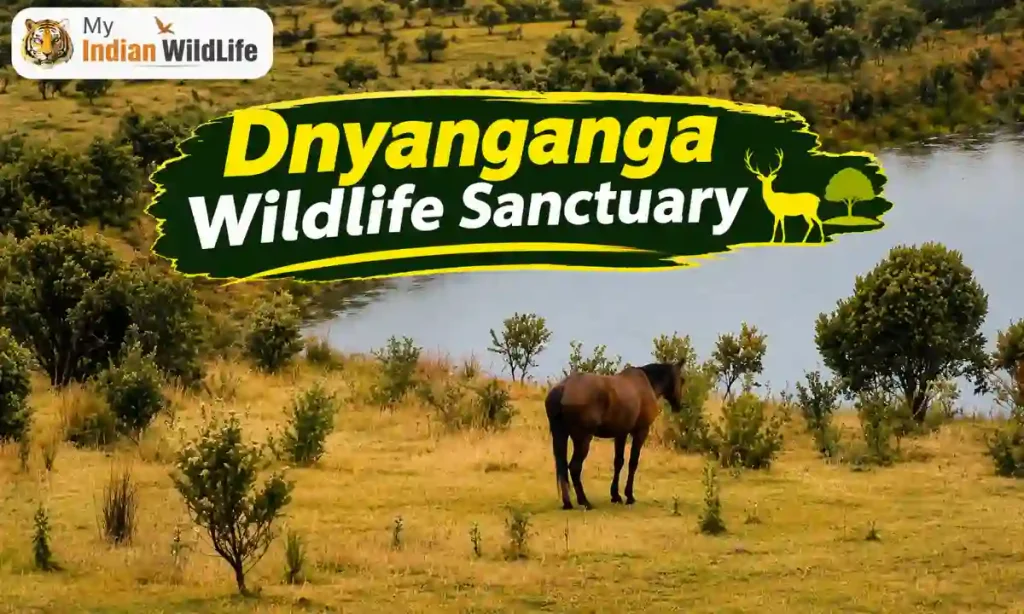
Dnyanganga River and two lakes located in this protected area make the Dnyanganga Wildlife Sanctuary special. In addition, there are low hills and slopes covered with forests and seasonal vegetation.
Travelers looking for wildlife spots which are not widely known have the chance to visit Dnyanganga Wildlife Sanctuary. This protected area is also important in the aspects of forest conservation and native wildlife protection.
Dnyanganga Wildlife Sanctuary – Location, Area, Wildlife and Key Details
Dnyanganga Wildlife Sanctuary is a vital protected site in Buldhana district. It is important for visitors to comprehend the geographical location and features of the forest before embarking on a visit there.
| Particulars | Information |
|---|---|
| Name | Dnyanganga Wildlife Sanctuary |
| Location | Buldhana district, Maharashtra, India |
| Region | Vidarbha |
| Establishment | 1997 |
| Notified Area | Approximately 203.21 sq. km |
| Nearest Major Town | Khamgaon |
| Other Nearby Town | Buldhana |
| Nearest Railway Station | Shegaon |
| Main River | Dnyanganga River |
| Natural Water Bodies | Two lakes |
| Forest Type | Southern Tropical Dry Deciduous Forest |
| Major Mammals | Leopard, Sloth Bear, Nilgai and Deer |
| Bird Diversity | Around 150 species |
| Best Season for Nature Visits | October to February |
| Favourable Wildlife Observation Period | February to May |
| Managing Authority | Maharashtra Forest Department |
Where Is Dnyanganga Wildlife Sanctuary Located?
The Dnyanganga Wildlife Sanctuary is found in Buldhana district of Maharashtra state, India. It is linked to the Dnyanganga river and is situated in a land comprising dry forests, some hills, and natural water sources.
The sanctuary is geographically situated close to the towns of Khamgaon and Buldhana, which can be used as references while visiting the sanctuary. The area surrounding the sanctuary has farmlands, forests, and other natural sites.
The sanctuary is also linked with the regional Melghat forests. This regional link helps understand the habitat of wildlife and conservation sites of eastern Maharashtra.
The geographical location of the sanctuary makes it a very attractive site for visitors who wish to explore natural attractions in Buldhana district. They can visit the sanctuary along with other regional locations such as Lonar Lake and Shegaon, based on their travel time.
Geographical Importance of the Sanctuary
The significance of Dnyanganga Wildlife Sanctuary lies in the conservation of the natural forest ecosystem, which coexists with other landscapes like agriculture and human habitation.
The rivers, lakes and vegetation in the area provide sustenance to the wild animals throughout the year. Natural resources assume great significance during summer when there is less water available. The natural forest ecosystem is significant for ecological balance in the surrounding environment as well.
Nearby Towns and Important Locations
| Nearby Location | Approximate Distance |
|---|---|
| Khamgaon | 20 km |
| Buldhana | 28 km |
| Shegaon | Exact distance should be verified |
| Akola | Exact distance should be verified |
Distances can vary depending on the selected entry point and road route.
History and Establishment of Dnyanganga Wildlife Sanctuary
History of Dnyanganga Wildlife Sanctuary is associated with conservation of natural forests and habitats in Maharashtra State. The district of Buldhana has some forests of ecological value which provide habitat for various species of animals and birds.
The protected area of Dnyanganga Wildlife Sanctuary was set up as a wildlife sanctuary in the year 1997. Conservation objective of this protected area involves conservation of wildlife, protection of forest vegetation and maintaining natural habitats for various species.
Conservation significance of this sanctuary is not limited to the presence of wildlife. Forests here have some small animals, birds, insects and plant species which play an important role in functioning of the ecosystem.
An important event in the conservation approach of the protected area was announcement of Eco-Sensitive Zone notification for Dnyanganga Wildlife Sanctuary on 17th May 2017. The notification has environmental regulations for the surrounding area for the purpose of controlling activities which can affect the protected forests. Now, Dnyanganga Wildlife Sanctuary is one of the protected areas of Maharashtra.
Why Was Dnyanganga Wildlife Sanctuary Established?
The sanctuary was established to protect the natural forest environment and provide a secure habitat for native wildlife.
Its major conservation objectives include:
- Protecting the natural habitat of wild animals.
- Conserving native trees and dry deciduous vegetation.
- Maintaining ecological balance between predators and herbivores.
- Protecting rivers, lakes and other natural water resources.
- Preserving biodiversity for future generations.
- Supporting regional wildlife conservation initiatives.
Eco-Sensitive Zone and Forest Protection
The Eco-Sensitive Zone surrounding the Dnyanganga Wildlife Sanctuary is yet another level of environmental protection provided by such sanctuaries.
The idea behind such zones is the regulation of activities which might lead to the creation of environmental hazards, habitat destruction and disturbance of the wildlife species. Such a framework is significant because the protection of a wildlife sanctuary also depends on the environmental quality of its surrounding area.
Total Area, Landscape and Geographical Features of Dnyanganga Wildlife Sanctuary
Dnyanganga Wildlife Sanctuary encompasses a total area of about 203.21 square kilometres that is formally notified. Sometimes, some tourist information provides an area of around 205 square kilometres.
It has a diversified natural terrain which includes hills, valleys, forests slopes, and water bodies. This diverse geography results in various habitats for the wildlife along with the development of a variety of flora.
There are great variations in the terrain from season to season. In the rainy season, there is ample rainfall that leads to the growth of grass, shrubs and new vegetation. During summers, the forests are dry, and animals rely upon water sources.
Dnyanganga River and Its Role in the Ecosystem
Another important geographic feature of the sanctuary is the Dnyanganga River, which is an integral part of the natural environment and the forest ecosystem.
Water plays an important role in sustaining the wildlife habitats. Rivers along with water bodies play an important role in sustaining vegetation as well as drinking water for various animals. The river also plays an important role in contributing to the ecology of the protected area.
Two Lakes and Natural Water Resources
There are two lakes in the nature reserve, which provide natural water sources to the forest ecosystem.
They ensure the existence of the wildlife in case of scarce precipitation, as well as help to create favorable conditions for the birds and animals that live in fresh water environment.
Water sources are very significant for the summer season when natural sources become scarce.
Hills, Valleys and Forest Terrain
The topography of the sanctuary is characterized by gentle hills, slopes and natural valleys. These help in creating variations in flora and habitat conditions.
Various elevations and forest tracts act as safe havens and movement paths for animals. They also make for the picturesque nature of the sanctuary.
The presence of water sources, flora and varied topography makes Dnyanganga a vital ecological zone in the district of Buldhana.
Flora and Vegetation of Dnyanganga Wildlife Sanctuary
Vegetation in Dnyanganga Wildlife Sanctuary is significant in terms of ecological features. Southern Tropical Dry Deciduous Forests dominate the ecosystem and include dry teak forest vegetation that has adapted to variable rainfall and temperature patterns.
The vegetation varies depending on the season. In the monsoon season, due to rains, the forest gets new vegetation in form of grass, shrubs, and leaves to make it green. In the summer season, the deciduous forest vegetation sheds off its leaves in order to conserve moisture.
The vegetation acts as a source of food, cover, and breeding habitat for different wildlife animals. While herbivores get their food from trees’ leaves, birds nest in tree branches and shrubs.
Major Tree Species Found in Dnyanganga Wildlife Sanctuary
The forest ecosystem of the sanctuary contains some tree species that belong to the dry deciduous forests of central India. The presence of these tree species contributes to the biodiversity and structure of the forest ecosystem.
Some important tree species associated with this forest type include:
| Tree Species | Ecological Importance |
|---|---|
| Teak | Provides forest cover and shelter for wildlife |
| Ain | Contributes to the diversity of deciduous vegetation |
| Dhaora | Forms part of the native dry forest ecosystem |
| Anjan | Supports the woodland vegetation structure |
| Tendu | Provides leaves and fruits used by different forest organisms |
| Palash | Adds seasonal flowering vegetation to the forest landscape |
The availability and distribution of individual tree species can vary across different forest compartments.
Dry Deciduous Forests and Seasonal Vegetation
The dry deciduous forests are distinguished by trees that shed their leaves during the dry period. This adaptation enables them to save water in times of little precipitation.
Seasonal vegetation is significant in Dnyanganga Wildlife Sanctuary as it acts as a source of food and other support for herbivores and other wild animals in the forest.
The rainy season is marked by growth in grass and other plants which become the source of food for the wild animals like deer and nilgai. The dry season is marked by reduced density of vegetation.
Importance of Native Plants for Wildlife
The indigenous plants play a critical role in preserving the natural food chain within the sanctuary. The different animals rely on forest vegetation for food, shelter, and safety.
The herbivores feed on grasses, leaves, fruits, and other parts of the plant. The birds also use the trees and shrubs for nesting, resting, and finding insects. The smaller animals also find shelter among the vegetation.
The healthy forest vegetation also plays an important role in preventing soil erosion and sustaining the natural water cycle.
Role of Forest Conservation in Protecting Biodiversity
The conservation of the natural vegetation of the Dnyanganga Wildlife Sanctuary is necessary to sustain the wildlife in the sanctuary. The degradation of the forest can lead to the loss of the food source and disturbance to the habitat of the animals.
The conservation of the forests helps in preserving the natural trees, natural water sources, and the habitat of the different species. Thus, the sustainable conservation of such forests is necessary not only for the mammals but also for other creatures in the ecosystem.
Wildlife and Animals Found in Dnyanganga Wildlife Sanctuary
Dnyanganga Wildlife Sanctuary is a natural habitat where a number of species of wild animals living in the forests of Maharashtra are present. Its dry deciduous flora, clearings, hills and water sources create proper environment for mammals, birds, reptiles and other wildlife.
The wildlife sanctuary is especially remarkable in that its ecosystem has both herbivorous and carnivorous animals. Herbivorous animals are dependent on grasses, leaves, fruits and other vegetation, whereas carnivores ensure the control of other animal species in their numbers as per the food chain cycle.
A number of mammals that are associated with the sanctuary are leopards, sloth bears, nilgai, spotted deer, barking deer, wild boars and hyenas among others. Other mammals may also be found in the forests surrounding the sanctuary.
There are no guarantees when it comes to seeing the wild animals. This is because animals usually move depending on food availability, water sources, climate and other factors. It is advised not to observe animals except at certain designated places.
Leopard – An Important Predator of Dnyanganga Wildlife Sanctuary
The Indian leopard is an important carnivore that lives in the forest habitat of Dnyanganga Wildlife Sanctuary. Leopards are very adaptable creatures which are able to live in various kinds of forest habitats.
These animals like places where there is enough vegetation, prey and comfortable places for rest. The spotted fur of these animals helps them to hide in the forests among trees, rocks and dry vegetation.
Leopards are carnivores and they eat various kinds of animals depending on the availability of prey. Usually, leopards do not interact with people and are most active at quiet times especially in the evenings and at nights. Leopards are important in maintaining ecological balance in the forest environment.
Sloth Bear – A Notable Forest-Dwelling Mammal
Yet another mammal of importance that lives in the dry deciduous forests of central India is the sloth bear. The sloth bear can be identified by its long black fur coat, white mark on the chest and feeding behavior.
The sloth bear is an omnivore which feeds on termites, ants and fruits available in nature. The long claws of the sloth bear along with the unique feeding pattern assist them in extracting insects from termite mounds and other places.
The sloth bear prefers the forest environment due to availability of food and shelter. Though they seem to move slowly, the sloth bears may become unpredictable in case of threat.
Nilgai (Blue Bull) – The Largest Asian Antelope
Nilgai, also known as blue bulls, are the largest antelopes in the continent of Asia. Nilgai is an herbivore and dwells in open woodlands, grassland, and scrubland.
The male nilgai appears to be bluish grey in coloration, whereas the female is mostly brown in color. The powerful legs and large body size assist them in moving around in open fields.
Their diet comprises of grass, leaves, shrubs, and other vegetation. They play their role in the ecosystem by grazing and browsing activities.
Spotted Deer (Chital) – A Common Herbivore of Indian Forests
Chital, also referred to as spotted deer, is identified by its reddish-brown fur with white spots. This type of animal is a social one and thus usually found in herds.
The diet of spotted deer comprises of grass, leaves, fruits, and other plant materials. Chital serve as prey for large carnivores like leopards.
They play an essential role in the ecosystem because they support the food chain within the forest environment.
Barking Deer – A Small Deer Species of Forest Habitats
The bark deer, also referred to as the Indian muntjac, is a small-sized deer that inhabits forests.
It is known for making the sound of a barking dog whenever it gets frightened. This peculiar sound serves as an alarm whenever the animal is threatened. Barking deer usually like to stay in those places where there is plenty of vegetation and food available.
Striped Hyena – An Important Scavenger
The striped hyena is an important scavenger species that is present in certain regions of the Indian subcontinent. It can be identified by its sloped back, erect ears, and striped fur.
Hyenas play a vital role in keeping the ecosystems clean by consuming dead animals. They may also eat smaller animals along with other forms of food. Their scavenging activity serves a vital purpose from an ecological perspective as well.
Wild Boar – An Adaptable Forest Animal
The wild boar is an adaptable creature which is native to many forest areas of India. It has a sturdy physique, rough fur, and a lengthy snout, which enables it to find food easily.
Wild boars are omnivores and have a diet of roots, fruits, seeds, insects and all kinds of edible things. They tend to travel in packs, although adult males can be seen traveling solo at times.
Other Mammals and Wildlife Species
Apart from the major mammals discussed above, the wider forest landscape supports other wildlife species that contribute to its biodiversity.
These may include:
- Jungle Cat: A small wild feline that generally inhabits forest edges and scrubland.
- Golden Jackal: An adaptable carnivore that feeds on small animals, insects and other available food.
- Indian Fox: A small wild canine associated with open and semi-arid landscapes.
- Indian Wolf: A carnivore of open grassland and scrub habitats in parts of central India.
- Indian Hare: A herbivorous mammal that feeds on grasses and other vegetation.
Species presence should be distinguished from confirmed recent sightings; individual animals are not necessarily observed during every visit.
Major Mammals and Their Role in the Sanctuary’s Ecosystem
There are many mammals within Dnyanganga Wildlife Sanctuary, which help create a food chain in nature. Mammals live in various habitats based on their eating habits and mobility.
As per the Maharashtra Eco-Tourism, there are many mammals, like leopards, sloth bears, barking deer, sambar, nilgai, spotted deer, hyenas, jungle cats, and jackals. Also, according to the official notification of Eco-Sensitive Zone of Dnyanganga Wildlife Sanctuary, there are wolves, foxes, and wild boars.
Sambar Deer – One of the Largest Deer Species
Sambar deer belong to one of the largest varieties of deer in India. They are distinguished by their heavy build, brownish fur and large antlers of the male variety.
Sambar deer are usually found in forested areas that have adequate plant cover and sources of water. They feed on grass, leaves, fruits, and other plant-based items. They form an integral part of the food chain of many forests.
Indian Wolf – A Carnivore of the Wider Forest Landscape
Indian wolf is a carnivorous mammal that is commonly found in open areas and grasslands of some parts of central India.
Indian wolves hunt small to medium sized prey animals and help in maintaining the balance of prey population.
Indian wolves are particularly mentioned in the 2017 Eco-Sensitive Zone notification of the sanctuary, and hence their mention is very crucial in the wildlife of the region.
Jungle Cat – A Small Wild Feline
The jungle cat is an intermediate sized feline that can be found in different environments in India. It has long legs, sharp ears, and a short tail.
Its main diet includes rodents, birds, reptiles, and other small creatures. The jungle cat is an adaptable creature and can survive in forests, grasslands, and scrubs.
Golden Jackal – An Adaptable Wild Canine
Golden jackals are highly adaptive canines that are able to thrive in a variety of environments such as forests, savannas, and farmlands.
They feed on small mammals, birds, insects, fruits and any other food found in nature. Jackals perform an ecological function by regulating populations of small animals and scavenging organic matter.
Indian Fox – A Small Carnivore
The Indian Fox, commonly known as the Bengal fox, is a fairly small-sized wild canine present on the Indian subcontinent. They usually live in open spaces, grasslands and arid zones. They feed on rodents, insects, small birds, and fruits. Foxes play an important role in maintaining the ecological balance by controlling smaller animals’ population.
Latest Wildlife Census and Animal Population Information
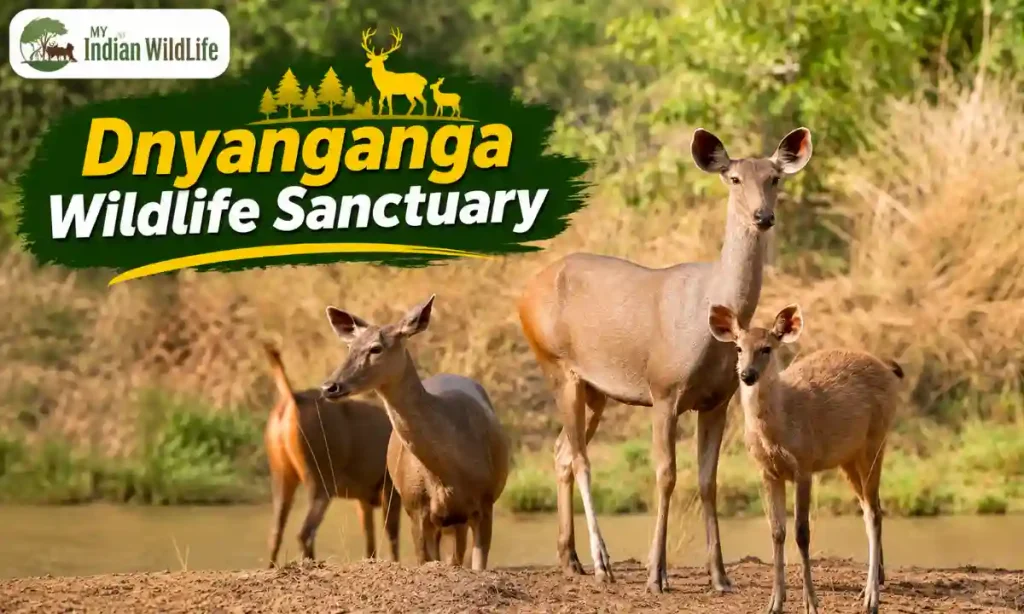
Wildlife monitoring is an integral component of the management of Dnyanganga Wildlife Sanctuary. Forest authorities employ various modes of monitoring animal movement and biodiversity through the use of camera traps and field surveys.
One of the major wildlife surveys conducted at the sanctuary took place during Buddha Purnima in May 2026. According to a report published by Navarashtra on 3 May 2026, the two-day surveying process involved 44 observation points and 44 cameras.
The survey monitored 635 wild animals using cameras.
Animals Recorded During the May 2026 Wildlife Census
| Animal | Number Recorded |
|---|---|
| Leopard | 25 |
| Sloth Bear | 29 |
| Wild Boar | 231 |
| Porcupine | 20 |
| Hare | 22 |
| Striped Hyena | 9 |
| Barking Deer | 28 |
| Nilgai | 145 |
| Peafowl | 81 |
| Chinkara | 4 |
| Other Deer | 19 |
| Pangolin | 2 |
| Jungle Cat | 3 |
| Monkeys | 16 |
| Sambar | 1 |
| Total | 635 |
Importance of Camera-Trap Monitoring
Camera trapping allows forest officials to document animal movements without the need for capturing or disturbing the animals.
These devices take photos of the animal whenever it passes through the observed spot. This information enables researchers and forest departments to analyze animal movements and their presence in the habitat.
Similarly, the wildlife monitoring in May 2026 also comprised forest officers from the ranges of Khamgaon and Buldhana. This kind of activity promotes wildlife conservation planning and environmental awareness.
The presence of leopards, sloth bears, pangolins, hyenas, and other animals indicates the ecological significance of preserving the sanctuaries.
Birds and Avian Biodiversity of Dnyanganga Wildlife Sanctuary
Apart from being a major destination for mammals, Dnyanganga Wildlife Sanctuary is equally popular among ornithologists because its dry deciduous forests, grasslands, and two lakes provide ideal habitat for birds.
As per information provided by Maharashtra Eco-Tourism, there are about 150 species of birds in Dnyanganga Wildlife Sanctuary. But a scientific survey carried out by Wildlife & Environment Conservation Society, Amravati, updated the existing list of birds.
This survey was conducted between February and September 2021, and 245 species of birds were recorded, which belonged to 55 families and 13 orders.
Resident Birds of the Sanctuary
Resident birds refer to species that either live in the area all year round or have regular local populations. They utilize the forest resources including trees, shrubs, grasslands and water resources for their nutrition, reproduction and nesting activities.
Presence of resident birds signifies the significance of having healthy forest vegetation and suitable habitat.
Migratory Birds and Seasonal Visitors
Seasonal birds come to the sanctuary according to certain seasons, which depend on the weather, food, and migration pattern of the birds.
These two bodies of water around the forested areas of the sanctuary are important for the water-related birds. Such seasonal birds contribute to the bird diversity of the region.
Common Birds Found in the Forest Ecosystem
The sanctuary’s birdlife includes woodland birds, birds of prey, ground-dwelling species and water-associated birds.
Some bird species recorded in the wider Buldhana forest landscape include:
| Bird Species | Main Characteristics |
|---|---|
| Indian Peafowl | Large ground-dwelling bird with colourful plumage |
| Shikra | Small bird of prey found in woodland habitats |
| Red-vented Bulbul | Common bird recognised by its distinctive red vent |
| Jungle Babbler | Social bird generally seen in groups |
| Common Bee-eater | Insect-eating bird known for catching flying insects |
| Black Drongo | Dark-coloured bird with a forked tail |
| Cattle Egret | White water-associated bird often seen near open fields |
| Indian Pond Heron | Commonly found around wetlands and shallow water |
| Grey Heron | Large wading bird that feeds on aquatic animals |
| Spotted Dove | Recognised by its spotted neck pattern |
Importance of the 245-Species Bird Survey
The scientific bird survey is significant because it provides more detailed information about the sanctuary’s avian biodiversity than the earlier checklist.
The survey recorded the following categories:
| Bird Category | Number of Species |
|---|---|
| Resident | 166 |
| Migratory | 68 |
| Passage Visitor | 2 |
| Resident Migratory | 3 |
| Breeding Migrant | 6 |
| Total | 245 |
Why Is Dnyanganga Wildlife Sanctuary Important for Wildlife Conservation?
Dnyanganga Wildlife Sanctuary is valuable because it conserves a diversified forest ecosystem in Maharashtra. It conserves natural habitat where various mammals, birds and other organisms rely on the vegetation and water resources available in the region.
Conservation value of Dnyanganga Wildlife Sanctuary may be described in the following aspects:
Protection of Indigenous Mammals: The conserved forest supports mammals including leopards, sloth bears, deer, hyenas, etc.
Avian Diversity: The scientific study that describes 245 bird species is evidence of the sanctuary’s significance for avian diversity.
Conservation of Forest Habitats: The dry deciduous teak and mixed forest conserves habitat where wildlife finds food and shelter.
Conservation of Water Resources: The river and lakes conserve the water resources that support wildlife especially during droughts.
Monitoring of Wildlife Population: The camera-trapping survey and other forms of monitoring contribute to the understanding of animals’ populations.
Conservation of these natural resources is necessary for maintaining the ecological balance in the region.
Best Time to Visit Dnyanganga Wildlife Sanctuary
The optimal season to visit Dnyanganga Wildlife Sanctuary in Maharashtra depends on what the tourists expect from their visit. The Wildlife Sanctuary can be exciting all through the year; however, climate conditions, accessibility of the forest and activities of wildlife vary with seasons.
October till February would be a convenient period for visiting the place, as the climate will be relatively favorable. One can take an advantage of exploring the natural surrounding, do some bird watching and spend some time in the forest environment without the burning heat of summer.
For the wildlife lovers, February till May can be a good season for viewing the animals. In summer, there would be less water in several areas of the forest, which makes animals come to water spots more often. But, nevertheless, one should not count on meeting the animals.
The season of rains has its charm too, as the rains make the dry forest greener.
Winter Season (October to February)
Visiting the Dnyanganga Wildlife Sanctuary during winter can be an easy period due to favorable weather conditions.
Some greenery remains in the forest even after the rains as it is the beginning of another season. This can be the right time for those who wish to visit for bird watching, taking photographs, and walking in the forest.
One may enjoy morning walks due to cool weather and the presence of birds.
Why visit during winter?
- Pleasant weather for outdoor activities.
- Comfortable conditions for nature observation.
- Suitable season for birdwatching.
- Opportunities for forest and landscape photography.
- Better conditions for exploring nearby attractions.
Summer Season (March to May)
It is fascinating to visit summer because all living things depend on the source of water.
When there is an increase in temperature, there may be a reduced amount of water in various sections of the forest. One may find animals near any source of water depending on how they move around.
It is very hot during the month of April and May. Therefore, it is important that you visit in the early mornings.
Why visit during summer?
- Potential opportunities for observing wildlife near water sources.
- Better visibility in some areas because of reduced vegetation.
- Interesting conditions for wildlife photography.
- Suitable for visitors specifically interested in animal behaviour.
Carry sufficient drinking water and avoid spending extended periods outdoors during peak afternoon temperatures.
Monsoon Season (June to September)
The monsoon season ensures the supply of water to Dnyanganga Wildlife Sanctuary. The trees, grasses, and shrubs get refreshed with water, making the forest region more green.
It is one of the most favorable seasons for people who love forests, greenery, and nature of Maharashtra.
But sometimes due to rains, the roads become slippery and cannot be accessed. Some parts of the forest are also restricted due to security reasons.
Why visit during the monsoon?
- Green forest landscapes.
- Fresh vegetation and seasonal flowering.
- Beautiful natural surroundings.
- Opportunities to observe seasonal changes in the ecosystem.
Visitors should confirm entry permissions and road conditions before travelling during the rainy season.
Month-Wise Visiting Guide
| Month | Weather and Forest Conditions | Visiting Experience |
|---|---|---|
| January | Cool and pleasant | Good for nature visits |
| February | Mild weather | Suitable for wildlife observation |
| March | Temperature begins rising | Favourable for wildlife enthusiasts |
| April | Hot and dry | Potential water-source sightings |
| May | Very hot | Interesting but physically demanding |
| June | Monsoon begins | Fresh vegetation |
| July | Rainy conditions | Green forest scenery |
| August | Rainfall continues | Nature observation |
| September | Rainfall may decrease | Changing forest landscape |
| October | Pleasant conditions return | Good for outdoor exploration |
| November | Comfortable weather | Suitable for birdwatching |
| December | Cooler conditions | Good for nature photography |
Dnyanganga Wildlife Sanctuary Timings and Visiting Hours
Dnyanganga Wildlife Sanctuary opening hours need to be clarified from the Maharashtra Forest Department before the visit, because, in contrast to conventional tourist sites, protected forests can have special rules of entry.
Availability of access for visitors may vary depending on the authorized entrance to the forest, condition of the forest, weather, and needs of wildlife management.
One cannot expect that the safari will start at the same time every day all year round.
Morning Visiting Hours
Morning is usually a time when nature study is favorable as the temperatures are cool and the birds and animals could be active.
The visitors interested in photography and bird watching should check how to get into the park during mornings.
Afternoon and Evening Visiting Hours
The afternoon time can be uncomfortable in summer due to high temperature. The movement of animals can also depend upon weather and availability of water.
If evening entry is allowed by the Forest Department, then the time scheduled by the department should be followed strictly. No one should stay within the forest beyond permitted timings.
Important Information About Visiting Timings
| Visitor Information | Details |
|---|---|
| Morning Entry | Confirm with forest authorities |
| Afternoon Entry | Subject to permitted visitor hours |
| Evening Entry | Not publicly confirmed |
| Weekly Holiday | Not publicly confirmed |
| Seasonal Restrictions | May apply |
| Advance Permission | Confirm before visiting |
Dnyanganga Wildlife Sanctuary Entry Fee and Ticket Price
There is no confirmation for the official entry fee at Dnyanganga Wildlife Sanctuary as of now. The visitors need to check the updated entry fee details with the concerned forest department office.
Visiting wildlife sanctuary costs can vary according to the type of entry permits as well as vehicle and guide facilities etc.
One needs to understand that regular entry in the forests and wildlife tourism are two different things. If there is any safari facility, then it might incur a separate fee.
Entry Fee for Indian Visitors
There is no independent verification regarding the current entry fee to India for both adults and kids. Tourists are encouraged to verify the status of being allowed entry and whether prior approval is needed.
Entry Fee for Foreign Visitors
Entry procedures or costs for international tourists have not been officially announced. Foreign tourists are recommended to communicate with the forest officials prior to traveling.
Vehicle and Photography Charges
Access by private vehicles and photography might have restrictions according to forest department policies. The visitors need to know about the policy prior to carrying photography gear or accessing the conservation area by using a private vehicle.
Dnyanganga Wildlife Sanctuary Ticket Price
| Ticket or Service | Price |
|---|---|
| Adult Entry Ticket | Not publicly confirmed |
| Child Entry Ticket | Not publicly confirmed |
| Foreign Tourist Entry | Not publicly confirmed |
| Private Vehicle Entry | Not publicly confirmed |
| Jeep Safari | Not publicly confirmed |
| Forest Guide | Not publicly confirmed |
| Professional Photography | Not publicly confirmed |
| Video Camera Charges | Not publicly confirmed |
Safari Facilities, Jeep Safari and Forest Exploration
Organised safaris are common in wildlife locations in India since it gives tourists a chance to observe the fauna in its natural surroundings. Nonetheless, the presence of organised safaris is not the same in all wildlife locations.
With regard to Dnyanganga Wildlife Sanctuary, there have been no official arrangements for public jeep safaris, booking options, and standard safari tracks.
Hence, tourists should not expect to book a jeep safari as they would do in major tiger sanctuaries.
Is Jeep Safari Available at Dnyanganga Wildlife Sanctuary?
There is no official confirmation on the availability of a regular tourist jeep safari in the Dnyanganga Wildlife Sanctuary.
People who wish to explore the forest should get in touch with the forest department for further details as to whether guided tours or any other activity is allowed.
Wildlife Watching Opportunities
Observing wildlife is one of the major activities that draws nature lovers to protected forests.
Leopards, sloth bears, deer and wild boars are some of the creatures that make up the wildlife in the sanctuary. Nonetheless, sighting of these animals is based on their movements, environmental conditions and visitor access rights.
Never should visitors move out of designated routes to get pictures of these animals.
Guided Nature Exploration
A professional forest guide will assist the tourists in comprehending the flora and fauna of the sanctuary. One should inquire beforehand about the availability of a forest guide by the forest department and its associated permissions/charges.
How to Reach Dnyanganga Wildlife Sanctuary?
The Dnyanganga Wildlife Sanctuary is located in the district of Buldhana of Maharashtra state and can be accessed via towns like Khamgaon, Buldhana and Shegaon. People traveling from various places of Maharashtra state or even other parts of India can make arrangements to travel by road, rail and air. Traveling by road will be convenient while reaching from nearby towns to the sanctuary.
It is suggested that people must first reach Khamgaon or Buldhana and then arrange local transport for traveling to the authorized point of entry into the forest. People must be sure about the point of entry as the sanctuary is spread in an extensive forest area and not all roads can be traveled.
How to Reach Dnyanganga Wildlife Sanctuary by Road?
Another one of the convenient modes of traveling to get to Dnyanganga Wildlife Sanctuary would be the roads. This sanctuary lies about 20 km from Khamgaon and 28 km from Buldhana. Visitors can travel there using cars, taxis, or any means of transport available in the locality.
Travelers who are coming from far off places can travel first to the places like Akola, Khamgaon or Buldhana and then continue their travel through road. Private transport would offer greater flexibility especially to those who wish to see other places in the district. However, it must be remembered that entry into restricted forest areas is not allowed.
One must check out the road conditions and authorised points of entry before beginning the journey. The monsoon rains will pose some problems during the monsoon period.
How to Reach Dnyanganga Wildlife Sanctuary by Train?
Train is yet another appropriate mode of transport that can be used by visitors from various parts of Maharashtra and adjoining states. Shegaon railway station is known to be the closest railway station to the wildlife sanctuary and is included in the eco-tourism information of the sanctuary. Shegaon railway station is a vital railway station on the Howrah-Nagpur-Mumbai railway line route.
After arriving at Shegaon railway station, one can arrange for transportation by taxi or any other means available from there to Dnyanganga Wildlife Sanctuary depending on the chosen forest point and route to it.
One should keep in mind about the availability of trains and subsequent transportation to the destination. For those who are traveling with families or luggage, it will be better to arrange for a taxi prior to the journey.
How to Reach Dnyanganga Wildlife Sanctuary by Air?
Visitors coming from far away can take flights to Dr. Babasaheb Ambedkar International Airport at Nagpur and then head to Buldhana district through roads. The city of Nagpur is one of the major aviation hubs in Maharashtra and provides flight facilities to several Indian cities.
Another place that visitors can think about using as their regional point of arrival would be Akola. However, they will have to confirm the availability of flight services before they finalize on it. They can hire private taxis after landing there.
It can be convenient for visitors who come from far-off places to use air travel as their mode of transport. Nevertheless, it is better for them to include the road trip in their travel itinerary.
Which Is the Best Way to Reach Dnyanganga Wildlife Sanctuary?
The most suitable means of transport will depend on the place of origin and the financial means of the tourists. Tourists who originate from neighboring towns can use road transport, while tourists originating from faraway cities can use rail transport and later road transport.
| Transport Mode | Suitable For | Important Information |
|---|---|---|
| Road | Families and groups | Private cars and taxis |
| Train | Budget-conscious travellers | Shegaon is a nearby railway station |
| Air | Long-distance travellers | Continue by road from the airport |
| Local Taxi | Visitors without personal vehicles | Availability and fares should be confirmed |
Distance to Dnyanganga Wildlife Sanctuary from Nearby Cities
Information on the distances to neighboring cities assists travelers in planning their schedule and transport means. Khamgaon and Buldhana can be regarded as two major departure points due to their closeness to the Dnyanganga Wildlife Sanctuary.
The distance between Khamgaon and the sanctuary is about 20 kilometers, and Buldhana is 28 kilometers away from it. Shegaon can also be considered a major city due to its railway connections.
Distances to other cities depend on the chosen route and entrance to the sanctuary. Travelers coming from Akola, Amravati, Nagpur, Pune or Mumbai need to find out current directions to the destination.
| Starting Location | Distance |
|---|---|
| Khamgaon | Approximately 20 km |
| Buldhana | Approximately 28 km |
| Shegaon | Not publicly confirmed |
| Akola | Not publicly confirmed |
| Amravati | Not publicly confirmed |
| Nagpur | Not publicly confirmed |
| Pune | Not publicly confirmed |
| Mumbai | Not publicly confirmed |
Distance from Khamgaon to Dnyanganga Wildlife Sanctuary
Khamgaon is among the closest cities to Dnyanganga Wildlife Sanctuary, and it lies around 20 kilometres from there. It can be a good city to start your visit to the sanctuary in case you have plans for an easy wildlife adventure.
This place is helpful in providing you with means of transport and buying basic necessities. You can move towards the sanctuary using a private vehicle or any other means of transport.
Distance from Buldhana to Dnyanganga Wildlife Sanctuary
Buldhana is about 28 km away from Dnyanganga Wildlife Sanctuary and acts as the administrative capital of the district. It is a useful place for tourists who want to make arrangements for accommodations and other travel necessities.
The town also offers facilities like access to local markets, restaurants and other amenities. Tourists visiting for a longer period of time may use Buldhana as an accommodation base.
Distance from Shegaon to Dnyanganga Wildlife Sanctuary
Shegaon is a significant rail-connected town located in the Buldhana district. People who have travelled by train can use this town as a point of transport and then proceed further to reach the sanctuary.
Another popular attraction of Shegaon is the Shri Gajanan Maharaj Temple. The distance to the sanctuary must be found out depending on which entry gate one chooses to enter through.
Hotels and Accommodation Near Dnyanganga Wildlife Sanctuary
Those who are planning to visit Dnyanganga Wildlife Sanctuary for more than one day need to make arrangements in towns close to the sanctuary because there is no such accommodation facility in the forest sanctuary as of now, as far as it is known publicly.
There are budget hotels, private lodges, guest houses and hotels where visitors can stay when they visit these towns. This depends upon the availability of rooms and facilities according to the season and travel period of the visitors.
Hotels and Accommodation in Khamgaon
Being near Dnyanganga Wildlife Sanctuary, Khamgaon can be seen as an ideal place to stay in since there are many hotels and resorts in the area depending on the choice and preferences of the visitor.
Since Khamgaon is near the surrounding forest region, it will save the visitor much time to reach that area. It is an ideal place for those planning short visits especially with their families.
Hotels and Accommodation in Buldhana
Buldhana is yet another option for visitors who want to tour the Dnyanganga Wildlife Sanctuary. It is the district headquarters where accommodation, restaurants, and markets can be found.
There are various hotel options for visitors to select according to their financial status. Those visitors who wish to tour other sites within the district can use Buldhana as a base.
Hotels and Accommodation in Shegaon
Shegaon is ideal for tourists who want to travel through the railway route or wish to combine their safari tour with religious tourism. Shegaon is a pilgrimage site owing to the presence of Shri Gajanan Maharaj Temple.
The tourists have access to hotels, lodges and guesthouses in the area. It is advisable to make arrangements regarding accommodation prior to visiting the place.
Where Should You Stay While Visiting Dnyanganga Wildlife Sanctuary?
Accommodation should be based on the travelling plan of the visitors. While Khamgaon provides a better option for those visitors who prefer to remain near the sanctuary, Buldhana offers district level amenities. Shegaon provides an ideal location for railway visitors and pilgrim tourists.
| Location | Accommodation Options | Suitable For |
|---|---|---|
| Khamgaon | Local hotels and lodges | Short wildlife trips |
| Buldhana | Budget and standard hotels | Families and longer stays |
| Shegaon | Hotels and guest houses | Railway travellers and pilgrims |
| Inside Sanctuary | Not publicly confirmed | Requires forest department confirmation |
Food Facilities and Restaurants Near Dnyanganga Wildlife Sanctuary
Provisions of food will be one of the major considerations when planning a visit to Dnyanganga Wildlife Sanctuary, particularly if visitors are travelling with kids and/or spending a considerable number of hours in the permitted forests of the sanctuary.
It is important not to presume that there will be any restaurant, food court, or food stall facilities in the sanctuary, which is a protected place. Travellers may look into meal options available at towns close to the sanctuary like Khamgaon, Buldhana, and Shegaon.
Food Options in Khamgaon
Khamgaon allows tourists to avail themselves of various restaurants as well as small eateries where they can make arrangements for their breakfast, lunch, and dinner. Tourists get an opportunity to enjoy various Maharashtrian cuisines, vegetarian food, and snacks, etc.
Tourists that plan to travel in the early hours of the day should make arrangements for breakfast in advance.
Food Options in Buldhana
Buldhana has varied local eating places where tourists coming for the sanctuary can dine. There are various restaurants that serve food of Maharashtrian cuisine along with other Indian cuisine.
Visitors having their stay in Buldhana can take care of their food requirements at Buldhana without being dependent on the protected forest.
Food Options in Shegaon
Shegaon is considered a religious place and tourists have the opportunity to visit restaurants that serve vegetarian and non-vegetarian dishes in the city. When tourists visit the Shri Gajanan Maharaj Temple, they can couple their spiritual visit along with having a meal in Shegaon.
It is recommended to verify the timings of the restaurants before visiting them.
Important Food and Refreshment Arrangements
Guests need to ensure that they have enough drinking water and food prior to entering the forests. No trash such as food containers, bottles, etc., should be left behind in the forest area. Additionally, visitors are advised not to feed the wildlife as it disrupts their feeding pattern and causes danger.
Estimated Budget for Visiting Dnyanganga Wildlife Sanctuary
The overall expenses required for the trip to the Dnyanganga Wildlife Sanctuary will depend on the starting point of travel, mode of transport, accommodation and other related arrangements. People traveling from the neighboring towns can make their travel relatively affordable, but those coming from farther cities will require more money for that.
As the official fees for the sanctuary entry, guides and safaris are not officially confirmed, the following amounts can be considered as approximate travel estimates.
Estimated One-Day Travel Budget
A day tour is perfect for tourists coming from places like Khamgaon or Buldhana. The cost largely hinges on the mode of transport, food, and personal costs.
| Expense | Estimated Cost |
|---|---|
| Local Transportation | ₹500–₹1,500 |
| Food and Refreshments | ₹300–₹600 |
| Drinking Water and Snacks | ₹100–₹200 |
| Miscellaneous Expenses | ₹200–₹400 |
| Entry Fee | Not publicly confirmed |
| Guide or Safari Charges | Not publicly confirmed |
Estimated Two-Day Travel Budget
For tourists coming from areas outside Buldhana district, a two-day tour is advisable for the following reasons: It will help tourists find accommodations and other places of interest within the area.
| Expense | Estimated Cost |
|---|---|
| Local Transportation | ₹1,000–₹2,500 |
| Hotel Accommodation | ₹800–₹2,000 |
| Food and Refreshments | ₹600–₹1,200 |
| Miscellaneous Expenses | ₹300–₹600 |
| Entry Fee | Not publicly confirmed |
| Guide or Safari Charges | Not publicly confirmed |
How to Plan an Affordable Trip to Dnyanganga Wildlife Sanctuary?
Travelers can avoid the costs of their travel by opting to stay at Khamgaon or Buldhana rather than paying for costly arrangements. Traveling as a group is another way of saving on transportation costs since the costs will be shared by the passengers.
Making bookings for accommodation beforehand and planning other attraction sites around the area will make the visit more economical. Visitors need to have extra cash for unforeseen costs and fees charged by the forest department.
Planning a trip well ensures that visitors see the surrounding areas of Dnyanganga Wildlife Sanctuary without any additional cost.
Best Places to Visit Near Dnyanganga Wildlife Sanctuary
Apart from enjoying the various wildlife species in the Dnyanganga Wildlife Sanctuary, visitors can also find numerous exciting tourism spots within the Buldhana district of Maharashtra. Some of the main tourism spots that can be considered during travel include Lonar Lake, Shegaon, Sindkhed Raja and Ambabarwa Wildlife Sanctuary.
Each of these locations provides a unique experience ranging from the visit of a unique meteor crater site to the discovery of various religious temples. Traveling to nearby tourism spots as well as visiting the wildlife spot is a great idea especially for those who will have a two day vacation plan.
Lonar Lake – A Famous Meteorite Impact Crater in Maharashtra
Lonar Lake is one of the most amazing natural wonders in Maharashtra. It is located in Buldhana district and is known for the crater that was created by a meteorite falling thousands of years ago. This lake is of significant scientific importance due to its geological features and salt-alkaline water.
The landscape around the lake features rocky areas and vegetation and even some temples. Lonar Lake is a place of interest for nature lovers, scientists, photographers, and geologists who come here for scientific purposes.
Shri Gajanan Maharaj Temple, Shegaon – A Popular Religious Destination
Shri Gajanan Maharaj Temple in Shegaon is a prominent place of pilgrimage in Maharashtra. It is a shrine of Sant Gajanan Maharaj and receives visitors from various corners of India all round the year.
In addition, Shegaon is known to have well-organised pilgrimage infrastructure and a religious aura. Travellers heading for Dnyanganga Wildlife Sanctuary could also make a trip to the Shri Gajanan Maharaj Temple during their visit.
Sindkhed Raja – A Historical Destination Associated with Jijabai
Sindkhed Raja is one of the culturally rich towns of Buldhana district. The town is popular because of its connections with Jijabai, who was the mother of the great Chhatrapati Shivaji Maharaj, and thus has cultural significance in the state of Maharashtra.
This town has many historical places to visit and is famous for places like the Lakhuji Jadhav memorial complex and others which are heritage related sites.
Ambabarwa Wildlife Sanctuary – Another Forest Destination
Ambabarwa Wildlife Sanctuary is another forest area which comes under the category of protected areas in Buldhana district. The protected area is known for its natural vegetation and wildlife.
The tourists who wish to explore the forests of Maharashtra can visit Ambabarwa Wildlife Sanctuary as well, as it is one of the protected landscapes in the region and home to different forest species.
Buldhana – A Convenient Base for Exploring the Region
Buldhana is an administrative center of the district as well as a significant site for tourists who wish to visit various sites within the area. It is also a source of local markets, hotels, and transport services.
Tourists can use Buldhana as a starting point when visiting Dnyanganga Wildlife Sanctuary and other places in the district. Its positioning makes it a good destination for tourists who want to combine tourism with religion and history.
Wildlife Conservation and Ecological Importance of Dnyanganga Wildlife Sanctuary
Dnyanganga Wildlife Sanctuary plays a significant part in the preservation of Maharashtra’s biological diversity. The dry deciduous forest in the sanctuary acts as habitats for various mammals, birds and other living beings.
Dnyanganga Wildlife Sanctuary has significance due to the fact that it provides different trophic levels of the natural food chain. Herbivores depend upon the forest vegetation for their diet whereas the predators maintain the balance between the prey and predator.
The forest vegetation, river and lakes also play an important part in maintaining the ecological balance of the sanctuary.
Protection of Endangered and Native Wildlife
Some of the main conservation goals of the Dnyanganga Wildlife Sanctuary are the protection of native wildlife and provision of a favorable habitat for the various animal species.
The region boasts of leopards, sloth bears, pangolins, and other mammals that form some of its native wildlife. Protection of these animals will involve maintenance of forest cover, prevention of habitat disturbances, and provision of natural food sources.
Other wildlife conservation efforts will be helpful in tracking animal movements and conservation needs.
Importance of Forest and Habitat Conservation
Conervation of forest is important in order to ensure the natural surroundings of Dnyanganga Wildlife Sanctuary. Various plants such as trees, shrubs, and grasses offer nutrition and shelter to various types of wildlife.
Healthy forests also include insects, reptiles, birds, and small mammals which make part of the ecosystem. It is thus important to prevent any activities such as deforestation, forest fires, and destruction of the habitat.
Role of Water Resources in Wildlife Protection
The Dnyanganga River and two lakes are among the natural resources of the sanctuary. Availability of water affects the movement of wildlife and the growth of plants and forest animals.
In summer, water becomes very important as the temperatures increase and moisture becomes scarce in many parts of the forest.
Conservation of these water resources aids in maintaining appropriate habitats for mammals and birds and other living things.
Wildlife Monitoring and Conservation Activities
Wildlife monitoring enables the forest authority to know the occurrence and behavior of the animals. The camera traps as well as the field surveys can give information regarding the activity of the animals.
This will be helpful in determining the conservation needs and status of the animals’ habitats.
Public awareness and good tourism practices may also assist in conserving the natural habitat of the forests.
Important Rules and Regulations for Visitors at Dnyanganga Wildlife Sanctuary
Since Dnyanganga Wildlife Sanctuary is a protected habitat, tourists have to adhere to the rules that have been laid down by the Maharashtra Forest Department. This will enable one to prevent disturbance to animals, protect the flora as well as ensure that tourists are safe while enjoying the wildlife sanctuary.
Tourists visiting the sanctuary have to know that wild animals need adequate space as well as a tranquil environment. Disturbing the animals through feeding them, approaching them, and trying to take pictures of them may lead to danger.
Visitors should confine themselves to authorized places and obey the directions of forest authorities.
Wildlife Protection and Responsible Behaviour
Feeding, chasing or harassing wildlife is strictly prohibited. The wildlife gets their food naturally from the surroundings, and human intervention in this process will definitely affect the animal’s behavior.
It is especially necessary to maintain a safe distance while coming face to face with large mammals like leopards, sloth bears and wild boars.
Cleanliness and Environmental Protection
Cleanliness is necessary to safeguard the natural ecosystem of the sanctuary. Travellers must not litter with items like plastic bottles, food packaging materials and other kinds of garbage in the jungle.
Such waste can affect the animals and contaminate the natural sources of water. The tourists must take the waste to proper garbage dump sites and refrain from harming the plants.
Vehicle and Forest Entry Regulations
Only sanctioned paths and vehicle restrictions should be observed by the visitors. The unauthorised use of vehicles, honking unnecessarily and playing loud music can scare off animals.
The use of private vehicles should not be taken as automatic permission without confirmation. This should be checked before embarking on one’s journey.
Safety Guidelines for Visiting Dnyanganga Wildlife Sanctuary
Safely is one factor to consider when touring any wildlife sanctuary. Though watching the animals in their natural habitat is exciting, the forests are natural homes where animals live free.
It is advisable to always be cautious and follow the instructions of authorised forest officers. One should never walk alone in unknown forest areas nor enter restricted areas.
In summer, the tourists should have enough drinking water and protect themselves from the heat. In monsoon, extra caution is required since forest roads can be slippery and visibility can reduce.
Children should at all times be under the care of adults during their visit. Tourists should not go near sick animals or touch reptiles and other animals. Responsible behaviour and authorised visit is a key factor for enjoyment and safety.
Dnyanganga Wildlife Sanctuary Location & Google Maps
Dnyanganga Wildlife Sanctuary is situated in Buldhana district, in the state of Maharashtra, India. The area around it is characterized by dry deciduous forests, natural sceneries, and varied wildlife habitats. The location of the sanctuary can be identified through the Google Maps application, and tourists can plan their route from other cities in the vicinity like Buldhana, Khamgaon, and Shegaon. It is wise to get information on the correct entrance before the trip.
Conclusion
Dnyanganga Wildlife Sanctuary is an important protected forest site in the Buldhana district of Maharashtra. The sanctuary has dry deciduous forests, water sources, and different animals. It therefore becomes an important asset to the natural wealth of the state.
The sanctuary hosts different mammals, such as the leopard, sloth bear, deer, hyena, among others. There are also a variety of birds, totaling to 245 different species as per a scientific study. There is also the Dnyanganga River and two lakes, which add on to the ecological value of the region.
For travelers looking to visit lesser-known wildlife sites, Dnyanganga Wildlife Sanctuary is an ideal place to learn about nature. This is because the place is near other interesting places such as Lonar Lake and Shegaon.
Travelers planning to visit this place will need to verify their entry permission and the existing facilities at the sanctuary. Travelers who plan well can visit the Dnyanganga Wildlife Sanctuary to enjoy nature.
Faqs
Where Is Dnyanganga Wildlife Sanctuary Located?
Dnyanganga Wildlife Sanctuary is located in Buldhana district, Maharashtra, India. It is situated near the Dnyanganga River and is surrounded by dry deciduous forests, hills and natural water bodies.
What Is the Total Area of Dnyanganga Wildlife Sanctuary?
Dnyanganga Wildlife Sanctuary covers an officially notified area of approximately 203.21 square kilometres. It is an important protected forest area in Maharashtra.
When Was Dnyanganga Wildlife Sanctuary Established?
Dnyanganga Wildlife Sanctuary was established in 1997 to protect the region’s natural forests, wildlife habitats and biodiversity.
Which Animals Are Found in Dnyanganga Wildlife Sanctuary?
The sanctuary supports several wildlife species, including leopards, sloth bears, nilgai, spotted deer, barking deer, sambar, hyenas and wild boars. It also provides habitats for smaller mammals and other forest animals.
What Is the Best Time to Visit Dnyanganga Wildlife Sanctuary?
October to February is suitable for comfortable nature visits, while February to May can be favourable for wildlife observation. During summer, animals may visit available water sources more frequently.
What Is the Entry Fee for Dnyanganga Wildlife Sanctuary?
The current official entry fee is not publicly confirmed. Visitors should contact the Maharashtra Forest Department to check the latest ticket prices, entry permissions and other applicable charges.
Which Is the Nearest Railway Station to Dnyanganga Wildlife Sanctuary?
Shegaon Railway Station is identified as the nearest railway station in the sanctuary’s eco-tourism information. Visitors can arrange a taxi or other local transportation for the onward journey.
Is Jeep Safari Available at Dnyanganga Wildlife Sanctuary?
Regular public jeep safari facilities are not publicly confirmed. Visitors should contact the local forest authorities to check whether guided forest excursions or authorised wildlife-viewing activities are available.
How Many Bird Species Are Found in Dnyanganga Wildlife Sanctuary?
A scientific survey conducted between February and September 2021 documented 245 bird species belonging to 55 families and 13 orders. This makes the sanctuary an interesting destination for birdwatching and biodiversity studies.
Which Tourist Places Can Be Visited Near Dnyanganga Wildlife Sanctuary?
Visitors can explore several nearby attractions, including Lonar Lake, Shri Gajanan Maharaj Temple in Shegaon, Sindkhed Raja and Ambabarwa Wildlife Sanctuary. These destinations offer natural, religious and historical experiences in the Buldhana region.
Also,Read About: Tadoba Wildlife Sanctuary: Safari, Ticket Price, Timings, Animals & Travel Guide