
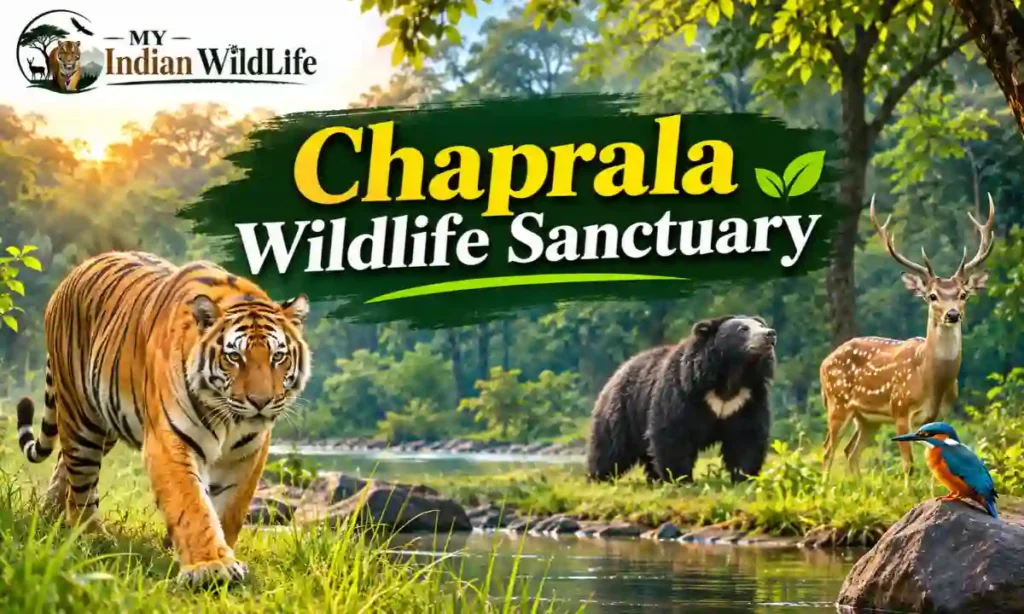
Chaprala Wildlife Sanctuary is one of the major wildlife sanctuaries present in the Gadchiroli district of Maharashtra. It consists of rich wildlife, dense forests, riverine ecosystems and high biological diversity. Several wild animals make their homes at Chaprala wildlife sanctuary including tigers, leopards, sloth bears, wild dogs and different species of deer.
Covering an area of about 134.78 square kilometers, Chaprala Wildlife Sanctuary was founded in 1986. This sanctuary comprises tropical dry deciduous forest, grassland and water bodies.
It is an important wildlife conservation zone due to its proximity to the confluence of Wardha and Wainganga rivers. Here, the Pranhita River flows through the ecosystem. These rivers support the presence of aquatic life in the ecosystem. They are also a source of water for various wildlife species.
Chaprala Wildlife Sanctuary is also an ideal spot for bird watchers and wildlife photography. Its forests are home to many resident and migratory birds while its surrounding natural environment attracts the attention of those interested in wildlife conservation.
One of the main features of Chaprala is that it is not a crowded place like other popular wildlife destinations. Therefore, it is an important wildlife sanctuary for preserving the forest biodiversity of Maharashtra.
Where Is Chaprala Wildlife Sanctuary Located?
Chaprala Wildlife Sanctuary is located in the Gadchiroli district of eastern Maharashtra, India. It is situated near the Chaprala village of Chamorshi tehsil and is covered in forests, hills and riverine landscapes.
It is situated in the south region of the Gadchiroli district. The western side of the sanctuary is bordered by the Pranhita River, which is a major source of water in the region.
The Markhanda and Pedigundam hills are other geographical features in the vicinity of the sanctuary. These geographical features add diversity to the landscape of the region.
The sanctuary is around 44 kilometers away from the headquarter of Gadchiroli, and it is 14 kilometers away from Chamorshi. One can easily reach this place via local transportation facilities.
Its location close to the river systems of Wardha and Wainganga makes Chaprala Wildlife Sanctuary very significant for the biodiversity of aquatic life, birds and forests.
Important Location Details:
| Details | Information |
|---|---|
| Sanctuary Name | Chaprala Wildlife Sanctuary |
| Village | Chaprala |
| Tehsil | Chamorshi |
| District | Gadchiroli |
| State | Maharashtra |
| Country | India |
| Western Boundary | Pranhita River |
| Nearby Hills | Markhanda and Pedigundam |
| Nearest Town | Chamorshi |
| District Headquarters | Gadchiroli |
History of Chaprala Wildlife Sanctuary
The Chaprala Wildlife Sanctuary holds great significance from the point of view of the history of wildlife conservation in Maharashtra. The region is considered protected owing to the presence of forests and a wide variety of natural habitats and wildlife in the area.
The government of Maharashtra declared Chaprala a wildlife sanctuary on 25th February 1986. The total area of the protected region is estimated at about 134.78 square kilometres.
The main motive for the declaration of the sanctuary was the conservation of natural forest ecosystem and protection of wildlife of various species.
The area is of special significance due to the presence of southern tropical dry deciduous forests wherein teak is the major type of trees found. This area is home to various mammals, reptiles and birds.
In 2020, the Ministry of Environment, Forest and Climate Change released the final notification for declaring the eco-sensitive zone around Chaprala Wildlife Sanctuary. The notified eco-sensitive zone includes an area extending up to 5 kilometres from the sanctuary boundary, taking into account the geography of the region.
Today, Chaprala Wildlife Sanctuary continues to remain one of the important conservation regions in Gadchiroli district in the state of Maharashtra.
Geography and Natural Beauty of Chaprala Wildlife Sanctuary
Chaprala Wildlife Sanctuary boasts of an exquisite natural landscape that comprises of thick forests, grasslands, hills, rivers and seasonal water bodies. The geographical variety makes way for suitable habitats for various species of flora and fauna.
Chaprala Wildlife Sanctuary comprises of southern tropical dry deciduous forests. Teak is the primary species of trees found in the region, but other species of native trees, shrubs and grasses are present in the forest.
The western boundary of Chaprala is marked by Pranhita River. It also helps in supporting the aquatic ecosystem of the region. During monsoon, the rising water level in the river enters the sanctuary through the natural streams of water.
The region also comprises of some important water bodies such as Murgikunta, Raikonta and Komatkunta tanks. These water sources help in the sustenance of fishes, turtles and birds.
Markhanda and Pedigundam hills also form an integral part of the geographical variety of the region. All the forests, hills, grasslands and river ecosystems make Chaprala an important ecological destination in Maharashtra.
Wildlife and Animals Found in Chaprala Wildlife Sanctuary
Chaprala Wildlife Sanctuary serves as a natural abode for various types of mammals. The tropical dry deciduous forests, grassland and riparian areas present here provide a conducive environment for many types of wild animals.
Various herbivorous and carnivorous animals found in the sanctuary help maintain the food chain in the forest ecosystem. The large carnivores like tigers and leopards require prey animals, while herbivores rely on vegetation of the forest.
The important wild animals found in Chaprala Wildlife Sanctuary are Bengal tiger, Indian leopard, sloth bear, wild dog, sambar deer and spotted deer.
Bengal Tiger
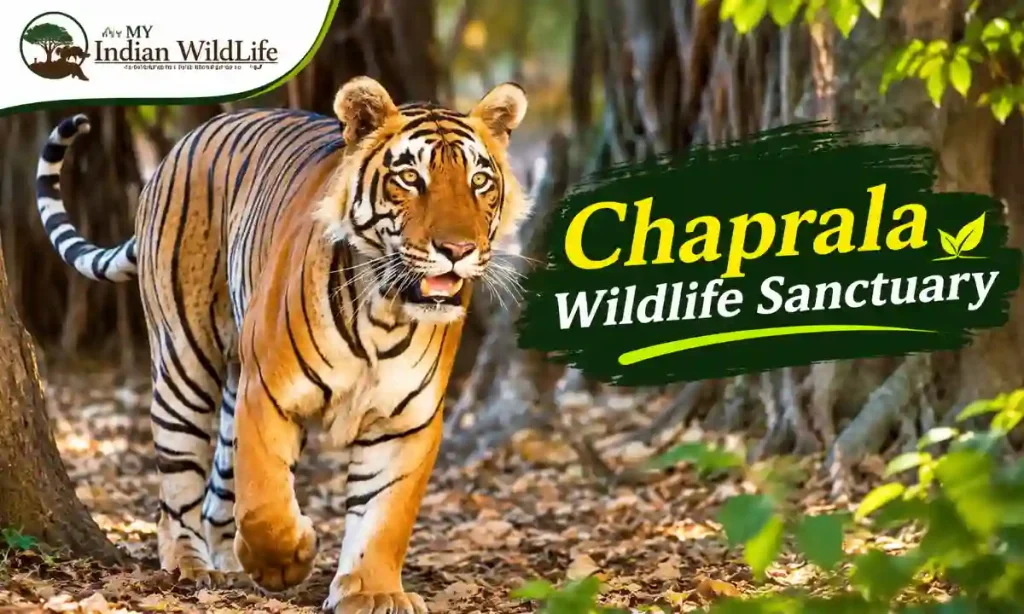
One of the important carnivores found in Chaprala Wildlife Sanctuary is the Bengal tiger. This animal is a strong predator and helps maintain ecological balance in the forest ecosystem.
Tigers are normally forest animals and live in places where there is plenty of vegetation, water, and prey animals. They are solitary animals, and they normally have their own territories. The presence of tigers brings out the need for conservation of big forest areas and wildlife populations.
Indian Leopard
Another predator in the forest environment that should be mentioned is the Indian leopard. It is quite an adaptable animal and can live in various environments, such as dry forests and rock formations.
These predators are great climbers and feed on smaller mammals as well as deer. Spotted coat allows them to be camouflaged amid plants. Leopards are very important for regulating prey population and balancing the food chain.
Sloth Bear
The sloth bear is an unique mammal that can be found in the forests of central India. The sloth bear has a shaggy black fur, long claws, and an iconic mark which is cream-colored on their chests.
The sloth bears have termites, ants, fruits, and honey as their major food items, but they use their elongated snout to get insects from the termite mounds. The sloth bears are mostly found in forest areas.
Indian Wild Dog
The Indian wild dog, alternatively referred to as the dhole, is a sociable predator that hunts and lives in packs. They are proficient hunters, and their diet mostly consists of deer and other herbivores living in the wild. They use a variety of sounds to communicate with each other during the hunt. They are very important in maintaining balance within the forest ecosystem.
Deer and Other Herbivores
Herbivorous animals form an important part of Chaprala’s wildlife population. They depend on grasses, leaves, fruits and other forest vegetation for food.
Some notable herbivorous animals found in the region include:
- Sambar Deer: One of the largest deer species in India, generally found in forest habitats.
- Spotted Deer: Also known as chital, recognised by its white spots.
- Barking Deer: A small deer species known for its distinctive barking sound.
- Nilgai: India’s largest antelope, commonly known as the blue bull.
- Wild Boar: An adaptable animal that feeds on roots, fruits, insects and other food sources.
- Four-Horned Antelope: A small antelope species known for its distinctive four horns in males.
These herbivores support the forest food chain and provide prey for different carnivorous animals.
Other Mammals
Besides big mammals, there are some small animals in Chaprala’s forest ecosystem. Various kinds of cats, jackals, squirrels and other small mammals add to the diversity of life in the sanctuary.
Small mammals play an important role because they are responsible for seed dispersal, insects’ elimination and forest ecosystem balance maintenance.
Birds Found in Chaprala Wildlife Sanctuary
Chaprala Wildlife Sanctuary is also an important place for diversity of birds. The forests, swamps, grasslands and riverbanks found here provide appropriate environment for various types of resident and migratory birds.
About 193 species of birds are present at Chaprala Wildlife Sanctuary, thus making it a good place to visit for bird watchers. Types of birds present in the area include forest birds, aquatic birds, birds of prey and migratory birds.
Resident Birds of Chaprala Wildlife Sanctuary
The resident birds are those birds that live within a specific geographical location all year round. The sanctuary’s forest areas and other natural ecosystems serve as feeding and breeding grounds for these birds. The Indian peafowl, red jungle fowl, green bee-eater, common kingfisher, Indian roller, and black drongo are some of the birds that are identified with this area.
Migratory Birds of Chaprala Wildlife Sanctuary
These birds migrate to different geographical locations at certain times of the year in order to find suitable climatic conditions, food and breeding sites. Chaprala has numerous wetlands, riversides and water bodies which provide food and rest to these seasonal visitors.
A variety of ducks, waders, shorebirds and other water birds can be spotted in the surrounding area of Chaprala during appropriate seasons.
Waterbirds and River Birds
Pranhita river along with other water bodies in the area serve as habitats to various water birds. The diet of these water birds mainly consists of fish, insects, aquatic life forms, and other small animals. Some of the water birds that have significance in this area include painted storks, Asian openbills, grey herons, little egrets, Indian pond herons, and kingfishers.
Reptiles Found in Chaprala Wildlife Sanctuary
Chaprala Wildlife Sanctuary is also home to various types of reptiles. The forests, rock formations, plains and waterbodies of Chaprala Wildlife Sanctuary provide ideal habitat for reptiles such as snakes, lizards, etc. The reptiles play a significant part in the food chain as they help keep insects and rodents in check while themselves being prey to bigger animals.
Indian Python
Indian pythons are very large non-venomous snakes that exist in various habitats like forests and wetlands in India. They kill their prey by constriction and feed on rats, birds, and other smaller prey. Indian pythons live in natural environments where there are hiding places and sources of water for them. They are important in regulating the population of smaller animals.
Indian Monitor Lizard
Indian monitor lizard is one of the largest reptiles with sturdy body, elongated tail, and strong claws. This type of lizard can live in diverse natural settings such as forests and wetlands. Indian monitor lizards eat insects, eggs, rats, and other small animals. Monitor lizards help to maintain the ecological balance.
Snakes and Other Reptiles
Various types of snakes and other reptiles are responsible for adding to the diversity of the Chaprala’s forest. The surrounding flora and rock formations and water bodies offer favorable conditions for these reptiles.
Snakes help in the control of rodents, whereas other reptiles are also part of the natural food chain. It is advised not to disturb reptiles while visiting Chaprala.
Flora and Vegetation of Chaprala Wildlife Sanctuary
Chaprala Wildlife Sanctuary has abundant flora and forest biodiversity. The topography in Chaprala largely includes Southern tropical dry deciduous forests in which most of the trees lose their foliage during the dry season. Teak is one of the major tree species found along with other native trees such as mahua, tendu, arjun.
The flora provides food, shade and refuge for various animals, birds, reptiles and insects. Forest flora also plays an important role in preserving soil fertility, regulating the environmental conditions and supporting natural hydrological cycle in the region.
Teak Trees
One of the major tree types found in Chaprala Wildlife Sanctuary is teak. It is an important deciduous tree species that can flourish in the tropical forest climate. The teak trees offer shade and protection to the various forest wildlife animals and birds. They also play a key role in providing the leaf litter in the forest environment.
Mahua Trees
Mahua is a vital native tree that occurs in the forests of central India. It serves as a source of food for various animals and birds in the form of its flowers and fruits. The tree also has cultural and economic significance due to the many uses of its flowers, seeds, and other parts by the local people.
Arjun Trees
The arjun tree is often found growing alongside rivers and in wet forests. Due to their robust root system, they prevent soil erosion along the water banks. They act as shelters for birds and small animals due to the shades provided by their thick foliage.
Tendu Trees
Yet another very significant tree in the forests of central India is tendu. The leaves of this plant are of great economic value and they are traditionally used in the manufacture of beedis. The plant contributes to the vegetation of the forest as well as provides sustenance to various organisms in the surrounding environment.
Other Important Plants
Other than teak, mahua, arjun, and tendu, Chaprala has many other native trees, shrubs, climbers, and grasses. Some of the important plants found in the forest ecosystems of central India include bija, salai, neem, kusum, babul, and shivan.
Bamboo and various kinds of grasses also give shelter and food to the animals. This diverse flora is helpful in maintaining the balance of nature.
Best Time to Visit Chaprala Wildlife Sanctuary
Chaprala Wildlife Sanctuary can be visited at any time of year but visiting it between the months of November and May can be considered as the most suitable time due to favorable weather and natural conditions of the forests. Those who are interested in wildlife viewing and photographing can make their plans accordingly during winter and early summer months.
There are different climatic changes through the year in Chaprala Wildlife Sanctuary. There is pleasant temperature in winter, summer is favorable for viewing wildlife in close vicinity to water sources and monsoon makes the whole forest look green and fresh.
Winter Season (November to January)
Winter is considered to be one of the best times to visit Chaprala Wildlife Sanctuary. The climate is quite favorable, hence easing the movement in the entire area. Individuals can engage in bird watching as well as enjoying the beautiful scenery in the forests and the serene ambiance. The winter season is ideal for family visits as well as photography.
Summer Season (February to May)
Another season that could be considered ideal for wildlife watching in Chaprala Wildlife Sanctuary would be the summer season. With temperatures rising, as well as availability of water sources becoming scarce, it is quite possible for animals to be seen around accessible sources of water.
There could be chances of watching wildlife at appropriate places. But temperatures during the day time can be very hot, especially during the months of April and May.
Monsoon Season (June to September)
Chaprala Wildlife Sanctuary gets rain during the monsoon season, which makes the forest area look green due to trees, shrubs, and other vegetation that becomes green due to rains, along with streams and ponds being replenished by water from the rains.
The natural surrounding area looks very beautiful during this time, but travelers should keep in mind that rains, muddy roads, and restrictions on forest access can hinder their travels.
Post-Monsoon Season (October)
The month of October is a nice time when the monsoon season slowly retreats, and the forests around us start recuperating from the rains. The surroundings are still green, and the water sources in nature are still home to various animals. This could be a nice time to explore the area around.
Chaprala Wildlife Sanctuary Timings and Entry Fee
Those who wish to visit Chaprala Wildlife Sanctuary should obtain current information regarding admission and permission from the Forest Department. It is different from other commercial wildlife sanctuaries where information such as timings for the safari, entrance fees, and facilities available are easily accessible.
The sanctuary is mainly a reserve forest; therefore, permission for its visit depends upon the forest department and the touristic activities permitted. Visitors cannot expect to find an open admission policy or jeep safaris at all times.
Chaprala Wildlife Sanctuary Opening and Closing Timings
Chaprala Wildlife Sanctuary’s opening and closing times per day are not available. The timings of entering the forest may be based on various criteria including weather and forest regulations. It is advised for people who plan to visit Chaprala Wildlife Sanctuary to get in touch with the forest office first.
Chaprala Wildlife Sanctuary Entry Fee
There is no official confirmation regarding the existing charge for entering Chaprala Wildlife Sanctuary. The entry fees charged, if any, will depend on the purpose of visit and permits issued by forest department officials. Visitors are advised to verify the existing fee structure before making the trip.
Jeep Safari Charges
Jeep safaris at Chaprala Wildlife Sanctuary, along with fees, have not been officially disclosed yet. Tourists wishing to conduct a safari inside the sanctuary need to contact the local Forest Department regarding approved vehicles and the route for the same.
Guide Charges and Booking Information
One is required to establish whether there are any authorised local guides and what their costs will be prior to undertaking the visit. The services of an experienced guide will enable one to comprehend the forest ecology and any conservation efforts.
Things to Do in Chaprala Wildlife Sanctuary
Chaprala Wildlife Sanctuary provides one with the chance of enjoying nature, bird watching, and wildlife conservation knowledge. Due to its forests, hills, grassland, and riverside scenery, Chaprala Wildlife Sanctuary becomes a fascinating place for individuals who prefer natural environments.
It is not a well-developed commercial touristic site but provides various experiences related to nature in authorized areas only. It is based upon the seasons and the facilities provided by the forest department.
Wildlife Watching
Watching wildlife forms an important part of Chaprala Wildlife Sanctuary. The sanctuary is home to many mammals like tigers, leopards, sloth bear, deer, and other wildlife. People who enjoy watching wildlife have the opportunity to observe the natural environment and watch for signs of wildlife in designated places. But the sighting of wildlife cannot be assured since they roam around their natural habitat.
Birdwatching
Another interesting activity to engage in at the sanctuary is bird watching. There are various bird species that inhabit its forests, swamps and river banks. One gets to watch colorful, water and forest birds in their natural habitat. Early mornings are the most appropriate time to go bird watching since many birds become active during such hours.
Nature Photography
Photography is possible through the natural surroundings in Chaprala. Nature photography enthusiasts can take photographs of forest flora, riverscapes, birds and other natural phenomena. Changes in the appearance of the sanctuary through different seasons also provide good opportunities for photography. It is important that visitors keep a safe distance from the wildlife and observe any photography guidelines set by the forest department.
Exploring Forest Landscapes
The presence of dry deciduous forest, grassland, hills, and riparian vegetation has made Chaprala a fascinating place for nature enthusiasts. People can enjoy the natural beauty of the area and gain knowledge about the different types of habitats found here. Exploring the landscape around the area in authorized places is one of the best ways to do so.
Learning About Wildlife Conservation
A trip to Chaprala Wildlife Sanctuary would also enable people to appreciate the need for conserving forests and biodiversity. This is because the sanctuary serves as the natural habitat for various animals and birds, thus the need for protecting this sanctuary is vital for the ecological balance.
How to Reach Chaprala Wildlife Sanctuary
Chaprala Wildlife Sanctuary is situated in the district of Gadchiroli, Maharashtra and it can be accessed through air, rail and road mode of transportation. The closest airport from this destination is Nagpur Airport, and the closest railway station as per Maharashtra Tourism is Ballarpur Railway Station. People can also go through Gadchiroli and Chamorshi and further travel towards Chaprala Village.
Road journey provides people with an easier way of reaching this destination as both Chamorshi and Gadchiroli are well connected with other places around. Private cars, taxis and government transport services can be utilized by travelers for reaching their destination.
How to Reach Chaprala Wildlife Sanctuary by Air
Dr. Babasaheb Ambedkar International Airport is the closest airport to Chaprala Wildlife Sanctuary, which is located in the city of Nagpur. This airport is at a distance of 230-243 km from the sanctuary.
There are several major cities in India that are connected through air transport services to Nagpur Airport. After arrival, one can book a private taxi or road transport services to reach Gadchiroli and Chamorshi, after which he/she can proceed further to Chaprala village. Travelers coming from far off places can make use of Nagpur airport to reach the sanctuary.
How to Reach Chaprala Wildlife Sanctuary by Train
The Ballarpur Railway Station located in the district of Chandrapur is the closest rail station found for traveling to Chaprala Wildlife Sanctuary and is about 65-70 km away from the sanctuary.
The visitors can come to Ballarpur via rail from associated cities and hire taxis or other local means of transportation for the rest of the journey. An alternative way is traveling via Chandrapur and then moving on to the district of Gadchiroli.
How to Reach Chaprala Wildlife Sanctuary by Road
Road journey is another easy way to visit Chaprala Wildlife Sanctuary. The village of Chaprala lies near Chamorshi, in the Gadchiroli district. Tourists can access the area through nearby towns.
The distance from Gadchiroli is about 44 km, and Chamorshi is around 14 km away. State transport buses or private cars can be taken from Chamorshi to reach the sanctuary.
Travelers using their own vehicles can go on the local road journey to reach Chaprala village. It is wise to check the road condition during monsoon as the roads may get inaccessible due to rainfall.
Distance to Chaprala Wildlife Sanctuary from Major Cities
Chaprala Wildlife Sanctuary can be accessed via many cities and towns of Maharashtra. The nearest road transport connectivity points are Gadchiroli and Chamorshi, whereas Chandrapur and Nagpur are the cities that provide access to Chaprala from other cities in Maharashtra.
| Starting Location | Approximate Distance |
|---|---|
| Chamorshi | 14 km |
| Gadchiroli | 44 km |
| Ballarpur | 65–70 km |
| Nagpur | 230–243 km |
| Chandrapur | Route-dependent |
Chaprala Wildlife Sanctuary Location, Address and Google Maps
Chaprala Wildlife Sanctuary is situated in Chaprala village of Chamorshi Tehsil, Gadchiroli district, state of Maharashtra. This sanctuary is located at a place where the Wardha and Wainganga rivers converge and where Pranhita river is an important part of the natural surroundings.
The sanctuary is enclosed with forest land, grassland and riverbanks. Being located in this place makes it one of the important areas for wildlife conservation in the eastern part of Maharashtra. Google Maps can be used for visiting the sanctuary from other neighboring cities like Chamorshi and Gadchiroli.
Gadchiroli to Chaprala Wildlife Sanctuary
Chaprala Wildlife Sanctuary is around 44 km away from Gadchiroli. Visitors can reach the destination using their own transport means or any other available public transport that goes to Chamorshi and Chaprala village.
Chamorshi to Chaprala Wildlife Sanctuary
Chamorshi is located about 14 km away from Chaprala Wildlife Sanctuary. It is the closest major town where local transport can be arranged. One can travel to the wildlife sanctuary using personal conveyance and government transport services.
Chandrapur to Chaprala Wildlife Sanctuary
Another place from where tourists may start their journey for Chaprala is Chandrapur. Tourists may take up the path to Ballarpur and proceed along the roads leading to the district of Gadchiroli. The total distance will vary depending upon the route.
Nagpur to Chaprala Wildlife Sanctuary
The distance between Nagpur and Chaprala Wildlife Sanctuary is about 230 to 243 km. Nagpur acts as a significant base for tourists who arrive through air or train. From here, tourists can move by road through Gadchiroli and Chamorshi.
Nearby Tourist Places to Visit Near Chaprala Wildlife Sanctuary
Chaprala Wildlife Sanctuary not only offers various religious as well as natural sites but tourists visiting Chaprala Wildlife Sanctuary will find various sites of religious and natural significance in Gadchiroli District as well. The area surrounding Chaprala Wildlife Sanctuary is famous for old temples, riverscape, and natural surroundings.
Prashant Dham
Prashant Dham is one of the religious places of interest that lies in Chaprala along the banks of Pranhita River. The other name for Prashant Dham is Chaprala and it is one of the most frequented pilgrim sites of Gadchiroli District.
The religious complex was founded in about 1935 by Kartik Swami Maharaj. It is home to temples dedicated to God Shiva, Sai Baba, Hanuman, Durga Mata and other Hindu gods.
Chaprala Temple
The Chaprala Temple is one of the important places of worship for visitors. It has significance because of its spiritual connection with Chaprala and draws devotees from surrounding villages and towns.
It also enjoys the proximity of the Pranhita River, which increases the natural beauty of the surroundings. Visitors have the chance to witness the spiritual surroundings during their tour.
Markanda Temple
Markanda Temple, also called Markanda Deo, is one of the many historically significant temples in the Gadchiroli district. It is a temple of Lord Shiva that is located close to the river Wainganga.
The architecture of this temple is unique because of the use of traditional stone architecture and its carvings. This makes it an interesting place for tourists who wish to visit ancient Indian temples. Travelers passing through Chamorshi may choose to visit Markanda Temple.
Pranhita River
One of the natural places that make Chaprala Wildlife Sanctuary famous is Pranhita River. It originates from the union of Wardha and Wainganga rivers and runs along the sanctuary’s western borders.
It hosts various aquatic life forms and is the source of water resources for the ecosystem. In addition to its riverbanks, the place offers picturesque views of nature to nature enthusiasts.
Hotels and Accommodation Near Chaprala Wildlife Sanctuary
The number of accommodation facilities around the Chaprala Wildlife Sanctuary is quite restricted when compared to other wildlife sanctuaries that attract tourist visitors. Tourists looking for overnight stay may check the forest guest house in Chaprala or opt for hotel and lodge options in neighboring cities like Chamorshi, Gadchiroli, and Chandrapur.
It would be best for the tourists to make prior arrangements for accommodation as it is better to plan the journey in advance, especially during winters and summers.
Forest Guesthouse at Chaprala
Chaprala guest house in the forest is one of the accommodation facilities offered in the state of Maharashtra. The guesthouse may suit those visitors who prefer to remain within the vicinity of the sanctuary and experience the nature around. Nevertheless, it would be important to confirm the above from the Forest Department.
Hotels in Gadchiroli
Gadchiroli provides an easy choice for travelers wishing to have accommodation along with basic amenities. There are many lodges and hotels available in Gadchiroli which suit various needs.
It will also be easier for the traveler to manage transport from Gadchiroli to Chamorshi and Chaprala. It is recommended that the travelers compare the facilities and prices before making the arrangements.
Hotels in Chamorshi
Since Chamorshi is nearer to Chaprala Wildlife Sanctuary, it makes a good choice for travelers who are seeking to cut down on the distances they travel daily. It provides some accommodation choices that have been locally registered although not as elaborate as one might find in big cities. One needs to confirm the availability of rooms and other amenities like food and parking beforehand.
Hotels in Chandrapur
Further, there is more accommodation available to tourists who may be coming from other regions of Maharashtra. There are different hotels and lodges that travelers can use for overnight stay arrangements.
Travelers arriving by rail via Ballarpur can also think about staying at Chandrapur prior to heading to Chaprala Wildlife Sanctuary.
Importance of Chaprala Wildlife Sanctuary
Chaprala Wildlife Sanctuary is an essential conservation site in Maharashtra due to its high biodiversity and natural habitats. It is home to various species of mammals, birds, reptiles, and other types of life forms. Its forests, grasslands, hills, and rivers are responsible for maintaining the ecological balance of the Gadchiroli area.
The Chaprala Wildlife Sanctuary is crucial as it acts as an ideal habitat for the natural vegetation of central India. The sanctuary’s tropical dry deciduous forests provide food and shelter to numerous species of wildlife. The Pranhita River and associated water sources act as a habitat for aquatic biodiversity.
Wildlife Conservation
One of the many reasons for the creation of Chaprala Wildlife Sanctuary is wildlife conservation. This place offers a natural habitat to wild animals including tigers, leopards, sloth bears, wild dogs, and deer. Protection of these animals is essential to maintain the food chain and prevent loss of biodiversity.
Many other small mammals, reptiles, and birds are also found at Chaprala Wildlife Sanctuary. Protection of forest and wildlife ensures their preservation for future generations.
Protection of Forest Ecosystems
Chaprala’s forests serve a significant purpose in keeping the environment in balance. The trees that include teak, mahua, tendu, and other indigenous flora are a source of nourishment to animals and act as their shelter. The flora of the forest plays an integral part in preventing soil erosion and ensures good soil quality and natural cycles of water. The protection of such forests is vital as any form of deforestation would be harmful to wildlife.
Importance of River and Wetland Habitats
Water systems such as the Pranhita River and others near to them are very significant elements of the natural ecosystem of Chaprala. They serve as water sources for aquatic life forms and other wild life forms such as birds.
The wetlands and riverbanks form a habitat for many species of fish, turtles, insects and various water birds. This also serves as a place where these species can breed and feed on.
Biodiversity Conservation
Chaprala Wildlife Sanctuary harbors various types of biological diversity such as mammals, birds, reptiles, trees, shrubs, and grasses. They all have a role to play in sustaining the equilibrium of nature within that ecosystem.
The diverse habitats within the sanctuary enable various organisms to coexist in the same protected area. The need to conserve the biodiversity is vital to preserve the natural heritage of Maharashtra.
Travel Tips for Visiting Chaprala Wildlife Sanctuary
Those traveling to Chaprala Wildlife Sanctuary need to make preparations in advance since the place lacks infrastructure as compared to other wildlife sanctuaries. This will ensure a more pleasant visit as well.
It is also crucial for one to listen to the guidelines of the forest department and not do anything to cause any disturbance to the wildlife.
Choose the Right Season
Travelers need to choose their travel season based on their interests. November to January is ideal for pleasant weather, whereas February to May could be good for watching animals around sources of water. During the monsoon, travelers need to ensure that there will be no rain and the roads are passable.
Confirm Forest Entry Permission
Make sure you consult the local Forest Department for confirmation about entry into the forest. It is also good practice to check about guides, safari facilities, and any charges involved.
Carry Drinking Water and Essential Items
Travelers need to carry enough drinking water, some medical supplies, personal documents, and other necessities. Comfortable walking shoes, proper attire, and sunscreen may help with travel as well.
Avoid Disturbing Wildlife
People need to keep their distance from wild animals and not make any noise. Feeding wild animals, going near their nests, or touching wild animals is quite risky and damaging for nature.
Keep the Sanctuary Clean
It is imperative that visitors do not litter plastic bottles, packets of food, or any other waste in the forest. This will help in preserving the natural environment.
Arrange Transportation in Advance
Chaprala may have limited facilities for local transport. It is advised to arrange the mode of travel back from there, particularly for those coming from Gadchiroli, Chamorshi or Ballarpur.
Follow Local Forest Department Instructions
There might be certain regulations to follow, based on the need for animal protection, climate, and other conditions in the area. It is recommended to adhere to all regulations concerning trails and forest activity.
Is Chaprala Wildlife Sanctuary Worth Visiting?
Yes, Chaprala Wildlife Sanctuary is a good destination for nature lovers, forest lovers, wildlife lovers and those who like quieter places. Chaprala Wildlife Sanctuary is located in the Gadchiroli district of Maharashtra.
The wildlife sanctuary is special because of the variety of wildlife and the river ecosystem it has. The forests in Chaprala have various wildlife including tigers, leopards, sloth bear and deer. The sanctuary is also special for those who love bird watching because of the many resident and migratory birds in the region.
What makes the area even more special is the natural landscape of the Pranhita River. The combination of forests, hills, grassland and other natural features make the area ecologically important and visually attractive.
However, one thing that one needs to note about the Chaprala Wildlife Sanctuary is that it is a wildlife sanctuary and not a fully commercial safari park. Permissions for entry into the wildlife sanctuary should therefore be sought from the concerned authorities.
In summary, Chaprala Wildlife Sanctuary is a nice destination for nature lovers, birdwatchers and travelers to discover the hidden wildlife reserves of Maharashtra.
Conclusion
Chaprala Wildlife Sanctuary is a significant place for wildlife conservation in the Gadchiroli district of Maharashtra. It covers an area of around 134.78 square kilometres, which consists of many forest areas and houses various species of mammals, birds, and reptiles.
This wildlife sanctuary is home to many Bengal tigers, leopards, sloth bears, wild dogs, and many species of deers. Its tropical dry deciduous forests, grassland, hills, and riverine habitats make this natural habitat very much ecologically valuable.
Pranhita River and other water bodies provide more diversity of aquatic life here and make it a good destination for wildlife conservation lovers. People who love nature, wildlife watching, and bird watching may visit this site.
Even though the area has less number of tourism facilities, Chaprala Wildlife Sanctuary can still be considered an exciting destination for knowing about the natural beauty and wildlife heritage of Maharashtra. Protection of forests and wildlife is vital for maintaining the biodiversity of this natural habitat.
Faqs
Where Is Chaprala Wildlife Sanctuary Located?
Chaprala Wildlife Sanctuary is located in Gadchiroli district of Maharashtra, India. It lies near Chaprala village in Chamorshi tehsil and is surrounded by forests, hills and river landscapes.
When Was Chaprala Wildlife Sanctuary Established?
Chaprala Wildlife Sanctuary was officially notified on 25 February 1986 by the Maharashtra government. It was established to protect the region’s forests, wildlife and biodiversity.
What Is the Total Area of Chaprala Wildlife Sanctuary?
Chaprala Wildlife Sanctuary covers approximately 134.78 square kilometres. Its protected area consists mainly of tropical dry deciduous forests and different natural habitats.
Which Animals Are Found in Chaprala Wildlife Sanctuary?
The sanctuary supports several wild animals, including Bengal tigers, Indian leopards, sloth bears, wild dogs, sambar deer, spotted deer, barking deer and wild boars.
Which River Flows Near Chaprala Wildlife Sanctuary?
The Pranhita River flows along the western boundary of Chaprala Wildlife Sanctuary. It is formed by the confluence of the Wardha and Wainganga rivers.
What Is the Best Time to Visit Chaprala Wildlife Sanctuary?
November to May is generally a suitable period for visiting Chaprala Wildlife Sanctuary. Winter offers comfortable weather, while summer can provide opportunities for wildlife observation near available water sources.
What Is the Nearest Airport to Chaprala Wildlife Sanctuary?
Dr. Babasaheb Ambedkar International Airport in Nagpur is the nearest major airport. It is approximately 230–243 km from the sanctuary, depending on the route.
What Is the Nearest Railway Station to Chaprala Wildlife Sanctuary?
Ballarpur Railway Station in Chandrapur district is the nearest railway station identified for reaching the sanctuary. It is approximately 65–70 km away.
How Far Is Chaprala Wildlife Sanctuary from Gadchiroli?
Chaprala Wildlife Sanctuary is approximately 44 km from Gadchiroli headquarters. Visitors can reach the area by private vehicle or available local transportation.
Are Jeep Safaris Available at Chaprala Wildlife Sanctuary?
Regular jeep safari availability and booking arrangements are not publicly confirmed. Visitors should contact the local Forest Department to check whether authorised safari facilities are operating.
Is Chaprala Wildlife Sanctuary Famous for Tigers?
Yes, tigers are among the important wild animals associated with Chaprala Wildlife Sanctuary. However, spotting a tiger during a visit is not guaranteed.
How Many Bird Species Are Found in Chaprala Wildlife Sanctuary?
Approximately 193 bird species have been documented in the sanctuary. These include resident birds, migratory birds and different species of waterbirds.
Which Tourist Places Are Near Chaprala Wildlife Sanctuary?
Some notable attractions in the surrounding region include Prashant Dham, Chaprala Temple, Markanda Temple and the Pranhita River.
Is Accommodation Available Near Chaprala Wildlife Sanctuary?
Visitors can enquire about forest guesthouse accommodation at Chaprala and consider hotels in nearby towns such as Chamorshi, Gadchiroli and Chandrapur. Availability should be confirmed before travelling.
Why Is Chaprala Wildlife Sanctuary Important?
Chaprala Wildlife Sanctuary is important because it protects diverse forest habitats and provides shelter to several wildlife species. Its forests, river systems and wetlands contribute to the biodiversity and ecological balance of Maharashtra.
Also,Read About: First Wildlife Sanctuary in India – Name, Location, Establishment Year, History & Facts