
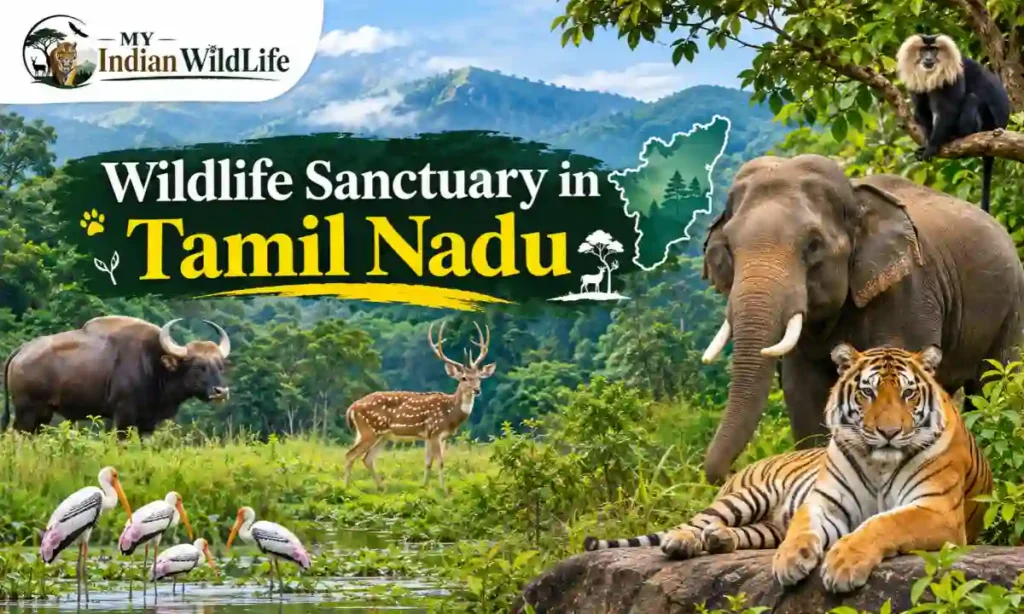
Tamil Nadu is considered as one of the finest tourist destinations for wildlife tourism and nature travel in India. The state of Tamil Nadu has diverse natural terrains ranging from tropical forests to green hills and mountains, grasslands, rivers, lakes, wetlands and coasts. These natural habitats house hundreds of animal species and birds like Bengal tigers, Asian elephants, leopards, Indian gaurs, Nilgiri tahrs, blackbuck, sloth bears and migratory birds.
The Western Ghats are one of the significant regions of biodiversity in Tamil Nadu. Natural habitats like Nilgiri Hills, Anamalai Hills, Palani Hills and Agasthyamalai region are some of the areas which have natural forest ecosystems where endangered species of wildlife are found. The Eastern Ghats and the Cauvery river region also serve as natural habitats of elephants, leopards and other animals living in the forest regions.
In order to conserve its rich natural heritage, there are many wildlife sanctuaries, bird sanctuaries, national parks and tiger reserves in Tamil Nadu. Every wildlife sanctuary has an individual ecological identity. Some wildlife sanctuaries are known for tigers and elephants while others protect rare primates, endangered squirrel species, grassland animals and migratory birds. No matter what your plan of adventure is, whether it is
Wildlife Sanctuary in Tamil Nadu – Quick Overview
The state of Tamil Nadu has a large network of protected areas distributed in its northern, central and southern parts. According to the Forest Department policy note for Tamil Nadu for 2025-26, there are 18 notified wildlife sanctuaries and 17 notified bird sanctuaries as per the policy note. There are other types of protected areas such as national parks and tiger reserves in the state.
| Information | Details |
|---|---|
| State | Tamil Nadu |
| Country | India |
| Main biodiversity region | Western Ghats and Eastern Ghats |
| Wildlife sanctuaries | 18 (2025–26 policy note) |
| Bird sanctuaries | 17 (2025–26 policy note) |
| Famous animals | Tiger, elephant, leopard, gaur and blackbuck |
| Famous rare species | Lion-tailed macaque, Nilgiri tahr and slender loris |
| Popular wildlife destination | Mudumalai |
| Famous bird sanctuary | Vedanthangal |
| Best general visiting season | October to March |
List of Wildlife Sanctuaries in Tamil Nadu
The wildlife sanctuaries of Tamil Nadu conserve varied natural habitats such as mountainous evergreen forest, dry grassland, and river valleys. The table given below mentions some of the significant wildlife sanctuaries of Tamil Nadu.
| No. | Wildlife Sanctuary | District / Region | Famous For |
|---|---|---|---|
| 1 | Mudumalai Wildlife Sanctuary | Nilgiris | Tigers and elephants |
| 2 | Indira Gandhi Wildlife Sanctuary | Coimbatore | Lion-tailed macaques and elephants |
| 3 | Mundanthurai Wildlife Sanctuary | Tirunelveli | Tigers and evergreen forests |
| 4 | Kalakad Wildlife Sanctuary | Tirunelveli | Rare Western Ghats wildlife |
| 5 | Point Calimere Wildlife Sanctuary | Coastal Tamil Nadu | Blackbucks and migratory birds |
| 6 | Vallanadu Blackbuck Sanctuary | Thoothukudi | Blackbucks |
| 7 | Kanyakumari Wildlife Sanctuary | Kanyakumari | Elephants and evergreen forests |
| 8 | Sathyamangalam Wildlife Sanctuary | Erode region | Tigers and elephants |
| 9 | Megamalai Wildlife Sanctuary | Theni region | Forest biodiversity |
| 10 | Kodaikanal Wildlife Sanctuary | Dindigul and Theni | Shola forests and mountain wildlife |
| 11 | Gangaikondan Spotted Deer Sanctuary | Tirunelveli | Spotted deer |
| 12 | Cauvery North Wildlife Sanctuary | Krishnagiri and Dharmapuri | Elephants and leopards |
| 13 | Nellai Wildlife Sanctuary | Southern Tamil Nadu | Dry evergreen forests |
| 14 | Kadavur Slender Loris Sanctuary | Karur and Dindigul | Slender loris |
| 15 | Cauvery South Wildlife Sanctuary | Krishnagiri and Dharmapuri | Elephant corridors |
| 16 | Thanthai Periyar Wildlife Sanctuary | Erode | Tigers and elephants |
| 17 | Srivilliputhur Grizzled Squirrel Wildlife Sanctuary | Virudhunagar region | Grizzled giant squirrel |
| 18 | Kanyakumari and other protected forest landscapes | Southern Western Ghats | Regional biodiversity |
Mudumalai Wildlife Sanctuary
Mudumalai Wildlife Sanctuary is among the oldest and most renowned protected forests of Tamil Nadu. Established in 1940, it is located in the Nilgiri Hills and is an important member of the Nilgiri Biosphere Reserve. It is encircled by forested landmasses that extend into the states of Karnataka and Kerala and serve as an important corridor for wildlife. The forests have a tropical moist deciduous ecosystem, dry deciduous forests and thorn forests.
The sanctuary is well-known because of its population of Asian elephants and Bengal tigers. The other animals of the region include leopards, Indian gaurs, spotted deer, sambar deer and sloth bears. The forests of the sanctuary also have bamboo, grasslands and natural water bodies which support diverse wildlife whereas its trees form nesting and feeding grounds for various bird species.
The Theppakadu region is one of the most famous places related to the wildlife tourism of Mudumalai. Tourists can visit its authorized safari zones and enjoy the beauty of Nilgiri forest landscape.
Indira Gandhi Wildlife Sanctuary
Indira Gandhi Wildlife Sanctuary, popularly called Anamalai Wildlife Sanctuary, is among the major biodiversity conservation reserves in Tamil Nadu. The sanctuary lies in the Western Ghats and was initially declared a wildlife sanctuary in 1976. The ecosystem in the protected area includes tropical evergreen forest, moist deciduous forest, grasslands and shola vegetation to provide habitat for various types of wildlife.
Some of the animals in Indira Gandhi Wildlife Sanctuary include Asian elephants, Bengal tigers, leopards, Indian gaur, lion-tailed macaque, Nilgiri langur and Malabar giant squirrel. Lion-tailed macaque is a noteworthy primate species that belongs to the evergreen forests of the Western Ghats. Some rare birds, reptiles and amphibians are also found in the ecosystem.
Among the top attractions in the area is Topslip. Tourists can take part in tourism ventures such as forest tourism activities, viewing of nature and wildlife. The sanctuary attracts tourists who want to visit rare animal species and mountain forest ecosystem.
Mundanthurai Wildlife Sanctuary
Mundanthurai Wildlife Sanctuary came into existence in 1962. It is one of the important forest conservation reserves in southern Tamil Nadu. The Kalakkad-Mundanthurai Tiger Reserve was formed in 1988 from the merger of the Kalakad and Mundanthurai reserve forest areas. The forest has evergreen forest vegetation, moist deciduous forest, grassland, and mountain streams.
The area has been identified as a habitat for Bengal tigers, Asian elephants, leopards, Indian gaur and sambar. Primate species like lion-tailed macaque and Nilgiri langur are also found in the forests. The forests play a very important role in conserving the catchment areas of the river streams emerging from the southern Western Ghats.
Mundanthurai is a tourist attraction for wildlife scientists and enthusiasts of forest conservation. The natural environment of the place is rich in flora and fauna, making it one of the ecologically important protected landscapes in Tamil Nadu.
Kalakad Wildlife Sanctuary
Kalakad Wildlife Sanctuary is established in the year 1976 and known for its thick evergreen forests and unique biodiversity. The sanctuary is located in the Southern part of Western Ghats and is a part of the Kalakkad-Mundanthurai Tiger Reserve. This sanctuary has tropical evergreen forests, moist deciduous forests and other types of mountain forests that house various rare and endangered wildlife species.
These forests are the abode of tigers, leopards, Asian elephants, lion-tailed macaques, and Nilgiri langurs. Apart from these animals, there are various other bird species, reptiles and amphibians that take refuge in these thick forests. There is abundant rainfall in most parts of the region that has helped in growing thick forests as well as natural streams.
This sanctuary plays a significant role in the conservation of biodiversity of Southern Western Ghats. The evergreen forests present in this sanctuary provide suitable habitats to the species that require natural habitats.
Point Calimere Wildlife Sanctuary
Point Calimere Wildlife Sanctuary is one of the rarest coastal sanctuaries in Tamil Nadu. This sanctuary is famous for its dry evergreen forests, grasslands, salt marshes, and wetlands. As against the forest sanctuaries of Western Ghats which are mainly mountain forests, Point Calimere is home to both terrestrial and wetland areas.
Blackbucks are famous inhabitants of Point Calimere sanctuary and can be seen in suitable open areas in the sanctuary. Some other animals found in Point Calimere include spotted deer, wild boars and jackals. The coastal wetlands of the sanctuary attract several migratory birds like flamingos, pelicans, storks and many wader species.
Another important characteristic of Point Calimere sanctuary is its international significance for wetland conservation. The natural landscapes here provide a wonderful chance for understanding the coastal biodiversity and wetlands and wildlife connection. Anyone interested in blackbucks, bird watching and coastal nature photography will find Point Calimere particularly interesting.
Vallanadu Blackbuck Sanctuary
Vallanadu Blackbuck Sanctuary is a special conservation area set up in 1987 to conserve the blackbuck along with their natural environment. Situated in the arid region of the Thoothukudi district, the sanctuary is made up mostly of scrub forests, grassland and dry vegetation. Such kind of vegetation helps provide a good environment for grazing animals as well as wildlife that are adapted to living in comparatively dry surroundings.
The most important animal in the Vallanadu sanctuary is the blackbuck. The blackbuck can easily be recognised by its spiral horns, black upper body and lighter belly. The conservation area shelters wild boar, jackal, hare and a number of bird species. This place holds significance in conserving the grassland habitats that tend to go unnoticed as compared to the forest habitats.
Vallanadu is a unique place for those people who want to learn about antelope conservation and the diversity of the arid regions. It provides a different wildlife experience from the forest safaris of Mudumalai and Anamalai.
Kanyakumari Wildlife Sanctuary
Kanyakumari Wildlife Sanctuary is an extremely significant wildlife conservation area in the Western Ghats range situated at its extreme south. The sanctuary encompasses an extensive ecosystem of evergreen forests, semi-evergreen forests, and grassland. Initially established in the year 2002, the sanctuary underwent a second notification in the year 2007, which saw some changes to the boundaries of the sanctuary. Geographically speaking, the sanctuary is an extremely significant component of the southern Western Ghats biodiversity belt.
The forests are home to many animals like the Asian elephants, tigers, leopards, Nilgiri langurs and lion-tailed macaques. Some endemic species of birds, reptiles and amphibians are also found within its ecosystem. The sanctuary’s dense forests and mountain streams help in maintaining water resources and wildlife movement in the southern region.
It is of significance for any traveler to this region who wants to experience the natural environment of India’s southernmost district. The forest ecosystem in this sanctuary is unique in that it is quite different from the coastal region that Kanyakumari region is well known for.
Sathyamangalam Wildlife Sanctuary
Sathyamangalam Wildlife Sanctuary is the largest wildlife sanctuary in Tamil Nadu with area coverage of around 1,411 square kilometres. This wildlife sanctuary was constituted as a wildlife sanctuary in the year 2008 and it is further included in the Sathyamangalam Tiger Reserve in the year 2013. This region acts as an ecological link between Western Ghats and Eastern Ghats.
The region is known for its presence of Bengal tigers, Asian elephants, leopards, sloth bear, Indian gaur and various species of deer. This region has dry deciduous forest, moist deciduous forests and scrub vegetation. The forest region acts as an important pathway for movement of elephants and other animals through protected areas.
This region has significance from tiger and elephant conservation point of view. Geographical location and large forest landscape of this region makes it important for ecological connectivity in Southern India. This region holds significance for those who have interest in wildlife conservation and biodiversity of forest ecosystems.
Megamalai Wildlife Sanctuary
Megamalai Wildlife Sanctuary is related to the charming mountain forests of Southern Western Ghats. The place boasts of green mountains, tea estates, evergreen forests, grasslands and natural streams. Its diversity in flora provides suitable habitat for many species of wildlife and thus makes the ecology of the Theni district significant.
The whole landscape of Megamalai forests is home to Asian elephants, leopards, Indian gaurs, spotted deer and various species of primates. It is also rich in habitats of birds and mountain flora. Its natural landscape has ecological value in preserving forest corridors and ecological balance of its surrounding mountains.
Megamalai is a favorite place for those who want to explore mountain landscapes. One can get the chance to view the beautiful surroundings and understand the diversity of flora and fauna of Western Ghats. However, there should be adherence to the regulations of the specific place in visiting the forests.
Kodaikanal Wildlife Sanctuary
Kodaikanal Wildlife Sanctuary was established in 2013 and covers a large area in the Palani Hills of Western Ghats. This area comprises shola forests, grasslands at high altitude, wet evergreen forests and montane scrub vegetation. This helps maintain the ecological balance of the mountainous area and conserve natural water sources for the surrounding population.
Kodaikanal Wildlife Sanctuary provides habitat for Indian gaur, elephant, leopard, sloth bear and Nilgiri tahr. The shola-grassland landscape of the sanctuary is unique and of great importance since many species of animals living in high altitudes get shelter here. There are also many endemic flora and fauna of the region.
The protected forest landscape increases the ecological significance of the well-known hill station of Kodaikanal. Visitors interested in mountain biodiversity can visit authorised areas of nature tourism and enjoy the natural landscapes of the Palani Hills.
Gangaikondan Spotted Deer Sanctuary
Gangaikondan Spotted Deer Sanctuary was established in 2013 with an objective to conserve spotted deer and the dryland ecosystem around it. Located near Gangaikondan in Tirunelveli district, the sanctuary is home to dry deciduous and scrub forest ecosystems. Its natural surroundings offer shelter and sustenance to animals that are capable of living in the relatively dry climate.
The spotted deer are the prime wildlife species found here. Other animal and bird species native to the area include wild boars, peafowls, mongooses and various kinds of reptiles. Despite being quite small when compared to some forest regions, it still has a vital role to play in preserving the wildlife in the area.
This sanctuary can be considered a good example of the way smaller protected zones help preserve biodiversity. This sanctuary is particularly significant for spotted deer preservation in southern Tamil Nadu.
Cauvery North Wildlife Sanctuary
The Cauvery North Wildlife Sanctuary was notified in 2014 and is situated in the Melagiri Hills of north Tamil Nadu. It is a vast forest landscape featuring dry deciduous forests, scrub forests and riparian habitats. The sanctuary’s strategic location in relation to the Cauvery landscape makes it extremely valuable in terms of forest connectivity in various parts.
It contains Asian elephants, leopards, sloth bears, wild boars and several other species of animals. It provides the appropriate habitat for several kinds of flora and fauna owing to its riverine forests and rugged terrains. The wider Cauvery forest landscape is also crucial for elephant migration and ecological connectivity between the states of Tamil Nadu and Karnataka.
The Cauvery North Wildlife Sanctuary is an extremely valuable location when it comes to the protection of the natural environment of the Melagiri Hills. It is significant for its forests that help preserve biodiversity and wildlife corridors.
Nellai Wildlife Sanctuary
Nellai Wildlife Sanctuary is a notified sanctuary that has been notified in the year 2015, and preserves the valuable dry evergreen forest landscape of southern Tamil Nadu. The flora of the sanctuary differs from that of the dense evergreen forests present in other parts of the Western Ghats.
The fauna found in the sanctuary includes spotted deer, wild boars, porcupines, monitor lizards and many types of birds. The natural flora present in the sanctuary also provides habitat to small mammals, reptiles and insects. All these species add value to the ecological system of the forest ecosystem.
Nellai Wildlife Sanctuary is of special importance since it helps in preserving a rare forest landscape. Though this sanctuary does not have as much name as the Mudumalai and Anamalai sanctuaries, it makes a significant contribution towards the preservation of the natural legacy of southern Tamil Nadu.
Kadavur Slender Loris Wildlife Sanctuary
Kadavur Slender Loris Wildlife Sanctuary has been declared a notified sanctuary in 2022. This is India’s first wildlife sanctuary meant for protecting the slender loris. The sanctuary provides protection to one of the most vital landscapes of forests and scrubs located in the Kadavur Hills.
The slender loris is a small primate tree-dwelling animal, which is identified by its huge eyes and thin limbs. Usually, this creature starts moving around during the night and consumes insects and other small animals. The destruction of natural habitats is one of the major conservation threats for the slender loris.
Kadavur is an especially interesting place for visiting by those who are engaged in research of rare primates. This sanctuary also stresses the significance of preserving smaller creatures that get less attention than tigers and elephants.
Cauvery South Wildlife Sanctuary
Cauvery South Wildlife Sanctuary has been constituted in November 2022 and spans an area of about 686.4 square kilometres. It provides protection to an ecologically vital forest region along the Cauvery River and links Cauvery North Wildlife Sanctuary as well as other nearby protected forest regions of Karnataka. This geographical setting gives it significance as far as maintaining wildlife corridors and protecting the migration of large mammals is concerned.
This sanctuary houses Asian elephants, tigers, leopards, and many other types of wildlife. Its forest vegetation, rocky terrain, and riverine ecosystem make available diverse ecological settings for animals and birds. Another reason why this sanctuary is significant for the conservation of elephants is that it maintains the connection between the forest habitats of two states.
It is one of the important components of the increasing conservation network of Tamil Nadu State. Its forest ecosystem also safeguards the natural environment of the Cauvery River region.
Thanthai Periyar Wildlife Sanctuary
Thanthai Periyar Wildlife Sanctuary came up in 2024 and constitutes a vital protected area in Tamil Nadu’s protected forest system. It is situated in the Bargur Hills and encompasses vast areas of tropical evergreen forests, semi-evergreen forests, moist deciduous forests and grasslands. This wildlife sanctuary is significant in terms of protecting the biodiversity of the Eastern Ghats.
Some of the fauna that can be found in the protected forest include Bengal tiger, Asian elephant, Indian gaur, sloth bear, sambar deer, Indian pangolin and smooth-coated otter. Due to its diverse vegetation, it is home to a variety of birds and other small wildlife. The sanctuary is important due to the presence of both forest and grassland ecosystems.
The sanctuary plays a crucial role in wildlife conservation in northern Tamil Nadu and protects the forest corridors and natural habitats of the larger mammals and other animals.
Srivilliputhur Grizzled Squirrel Wildlife Sanctuary
Srivilliputhur Grizzled Squirrel Wildlife Sanctuary is a significant protected forest landscape established in 1988. It was established mainly to protect the grizzled giant squirrel and its habitat. It is located in the southern Western Ghats and has moist deciduous forests, riparian forests and evergreen forest pockets.
The grizzled giant squirrel is the most important animal found in this sanctuary. It is an arboreal mammal that has a bushy tail. Elephants, leopards, Nilgiri langurs and many birds are found in the surroundings of the forest.
This sanctuary is significant as it protects a unique mammal that relies on good forest ecosystems. It is a very important place for wildlife conservationists and researchers who wish to learn about the significance of protection of endangered species.
Famous Bird Sanctuaries in Tamil Nadu
The state of Tamil Nadu is significant in terms of migration of birds and conserving the wetlands. The state of Tamil Nadu contains various kinds of lakes, reservoirs, marshes, lagoons, and wetlands which provide habitat to resident and migrating birds. During winter, many species of birds migrate from different parts of India and the world to feed, rest and breed.
Bird sanctuaries in Tamil Nadu are known for their conservation of pelicans, painted storks, flamingoes, herons, egrets, ibises, and various ducks. Some of the notable bird sanctuaries include Vedanthangal, Pulicat Lake, Koonthankulam, Vellode, and Vaduvoor. These wetlands are vital for the maintenance of ecological balance and preservation of water resources.
Vedanthangal Bird Sanctuary
Vedanthangal Bird Sanctuary is the one of the oldest bird sanctuaries of India and was set up in 1936. It is known for its fresh water lake and nests of the migratory and residential birds. It is surrounded by trees, which provides good nesting sites for various kinds of birds. Its wetland habitat makes it one of the best bird sanctuaries of Tamil Nadu.
Painted storks, open billed storks, pelicans, spoonbills, herons, egrets and ibises are some of the birds that are there in Vedanthangal. During the winters, many birds come to Vedanthangal to feed, rest and breed. Large numbers of birds found in the area are an excellent opportunity for bird watching and bird photography.
Vedanthangal is a perfect location for families, students, photographers and nature lovers. November to February is a good time to visit as bird activities are particularly attractive during this time period.
Karikili Bird Sanctuary
Karikili Bird Sanctuary is one of the significant wetlands characterized by the presence of freshwater. It was founded in 1988 and is known for its natural lakes and vegetation around it. The wetland offers ideal places to rest and feed the numerous waterbirds which live there.
In this sanctuary, one can see various species of herons, egrets, storks, ibises and other waterbirds. During the winter period, the migratory birds fly to the waterbodies and stay in the vegetation around. Such a natural environment is worth visiting for bird watching and taking photos.
The most convenient place for a bird watching tour in the area from Chennai is Karikili, as it is situated near Vedanthangal.
Pulicat Lake Bird Sanctuary
Pulicat Lake Bird Sanctuary is one of the key coastal wetlands in Tamil Nadu. This sanctuary serves to preserve the Tamil Nadu part of the Pulicat Lake, which is the second largest brackish lagoon in India. Pulicat Lake consists of shallow water bodies, mudflats, marshes and coastal vegetation.
This sanctuary is renowned by migratory flamingos that come during the winter months. Apart from these, pelicans, painted storks, herons, egrets, terns and many other water birds are found in the lagoon. The wetlands serve as the resting and feeding grounds for migratory birds.
Pulicat Lake is an ideal site for bird watching, taking pictures and studying coastal biodiversity. However, the most suitable period to observe migratory birds is from November to February.
Vettangudi Bird Sanctuary
Vettangudi Bird Sanctuary is one of the bird sanctuaries that attract many people in the district of Sivaganga. It was established in 1977 and it comprises of three very important water bodies which support various bird species through their activities.
It is famous for the various waterbirds such as herons, egrets, painted storks, ibises among others. Some of the birds come together in these water bodies during their breeding period and nest in trees near these water bodies. It has beautiful surroundings and hence makes it an ideal destination for nature lovers and bird watchers.
Vettangudi Bird Sanctuary is ideal for people who like visiting less visited bird sanctuaries in Tamil Nadu. The winter period is usually the best time for watching migratory birds.
Vellode Bird Sanctuary
Vellode Bird Sanctuary is a wetland conservation site in the vicinity of Erode. It encompasses Periyakulam Lake, which serves as the natural habitat of water birds. The sanctuary was formed in 2000 and is known for its efforts in wetland biodiversity conservation and protection of birds.
Birds such as pelicans, teals, pintails, cormorants, darters, herons, and many other water birds are seen in the wetland. Migratory birds visit the place in huge numbers during winter making the lake a popular spot among bird watchers. Vegetation around the wetland is also essential for maintaining the natural ecosystem of the region.
Vellode is an ideal place to visit for family members, students, and photographers who wish to see wetland wildlife.
Vaduvoor Bird Sanctuary
Vaduvoor Bird Sanctuary is a famous wetland tourist place in the Thanjavur district. The sanctuary was established in the year 1999 and has Vaduvoor Lake at its center. The lake attracts many birds during their resident season in the area.
The painted storks, pelicans, herons, egrets, ducks, pintails and other migratory birds are known birds of this sanctuary. Winter becomes the most favorable season for visiting the wetland owing to the arrival of various kinds of birds. It is also one of the areas where environment education and wildlife photography can be done owing to its surrounding.
Vaduvoor is a good place to visit for people who want to explore the wetlands of Cauvery delta region. November to February is the best time to see birds in this place.
Udayamarthandapuram Bird Sanctuary
Udayamarthandapuram Bird Sanctuary is one of the important freshwater wetlands of the Tiruvarur district. This wetland is surrounded by an irrigation tank which helps different kinds of waterbirds in feeding and nesting. The wetland has great significance during the monsoon season and winter season when migratory birds migrate to the area.
Painted Storks, Grey Pelicans, Herons, Ibises, and many other waterbirds inhabit the wetland. Natural vegetation around the wetland provides nesting sites to the birds, while waterbody within it caters to the food needs of the birds. All these characteristics of the wetland make it an important component of wetlands conservation of Tamil Nadu.
Nature photographers and birdwatchers may visit the sanctuary during the winter season due to its natural setting. The natural setting of the wetland also helps people understand the significance of conserving freshwater wetlands.
Koonthankulam Bird Sanctuary
Koonthankulam Bird Sanctuary is one of the most significant sanctuaries from a conservation point of view in southern India. Koonthankulam is located in Tirunelveli district and is notable for being home to waterbird nesting and breeding colonies. The bird sanctuary was founded in 1994 and is an important place for both resident and migratory birds.
Painted storks, pelicans, herons, egrets, ibises and other waterbirds are some of the birds which are associated with Koonthankulam Bird Sanctuary. When the breeding season arrives, many birds come to the water and trees nearby to construct nests and raise their young ones. There have been many contributions by local communities in protecting the birds.
Koonthankulam is an excellent location for bird watchers, students and wildlife photographers. Koonthankulam is not just a tourist spot but it is more than that because Koonthankulam shows how conservation can be done with the help of local communities.
Kanjirankulam Bird Sanctuary
Kanjirankulam Bird Sanctuary is a major wetlands area for bird conservation located within Ramanathapuram district. This sanctuary was set up in 1989 and has become famous due to the nesting sites of large waterbirds. It consists of an irrigation tank with vegetation around the tank that provides good nesting sites for various bird species.
Species such as painted storks, grey herons, egrets and others form part of the major birds at this sanctuary. During the northeast monsoon and winter period, migratory birds migrate to the region and make use of the wetlands for food and breeding purposes. The presence of water bodies and the vegetation make the area an ideal site for the birds.
It is therefore a suitable location for tourists who are interested in observing the nesting behavior of birds as well as wetland conservation.
Chitrangudi Bird Sanctuary
Chitrangudi Bird Sanctuary is a wetland ecosystem of freshwater nature. This sanctuary has been created in the year 1989 and it is known for its natural water body and the surrounding trees which attract various kinds of birds. It is a place where waterbirds come for nesting, roosting, and feeding purposes.
It is known that herons, egrets, painted storks and many such birds come to this place. The number of birds visiting this sanctuary usually increases during the monsoon and winter seasons when there are better conditions for breeding and feeding birds.
The Chitrangudi sanctuary can be an interesting location for those tourists who would like to know about the wetlands of south Tamil Nadu. It is an interesting place for bird watchers who prefer places away from the crowded locations.
Melaselvanur-Keelaselvanur Bird Sanctuary
Melaselvanur-Keelaselvanur Bird Sanctuary is one of the notable wetland conservation sites, which consists of a chain of irrigation tanks in the Ramanathapuram district. It was declared as a bird sanctuary in 2010, and it covers a wide wetland area where a number of birds get feeding and breeding grounds.
Pelicans, painted storks, ibises, egrets and herons are some of the birds that have been identified with this sanctuary. It is a chain of water bodies, providing a suitable habitat to waterbirds especially in the winter season. The surrounding plants provide a habitat for nesting birds and help to maintain ecological balance.
The sanctuary plays a significant role in the conservation of migratory birds in southern Tamil Nadu. Bird lovers can study its surroundings and the seasonal activities of the birds.
Theerthangal Bird Sanctuary
There is the Theerthangal Bird Sanctuary which is a bird conservation destination located in the Ramanathapuram district of India. The bird sanctuary was established in 2010 to conserve the marshy wetland. It provides habitats for both resident and migrating waterbirds.
There are pelicans, storks, herons, and darters as some of the birds found within the wetlands. This wetland has a water body that offers the birds feeding and resting grounds especially during winter. The wetland was also declared as a Ramsar wetland in 2024.
The Theerthangal is an important destination for bird watching and wetland photography. Those who would like to learn about the migration of birds should explore this conservation destination.
Sakkarakottai Bird Sanctuary
Sakkarakottai Bird Sanctuary is a significant freshwater wetland located within the vicinity of Sakkarakottai Tank. The bird sanctuary was declared in 2012 and is home to many resident and migratory waterbirds. The wetland serves as a critical habitat for many birds that rely on freshwaters.
Pelicans, Ibises, Herons, Egrets and Darters are some of the birds found within the sanctuary. It acts as a crucial stopover for migratory birds due to its seasonal water presence. The wetland is home to several small aquatic life forms which form part of the local food chain.
Sakkarakottai is one of the interesting destinations for bird lovers visiting the Ramanathapuram region. It was declared a Ramsar site in 2024.
Karaivetti Bird Sanctuary
Karaivetti Bird Sanctuary is one of the important wetlands in Tamil Nadu that are conserved for their freshwater nature. The sanctuary is located around Karaivetti Lake and is known for providing natural habitat to numerous species of birds living in the sanctuary. The sanctuary was declared in 1999 and it holds special importance for the protection of migratory waterbirds.
Bar-headed geese, pintails, garganeys, herons, ibises and storks are some of the many species of birds inhabiting this wetland area. During winter, the sanctuary serves as an important stopover for the migratory birds. The natural water sources of the sanctuary are also beneficial for the local biodiversity.
Karaivetti is a great location for bird watching and awareness about the environment. The sanctuary has been declared as a Ramsar Site in 2022.
Nanjarayan Tank Bird Sanctuary
The Nanjarayan Tank Bird Sanctuary is a significant wetland site in the Tiruppur district which was declared as a bird sanctuary in 2022. This sanctuary has a natural water body that is home to many resident and migratory birds. This water body is of significance in particular due to its role as a feeding and resting ground in an area that is experiencing urbanisation.
Several kinds of pelicans, painted storks, cormorants, herons along with various other water birds can be seen near the wetlands. The water body also has aquatic plants and organisms in its surroundings, contributing to the ecology of the region. Given its location, it is one of the easily accessible sites for nature lovers in Tiruppur.
Nanjarayan Tank was declared as a Ramsar site in 2024 and is a very good site for bird watchers, photographers and students studying wetland ecology.
Greater Flamingo Bird Sanctuary
Greater Flamingo Bird Sanctuary is one such bird sanctuary that came into existence in 2025 and is an area where the coast birds are conserved. It is located in Dhanushkodi and includes areas that are mudflats, marshes, mangroves and lagoons. This sanctuary is built to ensure the safety of the habitats and resting place of flamingos and migratory birds.
Greater flamingos are the most prominent inhabitants of the sanctuary. Lesser flamingos, herons, egrets, terns, and other birds can also be found there. The presence of the sanctuary at a point through which migrating birds pass gives them additional value since it ensures protection of the long distance travelers.
The sanctuary further enhances the significance of Ramanathapuram coast as a place of conservation of wildlife. One may take the opportunity to visit the coastal surroundings of the sanctuary during the season when it is safe.
Best Time to Visit Wildlife Sanctuaries in Tamil Nadu
The most convenient time to tour the wildlife sanctuaries in Tamil Nadu would depend on your preferred locations and what type of weather and wildlife species you would like to see. Normally, October to March will be an appropriate time for you to explore most of the protected areas. At this time, temperatures are generally pleasant at many sites in Tamil Nadu, while migratory birds usually arrive at many of the wetlands during the winter season.
If you plan to tour forest areas including Mudumalai, Anamalai and Sathyamangalam, then you can consider visiting them whenever official tourism activities are being conducted. You may find chances to observe animals around natural water bodies during the summer season, while the forests turn green during the monsoon. But heavy rains could affect the safari and other activities.
When it comes to bird sanctuaries like Vedanthangal, Vellode, Koonthankulam and Pulicat Lake, then winter will be the best time for you. However, you should take into consideration the rainfall and water availability in the wetland areas along with the presence of birds.
Famous Animals Found in Tamil Nadu Wildlife Sanctuaries
Tamil Nadu boasts varied wildlife due to the presence of diverse forests, mountains, grassland, and wetlands. Species such as Bengal tigers and Asian elephants are some of the most important animals in the state. They are found in major forest conservation reserves within the state. Other important species found in Tamil Nadu include the lion-tailed macaque, Nilgiri Tahr, grizzled giant squirrel, slender loris, blackbuck, and Indian gaur.
Western Ghats have endangered mammalian and primate species while the arid areas host antelopes and deer. Coastal wetlands boast various migratory birds and water animals.
| Animal | Important Sanctuary or Region |
|---|---|
| Bengal Tiger | Mudumalai, Anamalai and Sathyamangalam |
| Asian Elephant | Mudumalai, Anamalai and Cauvery landscapes |
| Lion-tailed Macaque | Anamalai and southern Western Ghats |
| Nilgiri Tahr | High-altitude Western Ghats |
| Grizzled Giant Squirrel | Srivilliputhur |
| Slender Loris | Kadavur |
| Blackbuck | Point Calimere and Vallanadu |
| Spotted Deer | Gangaikondan |
| Indian Gaur | Anamalai, Mudumalai and Kodaikanal |
| Leopard | Several protected forest landscapes |
Famous National Parks in Tamil Nadu
Apart from wildlife sanctuaries, there are a number of national parks in Tamil Nadu which protect the natural ecosystems. These national parks help preserve forests, montane grasslands, coastal areas and marine life. These national parks are very significant in preserving endangered species.
Mudumalai National Park
Mudumalai National Park is a component of the much larger Mudumalai Tiger Reserve area in the Nilgiris. There are elephants, tigers, leopards, Indian gaurs and different types of deers within this park. The park also constitutes a part of the Nilgiri Biosphere Reserve.
Guindy National Park
The Guindy National Park is a national park that can be found in Chennai and it is among the smallest national parks in India. This is despite being an urban-based park; it is home to black bucks, spotted deer, jackals, reptiles and various types of birds.
Mukurthi National Park
Mukurthi National Park is located in the Nilgiri Hills and is known for its alpine grasslands and sholas. It is especially significant for the conservation of the endangered species, the Nilgiri tahr. It contains mountain ecosystems that harbor many rare species of flora and fauna that require alpine habitat.
Gulf of Mannar Marine National Park
Gulf of Mannar Marine National Park is a significant marine national park situated on the southeast coast of Tamil Nadu. The marine national park conserves islands and other marine areas harboring coral reefs, seagrass beds, and mangroves. It is especially rich in dugongs, marine turtles, dolphins, and other marine life forms.
Indira Gandhi National Park
Indira Gandhi National Park lies within the Anamalai Hills and houses a wide variety of Western Ghats habitats. The forest is home to elephants, tigers, lion tailed macaques, Nilgiri Langur, and many other species. It is considered as one of the most significant areas for the conservation of the biodiversity of the Anamalai hills region.
How to Reach Wildlife Sanctuaries in Tamil Nadu
Transportation is good in Tamil Nadu; thus, there are various locations where one can travel to view the wildlife from the city. It is possible to access the place through flight, railway, or road. The best mode will depend on the location of the chosen protected area.
By Air
Visitors who are coming from other states can travel to Tamil Nadu by making use of the main airports, which include Chennai International Airport, Coimbatore International Airport, Madurai Airport, and Tiruchirappalli International Airport. Coimbatore is ideal when visiting the Anamalai sanctuary and some areas in the Nilgiris, whereas Madurai will give access to many areas in the southern part of Tamil Nadu.
The closest airport is based on the particular sanctuary that visitors choose. The next stage will be getting to the sanctuary after landing at the airport by making use of taxis or buses.
By Train
There exists an elaborate rail network in Tamil Nadu that joins important cities and towns in the region. Important railway stations include those in Chennai, Coimbatore, Erode, Madurai, and Tirunelveli among other important railway stations which allow access to various wildlife destinations. Travellers can opt to travel from the best suited railway station depending on where they want to visit within the region.
After reaching the rail station, one can opt to go forward using taxi, bus or private car. In case the destination is remote, one can arrange transportation before leaving the station.
By Road
Traveling by road is one of the easiest modes of exploring the wildlife sanctuaries in Tamil Nadu. The national highways as well as the state highways link all the big cities to their surrounding towns and forests. The mode of transport used by people are government buses, private buses, taxis and cars.
But cars are not allowed to enter all the protected forests. Certain places have their timings, restrictions and conditions for entering the safari. People have to adhere to the authorized route and instructions given by the forest department.
Wildlife Sanctuaries in Tamil Nadu Location & Google Maps
Find the geographical positions of the wildlife sanctuaries in Tamil Nadu using Google maps and get an idea of how to reach the desired place. Find your way through the maps and locate the best routes that lead you to your destination.
Wildlife Sanctuary Entry Fees and Safari Charges in Tamil Nadu
The entry costs and safari expenses differ from one sanctuary to another, depending upon the facilities and activities offered by the forest department for tourism. Bird sanctuaries have some different arrangements when compared to those in tiger reserves or forests meant for safaris. Some places offer authorized jeeps, buses, guides, and other kinds of nature-related activities.
The cost involved in visiting the wildlife sanctuary includes the entry fees, safari costs, guide costs, transportation, parking, and stay costs. Camera fees may be charged at some of the wildlife sanctuaries. There is no general entry cost for wildlife sanctuaries in Tamil Nadu.
Important Rules to Follow While Visiting Wildlife Sanctuaries in Tamil Nadu
Wildlife sanctuaries are natural habitats that require following guidelines set forth by forest authorities by all visitors. The animals must not be provided with any food, chased or disturbed because human presence will influence their natural instincts. It is crucial to keep a distance from the wildlife for their safety and visitors’ safety as well.
All kinds of loud music, shouting and noisy activities must be avoided while visiting forest areas. It is imperative not to litter forests or wetlands with plastic materials, used food packaging or bottles. Photography must be conducted in a way that does not disturb nesting birds or other wildlife with the use of flash.
Tips for Planning a Wildlife Sanctuary Trip in Tamil Nadu
Advance planning for a wildlife trip could ensure greater comfort during the experience. The first thing would be to choose a sanctuary that appeals to you on the basis of interest. Mudumalai and Anamalai sanctuaries will suit those interested in forest wildlife, Point Calimere is good for blackbucks and coastal birds, and Vedanthangal and Koonthankulam sanctuaries are perfect for bird watching.
The visitors can find out about the weather, visiting seasons, and entry arrangements prior to the trip. If there are authorised safari facilities, it is better to find out about them beforehand. It may be necessary to bring comfortable clothes, footwear and binoculars for the nature trip. The visitors need to arrange for their accommodations and local transport as well, especially when they visit forests far away from civilization.
Wildlife viewing cannot be guaranteed because animals move around freely within their habitats. The visitors must not expect any particular animals to show up but enjoy their natural surroundings instead.
Which Is the Best Wildlife Sanctuary in Tamil Nadu?
Mudumalai is one of the best places for people who wish to see elephants, tigers and forest animals. Its location in the Nilgiri Hills, along with connections to other forest areas, makes Mudumalai a very significant place for conservation tourism. Another such destination that would be interesting to visit would be Anamalai owing to the diversity of species of plants and animals found there as well as rare primates.
Sathyamangalam is a significant site for tiger and elephant conservation, whereas Srivilliputhur is known for being home to the grizzled giant squirrel. Point Calimere is suitable for blackbuck conservation as well as coastal ecosystems, and Kadavur is good for slender loris conservation. People who are more interested in bird watching should consider going to Vedanthangal, Koonthankulam, Vellode or Pulicat Lake.
There is no single best wildlife sanctuary for everyone since every conservation site is unique in some way.
Conclusion
Tamil Nadu has some of the most fascinating wildlife destinations in India. The protected areas of Tamil Nadu include several kinds of ecosystems such as the tropical evergreen forest ecosystem, mountain grassland ecosystem, dry scrubland ecosystem, inland water ecosystem and coastal ecosystem. These sanctuaries have ecological significance as they harbour different varieties of animal and bird species.
Some of the most interesting wildlife destinations in Tamil Nadu in terms of mammals and forest ecosystem include Mudumalai Wildlife Sanctuary, Anamalai Tiger Reserve and Sathyamangalam Wildlife Sanctuary. Some of the more specialized wildlife destinations in Tamil Nadu include Srivilliputhur, Kadavur and Vallanadu. Some of the destinations that provide insight into inland water ecosystem include Vedanthangal Bird Sanctuary, Koonthankulam Bird Sanctuary, Vellode Bird Sanctuary and Pulicat Lake Bird Sanctuary.
Visiting such protected areas is not only about having a good tourist experience but also involves understanding the importance of preserving endangered species, habitats and ecological balance.
Faqs
Which is the most famous wildlife sanctuary in Tamil Nadu?
Mudumalai Wildlife Sanctuary is one of the most famous wildlife sanctuaries in Tamil Nadu. It is located in the Nilgiri Hills and is known for its elephants, Bengal tigers, leopards, Indian gaurs and rich forest biodiversity.
How many wildlife sanctuaries are there in Tamil Nadu?
According to the 2025–26 Forest Department policy note, Tamil Nadu has 18 notified wildlife sanctuaries. The state also has separate bird sanctuaries, national parks and tiger reserves that contribute to wildlife conservation.
Which wildlife sanctuary in Tamil Nadu is famous for tigers?
Mudumalai, Anamalai, Sathyamangalam and Kalakkad-Mundanthurai are important tiger conservation areas in Tamil Nadu. These protected forests provide natural habitats for Bengal tigers and several other wildlife species.
Which wildlife sanctuary in Tamil Nadu is famous for elephants?
Mudumalai Wildlife Sanctuary is particularly famous for its Asian elephant population. Anamalai and Sathyamangalam are also important destinations for elephant conservation and wildlife observation.
Which is the most famous bird sanctuary in Tamil Nadu?
Vedanthangal Bird Sanctuary is one of the most famous bird sanctuaries in Tamil Nadu. It attracts numerous migratory birds, including painted storks, pelicans, herons and egrets, particularly during the winter season.
Which wildlife sanctuary in Tamil Nadu is famous for blackbucks?
Point Calimere Wildlife Sanctuary and Vallanadu Blackbuck Sanctuary are famous for blackbuck conservation. These protected areas provide suitable grassland and scrubland habitats for this beautiful antelope species.
What is the best time to visit wildlife sanctuaries in Tamil Nadu?
October to March is generally considered a suitable time to visit many wildlife sanctuaries in Tamil Nadu. Winter is particularly attractive for birdwatching because several migratory bird species visit the state’s wetlands during this period.
Are jeep safaris available in wildlife sanctuaries in Tamil Nadu?
Yes, authorised wildlife safari facilities are available in selected destinations, including Mudumalai and Anamalai. Visitors can explore designated forest tourism areas through permitted safari services, depending on availability and forest department regulations.
Which wildlife sanctuary is famous for the grizzled giant squirrel?
Srivilliputhur Grizzled Squirrel Wildlife Sanctuary is famous for protecting the endangered grizzled giant squirrel. It is located in the Western Ghats and provides an important natural habitat for this rare tree-dwelling mammal.
Which wildlife sanctuary is near Chennai?
Vedanthangal Bird Sanctuary and Karikili Bird Sanctuary are popular wildlife destinations near Chennai. Both are situated in Chengalpattu district and are known for their freshwater wetlands, migratory birds and birdwatching opportunities.
Also,Read About: Dalma Wildlife Sanctuary: Location, Timings, Entry Fee, Animals & Travel Guide 2026