
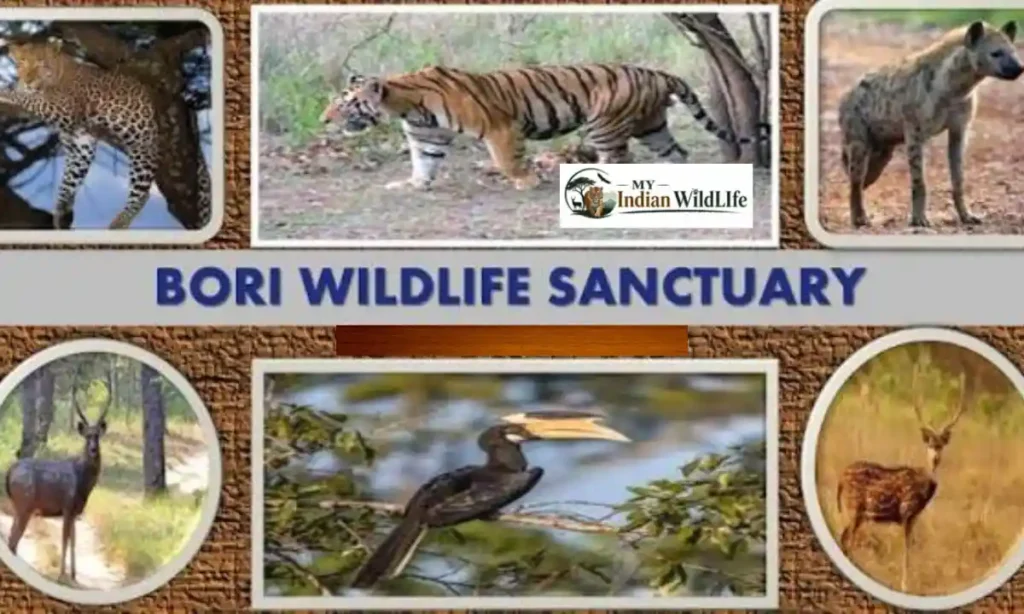
Bori Wildlife Sanctuary is one of the many historically important forest lands of Madhya Pradesh, India. The sanctuary is situated in the Satpura landscape, and it is popular due to its dense forests, high biodiversity, wild life, and historic significance in conservation of forests. This place will provide you the opportunity to explore the natural environment of central India along with a forest land that helps to conserve the wildlife of India.
This place is especially suitable for nature lovers, wildlife fans, bird watchers, and people who want to discover places other than the usual tourism hotspots. The teak forests, mixed vegetation, hills, and natural landscape around this place add to its ecological significance.
Furthermore, Bori is part of the Satpura Tiger Reserve landscape, which hosts many mammals, birds, and reptile species. It should be noted that the tourists need proper permission and tour plans to enter into these protected areas of forests.
Bori Wildlife Sanctuary: Quick Overview
Bori Wildlife Sanctuary is situated in the state of Madhya Pradesh and has gained recognition due to its efforts in conserving forests in the Satpura region. Below is a tabular representation of important details that visitors should know before visiting Bori Wildlife Sanctuary.
| Details | Information |
|---|---|
| Name | Bori Wildlife Sanctuary |
| Location | Narmadapuram region, Madhya Pradesh, India |
| Established | 1975 |
| Historical Forest Reserve | Bori Reserve Forest, established in 1865 |
| Geographical Region | Satpura Hills |
| Famous For | Forest biodiversity and wildlife conservation |
| Forest Type | Tropical deciduous and mixed forests |
| Major Tree | Teak |
| Wildlife | Mammals, birds, reptiles, and other forest species |
| Nearest Major Railway Hub | Itarsi Junction |
| Nearest Major City | Bhopal |
| Best Time to Visit | October to March |
| Main Attraction | Natural forest ecosystem |
| Associated Protected Landscape | Satpura Tiger Reserve region |
Where Is Bori Wildlife Sanctuary Located?
The Bori Wildlife Sanctuary is located in the Satpura hills of Madhya Pradesh in Narmadapuram, the earlier name of which was Hoshangabad. Bori Wildlife Sanctuary forms a part of an ecologically significant forest landscape in central India characterized by different types of plants and animals that can be found in the forests, hills, rivulets, and valleys here.
This place is ecologically significant because the landscape of Satpura, in which Bori is situated, comprises a number of interconnected forest habitats which serve as shelters and migration corridors for wildlife thus ensuring balance in the ecosystem.
Bori belongs to the larger conservation landscape which consists of Satpura National Park and Pachmarhi Wildlife Sanctuary. But each of them has its own border, entry system, and regulations. It is necessary to check out the exact place of entry before traveling there because visiting a town near the sanctuary does not guarantee getting into it.
History of Bori Wildlife Sanctuary
Bori holds a significant place in the history of forest conservation in India. The Bori Reserve Forest was created in 1865, and thus, it is considered to be one of the first protected forest territories in the country. The history of the site shows the significance of the Satpura forests as well as its natural resources.
With the passage of time, it became clear that the region was rich from an ecological point of view, which required protection of its vegetation and wildlife. The forest landscape became an essential element of conservation that sought to preserve natural habitats of various species.
In 1975, the Bori Wildlife Sanctuary was founded. It contributed greatly to the preservation of the forest ecosystem that surrounded the territory. Today, the sanctuary belongs to the larger Satpura conservation area, where forest management and wildlife protection are crucial aspects.
The history of Bori is not confined only to its role as a sanctuary. The older reserve forest tradition is another aspect of protecting natural landscapes that was formed throughout many generations in India.
Why Is Bori Wildlife Sanctuary Famous?
Bori Wildlife Sanctuary is well-known for its historical forest reserve, teak forest, diversity, and role in the conservation of wildlife in Madhya Pradesh. Its environment constitutes an essential component of the Satpura landscape that features hills covered by forest.
Among the most crucial characteristics of Bori Wildlife Sanctuary is vegetation. Various plantations serve as a source of food and habitat for many animal species. The diversity of relief and vegetation creates a suitable environment for mammals, birds, insects, and reptiles.
Another vital characteristic of Bori Wildlife Sanctuary is its belonging to a large protected forest area. Habitat connectivity helps animals migrate from one suitable place to another in search of food and survival.
For travelers, the entire region provides great opportunities to observe nature and forest ecosystem. At the same time, Bori is mainly a protected area, which means that visitors should follow certain rules concerning tourism in this place.
Wildlife Found in Bori Wildlife Sanctuary
The Bori Wildlife Sanctuary and the surrounding Satpura area serve as natural habitats for a number of wild animals. Herbivorous animals, big predators, smaller mammals, and other animals make up the list of the wildlife population in the forests of the region.
Wildlife spotting is affected by various factors such as season, migration of animals, vegetative cover, and the particular area that visitors can access. The mere presence of a particular species in the larger Satpura area does not mean that one is sure to spot it in Bori.
Bengal Tiger
The Bengal tiger is among the best-known predators in relation to central India’s forest ecosystems. Tigers require adequate territories, prey, water and vegetation to thrive. The larger Satpura region is vital for the conservation of tigers since it boasts of vast forest habitats.
Tigers are naturally shy animals, and their activities are unpredictable. One should not anticipate seeing them. In case you are visiting an authorized wildlife tourism area, adhering to the guide’s instructions and keeping a safe distance from the animals is crucial.
Indian Leopard
The Indian leopard is a versatile carnivore, capable of surviving in many different habitats, such as forests, mountainous regions, and areas where vegetation is dense. The leopard’s spotted fur is ideal for camouflage purposes.
The leopard fulfills a crucial ecological function, since it controls the population of prey animals. Leopards are usually elusive and shy away from people. It would be irresponsible of the tourists to go off-trail and try to get a closer shot of a leopard.
Indian Gaur
Indian Gaur, popularly called Indian bison, is a huge wild cow species that lives in the forests of certain parts of India. It mainly eats different plants such as grasses, leaves, twigs among others.
Gaur is one of the significant herbivorous species in the forests and it is
interesting to watch from afar. Even though it does not attack humans, it is a strong wild animal that should never be disturbed.
Sambar Deer
Sambar deer are some of the biggest deer species that exist in the forests of India. The Sambar deer usually inhabit woodlands and forest regions close to water and eat leaves and grasses among other vegetation. The sambar deer play a key role as prey for various large carnivorous animals such as tigers.
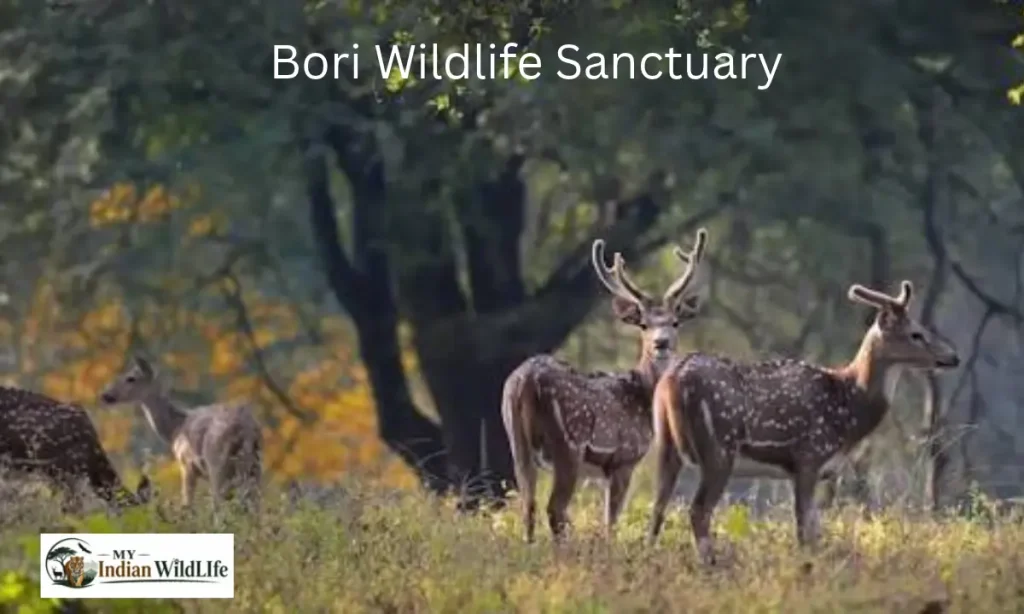
Spotted Deer
The spotted deer or the chital is identified due to its reddish-brown fur that is speckled with white spots. It has its habitat mainly in open woodlands, edges of forests, and grassy clearings.
The diet of this animal includes leaves and vegetation such as grass. They travel in herds and stay vigilant of any predatory threats. The distribution of this animal in the Satpura region gives it significance in the overall forest ecosystem.
Sloth Bear
Yet another important animal that inhabits the central forests of India is the sloth bear. This animal is known to consume insects, termites, fruits, and other foods found naturally.
This particular species of animals is quite shy but may become dangerous when disturbed in any way. Travellers need to be within authorized vehicles and listen to their guides for any activity related to wildlife.
Other Mammals Found in the Sanctuary
Apart from tigers, the larger Satpura area is also home to other types of animals such as wild boars, langurs, jackals, and several others. Depending on the environment and area, wild dogs and other predators can also be seen in the larger region.
Different species have different roles to play within the environment. While herbivores affect the flora, the predators help control the prey population in the ecosystem.
It is vital that the wildlife is viewed in a responsible manner. This entails avoiding activities like feeding the animals, making noise, and attracting them for photos.
Birds Found in Bori Wildlife Sanctuary
Suitable habitats for various kinds of birds are found at Bori Wildlife Sanctuary and in the adjacent Satpura forest range. Deciduous forest areas, open woodlands, streams, and nearby water bodies create distinct feeding and breeding areas for various kinds of birds residing and visiting the place.
Bird watching could be a fun activity for visitors to the Satpura region. Morning could be an appropriate time to spot birds as they are very active during cool hours of the day. You may hear calls of the birds and see them in search of food.
Common Birds in the Satpura Region
There is also support for birdlife such as Indian peacocks, parakeets, woodpeckers, drongos, owls, and various raptors. The specific birds that can be found will vary depending on the habitat and season.
| Bird | Key Characteristics |
|---|---|
| Indian Peafowl | Recognised for its colourful plumage and elaborate tail feathers |
| Woodpeckers | Use strong bills to search tree trunks for insects |
| Parakeets | Often seen feeding on fruits, seeds, and other plant material |
| Drongos | Known for their distinctive calls and agile flying |
| Eagles | Predatory birds that hunt smaller animals |
| Owls | Mostly nocturnal birds adapted to hunting in low light |
The bird watchers need to have binoculars with them and keep themselves away from the nest sites. The use of recorded bird calls and disturbing the birds for taking pictures should be stopped.
Flora and Vegetation of Bori Wildlife Sanctuary
Bori Wildlife Sanctuary is located in the lush forests of the Satpura belt, whose forests are affected by rainfall, soil condition, altitude, and water availability. The forests of Bori Wildlife Sanctuary are significant because these forests act as food and shelter for the wildlife species of this region.
The teak tree is an inherent tree of the region. Deciduous forest, bamboo in proper habitats, shrubs, grasses, and other native plants form the biodiversity of the forest.
Teak Forests
Teak is one such tree species that is present in the forests of Madhya Pradesh. Its large leaves, strong trunk, and cyclical growth help in forming the forest. Teak forests give shade, protection, and a home to many organisms.
In the dry season, the deciduous trees lose their leaves to allow sunlight to enter the forest floor. During the arrival of monsoons, the foliage of new leaves and grass covers the ground.
Bamboo and Mixed Deciduous Forests
Bamboo along with mixed forest vegetation is found in certain areas of the larger Satpura landscape. Such vegetation adds to biodiversity and serves as cover for small animals and birds.
The mixed deciduous forests are especially significant because there is an annual change in the production of fruit, seeds, leaves, and flowers among different plant species.
Common Trees and Plant Species
The whole forest area comprises teak, mahua, tendu, and flame-of-the-forest trees, among many others. The distribution of these plants varies among different forest areas.
These plants help sustain insects, birds, and mammals as well as ensuring the stability of the soil and nutrient cycling. Their flowers, fruits, and seeds also serve as food for animals.
Bori Wildlife Sanctuary Safari Guide
For a trip to Bori, one needs prior preparation, since entry to this place is regulated by wildlife protection laws and the possibilities provided in different forest regions. It is necessary to clarify whether a planned destination is open for tourists and offers tours or safaris by vehicles.
Bori is an element of the larger Satpura conservation area, although not all the forests in it can be visited by tourists. For example, a safari tour in some other part of Satpura Tiger Reserve cannot be called a safari in Bori Wildlife Sanctuary.
Safari Options and Forest Access
The Satpura Wildlife Tour Package may include authorized jeep safaris and guided wildlife tours. This availability depends on the zone of tourism, the working arrangements, seasonal restrictions, and permission from the Forest Department.
Prior to booking the package, it is recommended to find out about the entrance gate and all other details regarding permits, timings, transport arrangements, and fees. In case you are planning to visit the Bori Wildlife Sanctuary, enquire from the authority concerned regarding the same.
What to Expect During a Wildlife Visit
Tourism at the forest level enables people to explore their natural environment without necessarily looking out for animals. This will depend on what has been allowed by law as well as the condition of the forest in terms of vegetation and wildlife.
The chances of seeing an animal are not guaranteed. Even if a certain area is renowned for tigers and leopards, it cannot be assured that visitors will see these animals. One can still have a worthwhile experience through bird watching and the study of indigenous plants.
Wildlife Photography and Birdwatching
A nature photographer will find the Satpura terrain fulfilling as there are diverse plants, lighting changes, and different types of birds. The binoculars and the camera with an appropriate zoom lens may come handy.
There is the need to observe photography rules and not disturb the animals as well as stay within the authorized paths to get a closer shot.
Bori Wildlife Sanctuary Timings
Bori Wildlife Sanctuary doesn’t have a common schedule that is applicable to all the forest areas. It depends upon the authorized entry point as well as if the specific place allows tourists or not.
| Visitor Information | Details |
|---|---|
| Opening hours | Confirm with the relevant forest authority |
| Safari timings | Depend on the authorised tourism zone |
| Entry permits | Required where applicable |
| Advance booking | Recommended for permitted activities |
| Seasonal access | May change according to local rules |
| Night entry | Subject to official restrictions |
It is advisable to verify the schedule prior to traveling especially if they aim to arrive in the area early in the morning. Visitors should not take for granted that the timings of the Satpura National Park would also be applicable to Bori’s forests.
Bori Wildlife Sanctuary Entry Fee and Safari Charges
Costs associated with the visitation will depend on the site to which access is granted, along with the activities allowed at that site. Separate billing for entry fees, game viewing cars, guides, etc., can be done.
| Expense | What to Check |
|---|---|
| Entry permit | Applicable sanctuary or tourism-zone fee |
| Jeep safari | Current vehicle and safari charges |
| Guide service | Whether a guide is compulsory and the applicable fee |
| Camera charges | Current photography regulations |
| Accommodation | Room rates and booking conditions |
| Transport | Taxi or other road travel costs |
However, there is no fixed price applicable for all visits to Bori Wildlife Sanctuary. Ensure you find out about the latest prices before finalizing your trip budget.
Best Time to Visit Bori Wildlife Sanctuary
The most favorable period to explore the Bori area usually lies in the months of October through March due to the better weather conditions in this area that helps tourists to move around the nearby Satpura forest. The perfect season depends on your preference about weather or wildlife watching.
Winter Season: October to February
Winter is a perfect time to travel in the area because of its comfortable weather. The climate in this period is usually not so hot as it is in summer. The winter time is appropriate for bird watching, forest photography and visiting some interesting places. Mornings might be cold; therefore, one should have a jacket on.
Summer Season: March to May
The summer season comes with warm weather and dryer forests. There will be less vegetation in some approved wildlife tourism areas, which will help to see the animals better although there is no certainty. It is recommended that you have plenty of drinking water and protect yourself from the sun since activities should not be undertaken when it is very hot.
Monsoon Season: June to September
Monsoon brings change in Satpura with fresh flora, green hills, and streams. It is a pleasant season to witness the scenic beauty of nature. On the other hand, heavy rains could make forest roads tough to travel on. Also, there are certain restrictions during the monsoon season. It is advised to check the availability of tourism facilities beforehand.
How to Reach Bori Wildlife Sanctuary
The Bori Wildlife Sanctuary may be accessed via Narmadapuram and further Satpuras area of Madhya Pradesh. The best mode would depend on which official entry point is being accessed.
How to Reach Bori Wildlife Sanctuary by Air
Bhopal Raja Bhoj Airport is a good airport for tourists visiting the Satpura area. From the airport, travelers can move further via road to Narmadapuram, which will lead to their actual destination point. The journey by road will depend on many factors such as where you enter from the road and the road conditions.
How to Reach Bori Wildlife Sanctuary by Train
Itarsi Junction is one of the important railway stations in the area, whereas Narmadapuram railway station can also be used based on your itinerary.
Once you arrive at the selected railway station, you will have to make arrangements for taxis and other suitable means of road transport. It will be advisable to know the place of your stay and the entrance to the forest.
How to Reach Bori Wildlife Sanctuary by Road
The area can be accessed via roads from many other cities/towns within Madhya Pradesh. Usually, tourists will make their travel arrangements via Narmadapuram or Itarsi, and then continue their journey to the entrance gate of the respective forest area. Private transport and taxi cabs could prove to be an ideal choice, especially when traveling with luggage.
Distance to Bori Wildlife Sanctuary from Major Cities
The distance to the Bori Wildlife Sanctuary changes based on which place in the vicinity you are traveling to, and how you go about it. The values below are only approximate figures meant for planning purposes concerning the Satpura range in general.
| Starting Point | Approximate Road Distance |
|---|---|
| Narmadapuram | 50–100 km |
| Itarsi | 60–100 km |
| Bhopal | 140–200 km |
| Pachmarhi | 100–190 km |
| Nagpur | 250–300 km |
Actual road distances may differ considerably. Confirm the exact route, destination, and road conditions before travelling.
Places to Visit Near Bori Wildlife Sanctuary
The area around Bori Wildlife Sanctuary has some natural sights which would make your visit to the Satpura Range even more interesting. Travellers can choose from such sites as forests on hills, wildlife tourism zones, beautiful reservoirs, and famous hill stations.
While planning your tour, keep in mind the distances between the sites, means of transportation, and accessibility of the forest areas. Some sites are good for a day tour, while others need some extra time.
Satpura National Park
Satpura National Park is one of the leading wildlife parks in Madhya Pradesh. The Satpura National Park is characterized by dense forests, diverse landscapes, and abundant wildlife. The park consists of hills, valleys, meadows, and streams supporting various species of plants and animals.
Tourists are allowed to visit the designated tourism areas in the park using authorized tourism activities like wildlife safari. The national park is ideal for nature enthusiasts, photographers, bird watchers, and tourists interested in wildlife preservation.
Pachmarhi Hill Station
Pachmarhi is a well-known hill station located in Madhya Pradesh, featuring forests, rocky areas, valleys, and waterfalls. Hence, it will serve as a perfect inclusion in a longer Satpura tour since it provides a different kind of adventure than a wildlife sanctuary.
Visitors can visit various scenic spots and natural sites, along with approved forest trails. Also, the hill station can be a good option for travelers looking for a comfortable holiday destination.
Tawa Reservoir
The Tawa Reservoir is noted for its beautiful water view and scenery. The Tawa Reservoir and the surrounding scenery are perfect places to enjoy peaceful surroundings and scenery change depending on the time of the year.
Depending on the season and local conditions, some activities such as boating may be allowed in the area. It is advisable to consider local operating conditions first.
Madhai Safari Zone
Madhai is a very important tourism entrance point that relates to Satpura Tiger Reserve. It is famous for its forests, rivers, and wildlife tourism that is officially allowed by the authorities.
It would be wise to find out about safari and nature activities beforehand since Madhai will be very useful to those people who are interested in exploring Satpura in general but not Bori Wildlife Sanctuary.
Best Places to Stay Near Bori Wildlife Sanctuary
The choice of lodging for a Bori safari will depend upon the forest area one wishes to explore, means of transport, and one’s own standards of comfort.
One may wish to look at the options of staying at hotels in the neighbouring towns, wildlife lodges in the larger Satpura area, and even in approved forest accommodations.
Hotels and Accommodation Options
| Type of Accommodation | Suitable For |
|---|---|
| Budget hotels | Travellers seeking economical accommodation |
| Mid-range hotels | Families and visitors looking for comfortable facilities |
| Wildlife lodges | Nature lovers planning activities in authorised tourism zones |
| Forest accommodation | Visitors who meet the applicable booking and permission requirements |
| Resorts in the wider Satpura region | Travellers planning a longer nature holiday |
Make sure to book in advance when it is the right time for you to travel. Make sure you have found out the exact distance between your chosen accommodation and the authorized entrance.
Things to Do in Bori Wildlife Sanctuary
The trip to Bori and the entire Satpura landscape will help one interact with nature and understand the significance of forest conservation. The activities will be subject to the permits acquired from the locals and the facilities available in that particular location.
Wildlife Observation
Observing wildlife is one of the key activities of the Satpura area. With respect to the particular route, tourists can get a chance to observe deer, birds, and other animals of the forest.
Large predators cannot be easily observed, and seeing them is not a sure thing. Tourists must follow the instructions of their guides and stay at a safe distance from the animals.
Birdwatching
Bird watching is among the activities that nature lovers enjoy because there are a variety of bird species in the forest. In the early mornings, one can listen to the birds singing and see how they are eating or flying from tree to tree.
Visitors can use binoculars to watch the birds without necessarily being close to them. It is not advisable to disturb the nests of the birds or use recordings to lure the birds.
Nature Photography
One can capture pictures of forests, hills, natural flora, birds, and other wild animals at Bori and throughout the Satpura area wherever allowed. Use of a camera fitted with a zoom lens may be beneficial in capturing photographs of animals from a safe distance.
Forest and Landscape Exploration
Natural scenery found in the area includes woodland, hills, valleys, and streams. Such characteristics make the entire area attractive for people who like nature. Exploration should take place only along approved paths and approved activities. Do not venture into prohibited forested areas.
Wildlife Conservation Learning
A trip to an area of preserved forest can assist travelers in comprehending the significance of biodiversity, conservation of habitats, and sustainable tourism.
An understanding of the interactions between plants, herbivores, predators, and even microorganisms will enrich the experience. It will also show the reason for having conservation laws in place.
One-Day Bori Wildlife Sanctuary Travel Itinerary
It is more practical to have made prior arrangements for transport and entry into the forest before a one day visit. Due to the possibility of different entrance arrangements, the following is merely an itinerary guide.
| Time | Suggested Activity |
|---|---|
| Early morning | Depart from your accommodation |
| Morning | Reach the authorised entry point and complete required formalities |
| Morning session | Participate in a permitted wildlife or nature activity |
| Afternoon | Have lunch and rest |
| Late afternoon | Explore an authorised nearby attraction, if time permits |
| Evening | Return to your accommodation or onward destination |
Allow ample time for travel, the process of check-in, and any changes in access to the forest. If the chosen location does not provide an afternoon activity, spend that time resting or visiting another site in the region.
Two-Day Bori Wildlife Sanctuary Travel Itinerary
Two days would give them more leeway and help them take a look at the neighboring areas as well.
| Day | Travel Plan |
|---|---|
| Day 1 | Arrive in the region, check in, and explore an accessible nearby natural attraction |
| Day 2 | Join a pre-booked authorised safari or nature activity, then begin the return journey |
Travelers who intend to explore Pachmarhi or any other place should consider allocating one more day for that purpose. Arrange the schedule depending on your hotel location, transportation and permitted activities.
Essential Travel Tips for Visitors
Preparation is important when visiting a remote forest region. Keep these practical points in mind before starting your journey.
- Confirm access permissions, timings, and applicable charges.
- Arrange accommodation and transport before arrival.
- Carry drinking water and essential medicines.
- Wear comfortable footwear and clothing suitable for forest conditions.
- Bring binoculars if you enjoy birdwatching.
- Use sunscreen and insect repellent when appropriate.
- Follow instructions from authorised guides and forest staff.
- Avoid loud music, littering, and feeding wildlife.
- Do not approach animals or leave permitted routes for photographs.
- Check weather forecasts and road conditions before departure.
- Save important travel details because mobile connectivity may be unreliable in remote areas.
These precautions can help make the trip safer and more comfortable while reducing disturbance to the natural environment.
Rules and Regulations for Wildlife Sanctuary Visitors
As Bori Wildlife Sanctuary is a nature sanctuary, tourists need to comply with all the guidelines set up by the management in order to conserve forests and wildlife.
Tourists need to come through authorised access points and acquire all necessary permits. Guided activities should follow all rules and tourists need to stay on permitted routes.
Hunting, trapping, feeding wildlife, gathering plants and natural materials are all considered violations and are not allowed in protected areas. In addition to that littering, damaging vegetation, harassing wildlife and entering restricted zones also carries penalties.
Photography, vehicle entry and other activities could also have special rules. Please check the rules before your trip, as rules may vary from one forest area to another.
Importance of Bori Wildlife Sanctuary for Wildlife Conservation
Importance of Bori Wildlife Sanctuary lies in the fact that the forests in this area are a part of a greater ecological system in central India and play an important role in the sustainability of the Satpura landscape.
Protection of Natural Habitats
Preservation of forests helps protect the feeding grounds, breeding grounds, hiding places, and migration corridors of wildlife. This preservation of habitat is especially crucial for animals which need large continuous tracts of forestland.
Support for Biodiversity
The sanctuary’s flora, along with the surrounding habitats, provide home to a variety of organisms, such as mammals, birds, reptiles, insects, and plants. Biodiversity is essential for maintaining ecosystems.
Ecological Balance
The forests assist in the protection of soil, nutrients cycles, and flow of water naturally. Plants also offer food and habitat to animals, thus helping in the maintenance of connections between various species.
Importance of Forest Connectivity
The larger landscape around Satpura consists of several areas that have been conserved and forested. It would be important to have links between habitats for the movement of species.
Environmental Awareness
Responsible nature tourism may also help tourists understand the significance of protected forests. Learning about biological diversity and conservation makes one appreciate the wildlife as well as practice eco-friendly tourism.
Bori Wildlife Sanctuary Location & Google Maps
Bori Wildlife Sanctuary is situated in the Satpura range in the state of Madhya Pradesh, particularly in the area known as Narmadapuram. Before you make your journey, ascertain the actual entrance gate for this sanctuary. This is because some parts of the forests are closed to tourists.
Conclusion
Bori Wildlife Sanctuary is an excellent location to get familiar with the forests and diversity of flora and fauna in Madhya Pradesh. This sanctuary has an interesting history of conservation, has teak forests and is linked to the Satpura landscape.
However, a good visit is not just about choosing the right travel dates. Travelers must make sure that they have been granted permission for this trip, learn the rules they need to follow and arrange their transportation and accommodation properly. By showing respect towards wildlife, travelers can explore the beauties of the Satpura region.
Faqs
Where Is Bori Wildlife Sanctuary Located?
Bori Wildlife Sanctuary is located in the Satpura hills of Madhya Pradesh, in the Narmadapuram region of central India. It is part of an important forest landscape known for its biodiversity, natural vegetation, and wildlife conservation.
When Was Bori Wildlife Sanctuary Established?
Bori Wildlife Sanctuary was established in 1975. Its historical Bori Reserve Forest dates back to 1865, making it significant in the history of forest conservation in India.
What Is Bori Wildlife Sanctuary Famous For?
Bori Wildlife Sanctuary is famous for its historic forests, teak vegetation, rich biodiversity, and contribution to the wider Satpura conservation landscape. It is an interesting destination for nature lovers and wildlife enthusiasts.
What Is the Best Time to Visit Bori Wildlife Sanctuary?
October to March is generally a suitable period to explore the Bori region because the weather is often more comfortable. Summer can be hot, while monsoon conditions may affect road access and permitted activities.
Are Tigers Found in Bori Wildlife Sanctuary?
The wider Satpura landscape supports Bengal tigers and other wildlife. However, tiger sightings are never guaranteed, and the animals visitors may encounter depend on the location, season, and authorised access arrangements.
What Are the Timings of Bori Wildlife Sanctuary?
Visiting and safari timings depend on the authorised entry point and permitted activities. Travellers should confirm the latest timings with the relevant forest authority before planning their journey.
Is a Jeep Safari Available at Bori Wildlife Sanctuary?
Safari availability depends on the forest zone and current tourism arrangements. Visitors should verify whether entry and guided activities are permitted in their intended area before booking transport or accommodation.
Which Railway Station Is Nearest to Bori Wildlife Sanctuary?
Itarsi Junction and Narmadapuram railway station are useful options for reaching the region. The best station depends on your starting city, final destination, and available road transport.
Which Animals Can Be Seen in Bori Wildlife Sanctuary?
The wider Satpura forest landscape supports animals such as leopards, tigers, Indian gaur, sambar deer, spotted deer, and sloth bears. Actual sightings depend on wildlife movement and the specific area visited.
How Many Days Are Enough to Visit Bori Wildlife Sanctuary?
One day may be sufficient for a planned nature excursion if access and transport are arranged in advance. Two days provide more time to explore the surrounding Satpura region and enjoy permitted wildlife activities at a relaxed pace.
Also,Read About: Rajgir Wildlife Safari Tickets Price 2026: Entry Fee, Booking and Visitor Guide